


Elon Musk just announced a chip factory — and it has very Elon Musk vibes
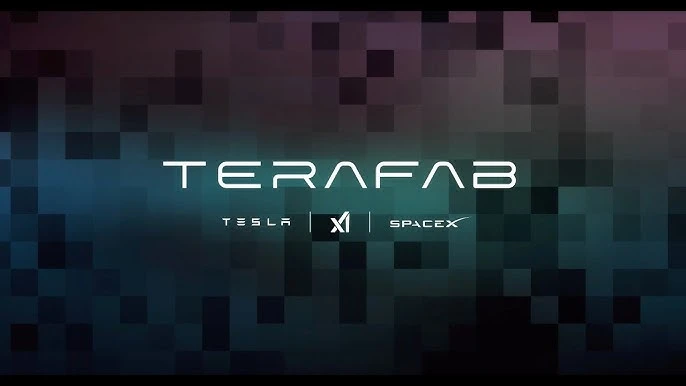
So Musk got up and announced he's building a chip fabrication plant called Terafab in Austin, Texas. It'll be jointly run by Tesla and SpaceX. It'll make chips for AI, robotics, and — wait for it — space-based data centers. And he gave exactly zero timeline for when any of this happens.
Look, I've covered enough Musk announcements at this point to know the pattern. Bold vision, massive numbers, no dates. Let's actually dig into what he said and what it means.
What Musk actually announced
Musk's core argument is simple and, honestly, not wrong: the AI industry is consuming chips faster than the semiconductor industry can produce them. Nvidia's GPUs are backordered for months. Every major AI company is scrambling for compute. Musk's own companies — Tesla (for Dojo, its AI training supercomputer), xAI (for Grok), and SpaceX — all need massive amounts of chip supply.
His solution: build your own fab. The plant is called Terafab, it'll be in Austin, Texas — where Tesla already has a gigafactory — and it'll be jointly operated by Tesla and SpaceX.
The scale he described is genuinely staggering. Musk said Terafab would produce chips capable of supporting up to 200 gigawatts per year of computing power on Earth, and up to a terawatt in space. That's an extraordinary amount of compute. For context, the entire current global AI compute infrastructure runs on a fraction of that.
The quote that tells you everything
Musk put it simply: "We either build the Terafab or we don't have the chips, and we need the chips, so we build the Terafab."
That's actually a coherent business argument. If you're running multiple AI-heavy companies and chip supply is your biggest constraint, building your own supply chain is the logical response. It's exactly what Apple did with silicon — tired of depending on Intel and Qualcomm, they spent years building their own chips and now have a massive advantage.
The difference is Apple spent about a decade quietly building chip design expertise before announcing anything. Musk just announced it on Saturday with no timeline.
Why this is harder than it sounds — much harder
Building a chip fabrication plant is genuinely one of the hardest things in modern technology. Here's what Musk is proposing to do:
Chip fabs cost tens of billions of dollars to build. TSMC's newest plants in Arizona cost over $40 billion with US government subsidies. Samsung's Texas fab has similar costs. These aren't like building a car factory — the precision required is at the atomic level.
It takes years to build and commission a fab — typically 4-6 years from groundbreaking to producing chips at scale. Intel has been trying to rebuild its fab capabilities for years and is still struggling. Samsung and TSMC have decades of accumulated expertise.
And then there's the Bloomberg point that's worth quoting directly: Musk "has no background in semiconductor production and a history of over-promising on goals and timelines." That's a polite way of saying: the man who said Full Self-Driving would be ready in 2016 is now promising a chip fab. With no timeline.
To be fair to Musk — the chip supply problem is real
Here's where I want to give him some credit. The global chip shortage for AI is not a manufactured concern. Nvidia's H100s and H200s have had waiting lists measured in months. Every major AI lab — OpenAI, Google DeepMind, Anthropic, Meta — is spending billions trying to secure compute. The US government is spending hundreds of billions through the CHIPS Act specifically because chip supply is a national security issue.
For Musk's empire specifically: Tesla's Dojo supercomputer needs massive compute. xAI's Grok competes with GPT-4 and Gemini and needs equivalent training infrastructure. SpaceX's Starlink constellation is essentially a distributed computing network in space. These are real compute needs, not invented ones.
Whether building a fab from scratch is the right solution versus buying capacity from TSMC or Samsung is a separate question. But the problem he's trying to solve is genuine.
What this means for India's chip and AI ambitions
India has its own semiconductor ambitions right now — the India Semiconductor Mission, Tata Electronics' fab plans, and Micron's assembly plant in Gujarat are all part of India's push to build domestic chip capacity. The Indian government has committed over ₹76,000 crore ($9 billion) in incentives for semiconductor investments.
Musk's Terafab announcement — even with its vagueness — is a reminder of how massively capital-intensive this space is. Building a leading-edge chip fab requires not just billions of dollars but decades of accumulated know-how. India's semiconductor journey is realistic but long — India is starting with packaging and assembly, not cutting-edge fabrication. Musk's Terafab, if it ever happens, would be in a similar position of having to build expertise from scratch.
For Indian IT professionals and engineers: if Terafab actually gets built, it creates demand for chip design engineers, fab process engineers, and AI hardware specialists. India already supplies a massive percentage of the world's chip design talent — companies like Qualcomm, Intel, and AMD have major design centers in Bangalore and Hyderabad. A Musk-backed chip operation would be another potential employer for that talent pool.
My honest take
Musk has done genuinely impossible things. Nobody thought he'd land orbital rockets and reuse them. Nobody thought a startup could compete with Boeing on crew spacecraft. The man has a track record of doing things people said couldn't be done.
But he also promised Cybertruck deliveries in 2021 (they started in late 2023), promised Full Self-Driving would be ready by 2016 (it's still Level 2 assistance in 2026), and promised a hyperloop that never happened. His hit rate on timelines is, charitably, not great.
A chip fab is categorically different from a car or rocket factory. The physics involved — lithography at 2nm or smaller, extreme ultraviolet machines that cost $200 million each and are made by basically one company (ASML in the Netherlands) — require a supply chain and expertise that takes decades to build. This isn't a willpower problem. It's a physics and time problem.
I think Terafab will exist in some form eventually. Musk has the money, the companies that need chips, and the motivation. But "eventually" is doing a lot of work in that sentence. Don't expect chips from Terafab before 2030 at the earliest — and that might be optimistic.
For now: cool announcement, zero timeline, watch this space. Classic Saturday Musk energy.



Comments (0)
Be the first to comment!