


What’s the big news?
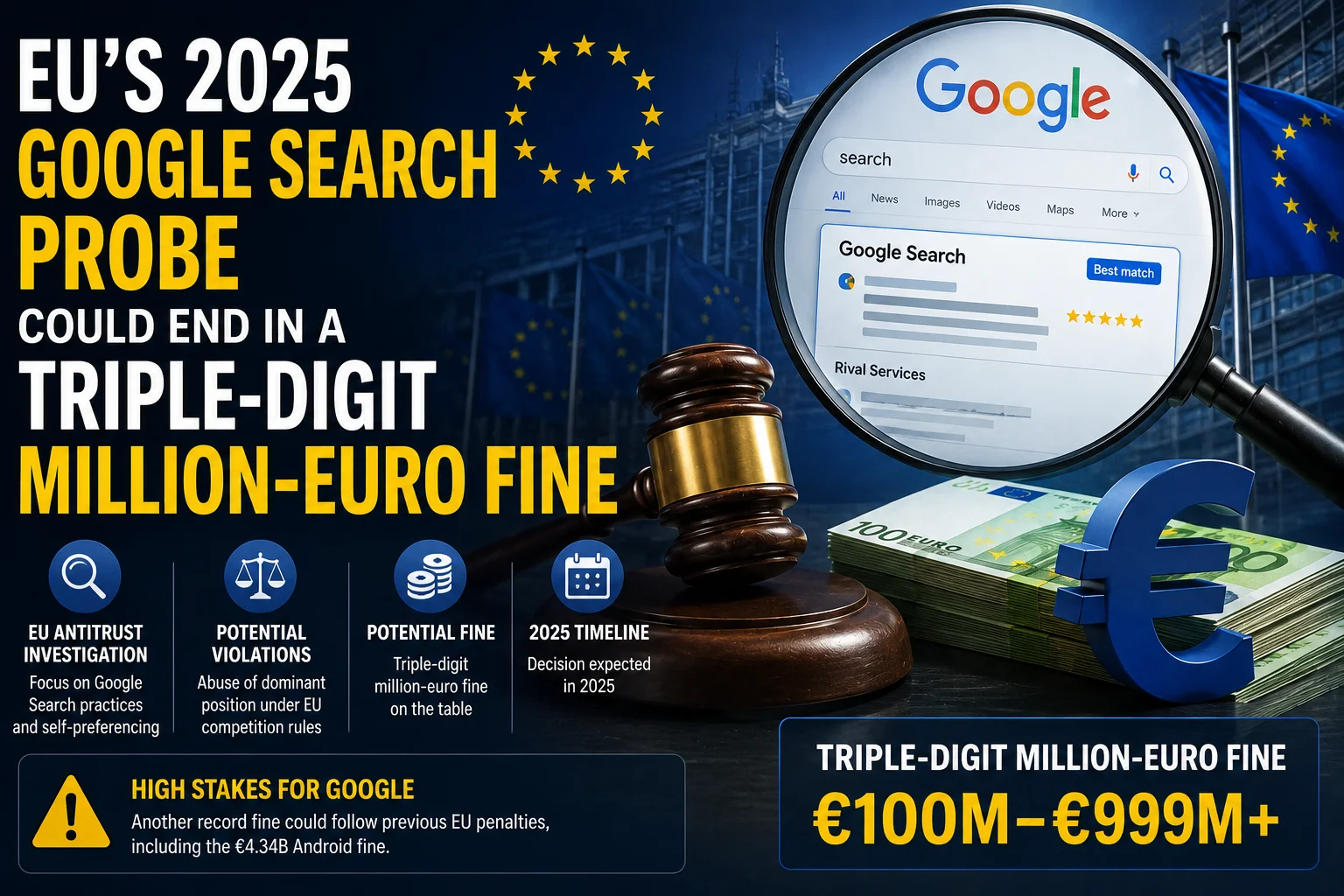
Europe’s competition watchdog is preparing a formal investigation that aims to determine whether Google is giving its own services – like Maps, Shopping and YouTube – an unfair boost in its Search results. If they find the claims true, the Commission could slap Google with a fine that runs into the high triple‑digit millions of euros.
Why now?
Google has already been fined billions for Search‑related antitrust violations – the most famous being the €2.42 billion fine in 2017. The new probe focuses on a narrower question: does Google’s algorithm automatically push its own products to the top, squeezing rivals out of the spotlight? The EU says the evidence is “strong enough” to launch a full‑blown case.
The numbers we’re looking at
While the exact figure isn’t disclosed, analysts estimate the fine could be anywhere between €300 million and €800 million. That range puts the penalty well above the €1 billion threshold that would trigger a 10 % turnover‑based fine – a level the Commission rarely reaches unless the misconduct is massive.
How the probe works
The Commission will request data from Google about how its Search algorithm ranks results, especially for queries that could lead to Google‑owned services. They’ll also interview competitors and look at user‑experience studies. If Google can’t prove that the ranking is based on neutral relevance criteria, the fine will be calculated on the basis of the company’s 2023 turnover from Search‑related advertising – roughly €50 billion.
Impact on Indian users
Even though the case is being fought in Brussels, the ripple effects will be felt in India. Google Search is the default gateway for millions of Indians to discover products, services and local businesses. A penalty could force Google to change how it surfaces results, potentially giving Indian startups a better shot at visibility.
For example, local e‑commerce platforms like Flipkart or niche grocery apps often lose out to Google Shopping’s prominent placement. If the EU forces a more neutral ranking, those players could see a lift in traffic without spending extra on Google Ads.
TamilTech‑ஓட கருத்து
We think this is a classic case of the EU finally catching up with the digital reality. Google’s ecosystem is so tightly knit that it’s almost impossible for a user to avoid one of its services once they start a Search. The Commission’s move could create a healthier competition landscape – not just for Europe, but for every market where Google dominates.
That said, a fine of a few hundred million euros won’t change Google’s cash‑flow dramatically. The real win will be the precedent – a clear message that “self‑preferencing” is not acceptable. Indian regulators, who are already eyeing similar concerns, might use the EU’s findings as a template for their own actions.
What to expect next?
The formal investigation is slated to start in early 2025, with a decision expected by late 2026. In the meantime, Google is likely to double‑down on transparency, publishing more details about how its ranking works – a move that could actually help developers and SEO specialists understand the system better.
For Indian marketers, the takeaway is simple: keep an eye on any changes in Search result layouts. If Google starts demoting its own services, there could be a window of opportunity to boost organic traffic for your own sites.
Bottom line
The EU’s high‑stakes probe could end with a fine that makes headlines, but the deeper impact will be on how Search results are displayed worldwide. For Indian users and businesses, a more level playing field could mean more choices, more visibility, and ultimately, a healthier digital market.





Comments (0)
Be the first to comment!