


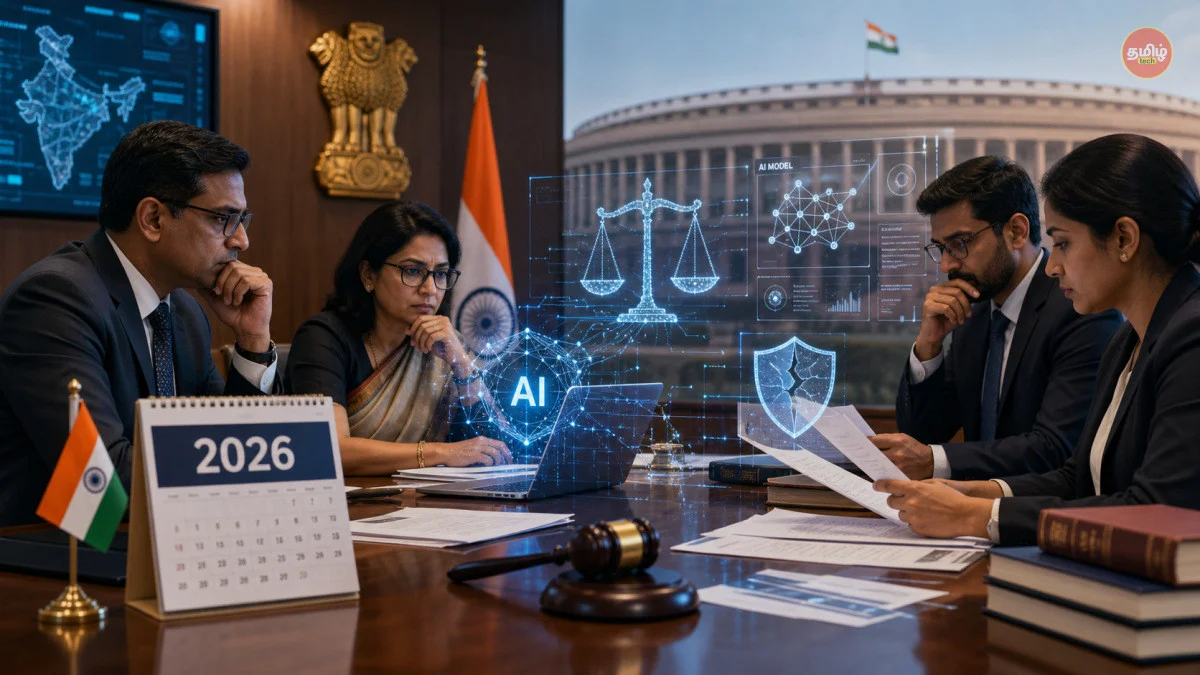
Key Takeaways
- Safe Harbour protection under Section 79 is no longer automatic for Generative AI services in India as of 2026.
- The eligibility for legal immunity depends entirely on the 'nature of the service'—whether the AI acts as a passive platform or an active content creator.
- AI companies can be held legally liable for 'hallucinations' or misinformation if the model is found to be generating original harmful content rather than just hosting it.
- This policy shift aims to curb the rise of deepfakes and AI-generated scams that have spiked in early 2026.
- Startups and tech giants must now implement stricter 'Guardrails' to ensure they don't lose their intermediary status.
The AI Legal Shield is Cracking
So, here is the deal—for years, tech companies in India have enjoyed a massive safety net called 'Safe Harbour.' If someone posted something illegal on Facebook or WhatsApp, the company wasn't usually blamed because they were just the 'postman.' But it is 2026, and the game has completely changed. With Generative AI like ChatGPT, Gemini, and Claude becoming a part of our daily lives, from writing emails to filing taxes, the Indian government has finally stepped in to answer the million-dollar question: Who is responsible when an AI lies or creates something dangerous?
The latest stance from the Ministry of Electronics and IT (MeitY) is a wake-up call for Silicon Valley and Indian AI startups alike. They have clearly stated that you can't just hide behind Section 79 of the IT Act anymore. If your AI tool is actively 'creating' or 'modifying' information rather than just passing it along, you are not just an intermediary—you are a publisher. This distinction is massive because, as a publisher, you are legally responsible for every single word your AI spits out. We have seen a lot of AI 'hallucinations' lately where bots give wrong medical advice or fake legal precedents, and this new rule is here to put an end to that 'not my problem' attitude.
Understanding Safe Harbour and Section 79
To understand why this is such a big deal, we need to look at what Safe Harbour actually is. In the early days of the internet, Section 79 was the backbone of tech growth. It basically said that if you provide a platform (like a social media site or an ISP), you aren't liable for what users do on it, provided you follow government take-down orders. It was a simple 'pipe' logic. You don't sue the water company if someone uses the water to do something illegal, right? That was the logic for the internet too.
But Generative AI isn't a pipe. When you ask an AI to write a blog post or generate an image, the AI is the one doing the work. It is synthesizing data, making choices, and 'creating' something that didn't exist before. The government’s logic in 2026 is that if the service provider's algorithms are actively shaping the output, they are exercising editorial control. And once you have editorial control, you lose the 'intermediary' tag. This means if an AI generates a deepfake that ruins someone's reputation, the company that built the AI could be sitting in a courtroom next to the person who prompted it.
The 'Nature of Service' Clause Explained
The government has introduced a very specific filter: the 'Nature of Service.' This isn't a one-size-fits-all rule. If an AI is used as a search engine (like the evolved versions of Google Search we see now in 2026) where it simply points to existing links, it might still get some protection. However, if it is a 'Creative AI' that generates code, art, or news summaries without clear sourcing, it is on thin ice. The authorities will look at how much the AI 'contributed' to the final output.
I think this is a necessary move, even if it feels harsh for innovation. In the last few months, we have seen specialized AI bots in India giving out financial advice that led to people losing money on the stock market. Under the old rules, these companies would just say, 'Hey, it's just a beta bot, use at your own risk.' But in 2026, the Indian government says that's not good enough. If you are selling a service that claims to provide answers, you better make sure those answers don't break the law or cause public disorder.
Impact on the Indian Tech Ecosystem
What does this mean for us in India? First, expect AI services to get a lot more 'cautious.' You might see more disclaimers, and more importantly, more 'censorship' within AI models. Companies will be terrified of their bots saying anything controversial about Indian law, religion, or politics because the legal cost is now too high. For Indian startups building LLMs (Large Language Models), this adds a huge layer of compliance cost. They can't just 'move fast and break things' anymore; they have to 'move carefully and verify everything.'
On the flip side, this is great for consumer protection. We are seeing a massive rise in AI-driven phishing and voice cloning scams in 2026. By making the platform providers partially liable, the government is forcing these companies to build better detection tools. If a company knows they can be sued for a deepfake generated on their platform, they will invest 10x more into preventing that deepfake from being created in the first place. It is a push towards 'Responsible AI' rather than just 'Fast AI.'
How to Stay Safe as a User or Developer
If you are a developer building AI apps in India, you need to be very careful about your 'Terms of Service.' But more than that, you need to implement robust filtering. Using a wrapper around GPT-4 or Gemini doesn't exempt you from Indian laws. If your 'wrapper app' provides a harmful output to an Indian user, you are the first point of contact for law enforcement. You need to ensure that your AI has 'human-in-the-loop' systems for sensitive categories like health, law, and finance.
For regular users, this news means the AI tools you use might become a bit more restricted, but also more reliable. We are moving away from the 'Wild West' era of AI. The government is basically saying that if you want to do business in India's massive digital market, you have to take responsibility for your algorithms. No more blaming the 'black box' for bad behavior. This is about accountability in the age of automation.
TamilTech’s Verdict: A Bold but Needed Step
Look, we love tech, and we love how AI is making our lives easier. But let's be honest—the misinformation problem in 2026 is getting out of hand. The Indian government's decision to link Safe Harbour to the 'nature of service' is a smart, nuanced approach. It doesn't kill AI, but it tells the big tech companies that they can't have it both ways. You can't claim your AI is 'smarter than a human' when selling it, and then claim it's 'just a dumb machine' when it does something illegal.
In the coming months, we expect to see the Digital India Act further codifying these rules. We will likely see a licensing regime for 'High-Risk AI' models. For now, the message is clear: If your AI creates it, you own it. Legal liability is the new reality for the AI industry in India. It is going to be a tough road for some startups, but for the average Indian user, it means a safer and more trustworthy digital experience. Stay tuned to TamilTech, and we will keep you updated as these new regulations roll out!




Comments (0)
Be the first to comment!