


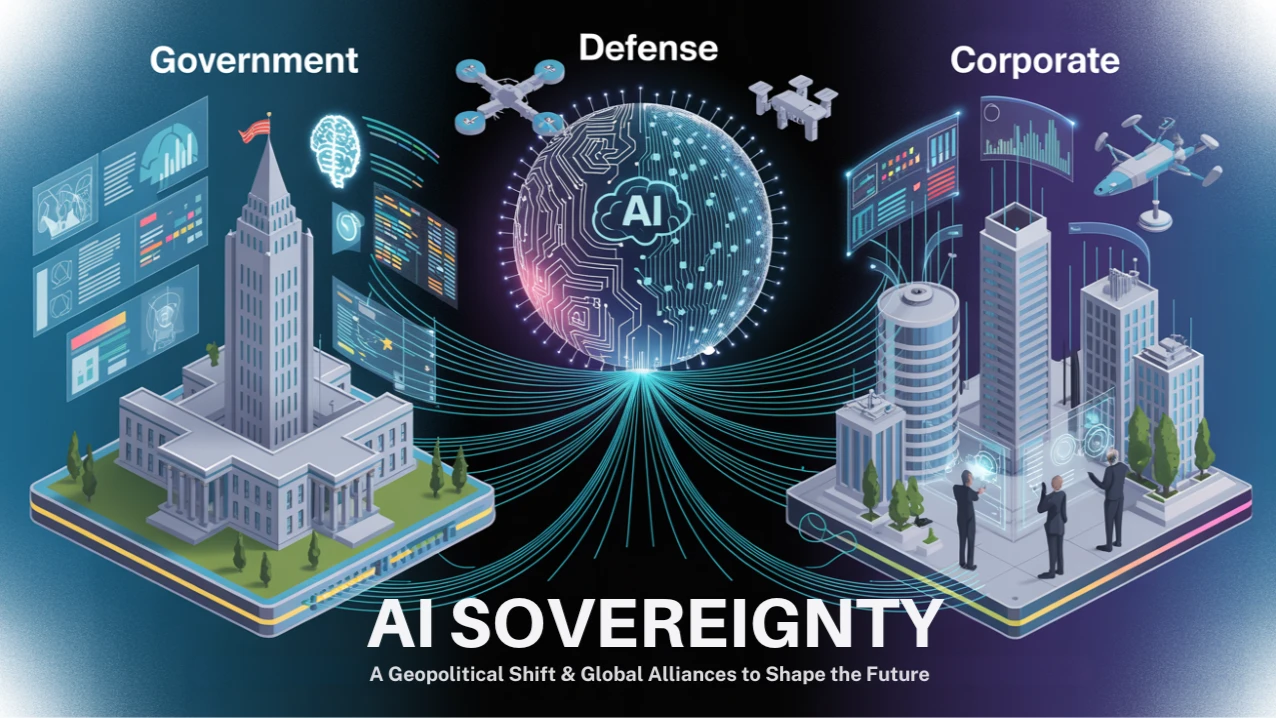
Global AI Governance and Sovereignty: Who Gets to Control the World's Most Powerful Technology?
In the 20th century, nations competed for oil, nuclear capability, and military dominance. In the 21st century, a new resource has emerged that is reshaping power, economy, and society more profoundly than any before it — Artificial Intelligence. The country or bloc that sets the rules for AI does not merely regulate a technology. It shapes the values, biases, economic models, and power structures embedded into the systems that will govern healthcare, justice, finance, warfare, and communication for billions of people.
This is why global AI governance and AI sovereignty have become the defining geopolitical debates of our time — and why every major nation, from the US and EU to China and India, is racing to establish its position.
What Is AI Governance?
AI governance refers to the set of laws, regulations, standards, norms, and institutions that guide how AI systems are developed, deployed, and controlled. Good AI governance aims to:
- Ensure AI systems are safe and do not cause harm
- Protect individual rights — privacy, non-discrimination, due process
- Maintain accountability when AI systems fail or cause damage
- Foster innovation while managing risk
- Ensure the benefits of AI are distributed equitably
The challenge is that AI does not respect national borders. A model trained in the US, running on servers in Ireland, used by a company in India, affecting a customer in Brazil — who governs that? This transboundary nature of AI makes global governance one of the most complex policy challenges in human history.
Premium Content
You've read all your free articles today. Subscribe to continue reading.
You've used 3 of 3 free articles today.
Subscribe NowAlready subscribed? Sign in





Comments (0)
Be the first to comment!