


Key Takeaways
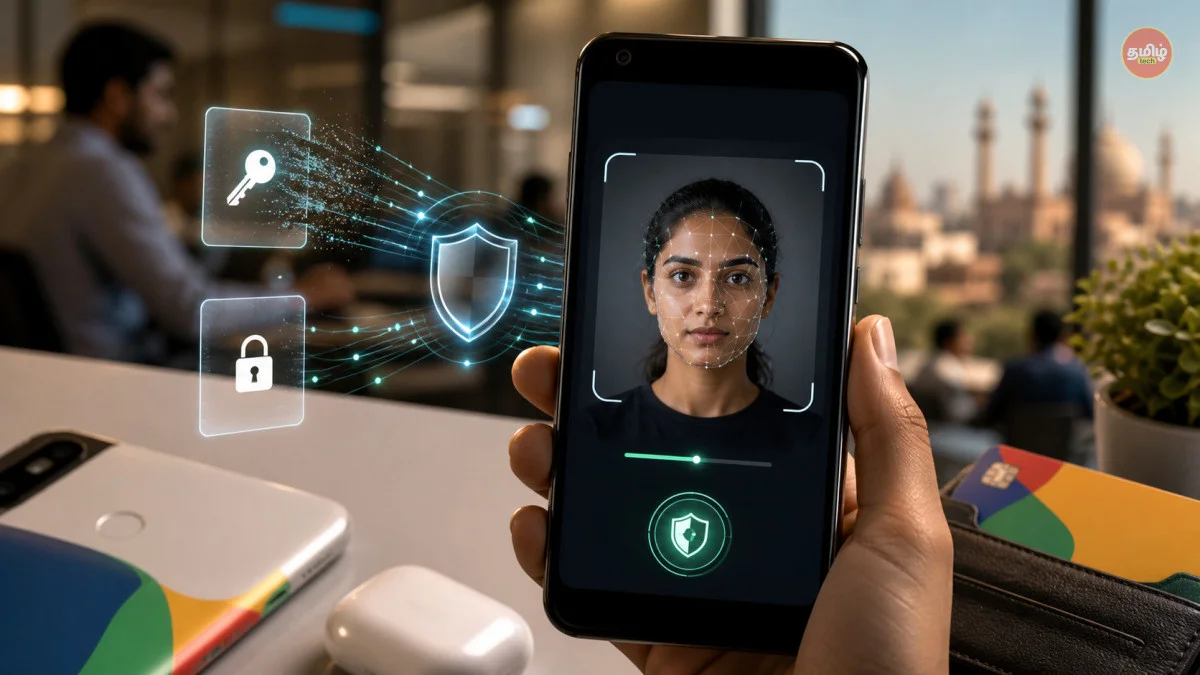
- Google has officially launched 'Video Liveness' authentication, allowing users to sign in by recording a brief 3-second selfie video instead of typing passwords.
- The feature uses on-device AI to verify depth and movement, making it impossible for hackers to use static photos or high-quality deepfake videos to break in.
- In India, this feature is rolling out to all Android 14+ and iOS 18+ users starting July 2026, targeting enhanced security for GPay and Gmail.
- No actual video data is stored on Google’s servers; the biometric 'hash' is encrypted locally within the phone's Secure Element chip.
The End of the Password Headache?
Let’s be honest—how many times have you clicked on 'Forgot Password' this month? We’ve all been there. Even with the introduction of Passkeys last year, many users in India still find it a bit technical to set up. But Google is about to change the game entirely. As of July 2026, Google is introducing a 'Selfie Video' sign-in method. It’s exactly what it sounds like: instead of typing a long string of characters or even using a fingerprint, you just look at your front camera, follow a small prompt (like nodding or blinking), and boom—you’re in. This isn't just about convenience; it's a massive wall against the rising tide of AI-driven scams we've been seeing lately.
Why is Google doing this now? Well, 2026 has been the year of the 'Deepfake Crisis.' Hackers are now using AI to recreate voices and even 2D facial photos to bypass basic face locks. Google’s new system doesn't just look at your face; it checks for 'liveness.' It ensures that the person behind the camera is a living, breathing human being in real-time. For us in India, where millions of people are entering the digital economy every month, this is a much-needed layer of protection that doesn't require a PhD to operate.
How the Tech Actually Works (No, Google isn't spying!)
The first question everyone asks is: "Is Google recording my face and keeping it on their servers?" The answer is a solid no. When you use the Selfie Video sign-in, the processing happens entirely on your smartphone. Whether you have a Google Pixel with a Tensor chip or a flagship Samsung/Xiaomi with the latest Snapdragon, the AI models run locally. The camera captures a 3D map of your facial movements—like the way your skin reflects light or how your eyes move. This data is then converted into a complex mathematical code (a hash). Google only sees this code, never your actual video.
This 'Liveness Detection' is the secret sauce. During the setup, the app might ask you to turn your head slightly to the left or smile. This prevents someone from holding up a high-resolution tablet with your photo on it. The system is smart enough to distinguish between a 2D image and a 3D human head. Even if a hacker has a video of you from Instagram, they won't know which specific movement Google is going to ask for during the login challenge. It’s dynamic, it’s fast, and it’s incredibly secure.
The India Impact: Safer UPI and GPay
In India, our digital lives revolve around Google. From our YouTube history to our sensitive GPay transactions and official emails on Gmail, a hacked Google account is a nightmare. Recently, we've seen a surge in 'APK scams' where users are tricked into installing malicious apps that steal OTPs. By moving towards Selfie Video authentication, Google is effectively making OTPs redundant for high-risk actions. Even if a scammer manages to mirror your screen, they can't 'mirror' your physical presence.
Moreover, this is a huge win for accessibility. Think about the elderly or people in rural areas who struggle with complex English passwords or biometric sensors that don't always work with worn-out fingerprints (common among manual laborers). A selfie is universal. Everyone knows how to take one. By making the face the primary key, Google is making the internet safer for the 'Next Billion Users' in India. We expect this to become the default standard for banking apps in India by the end of 2026.
How to Set It Up: Step-by-Step Guide
Ready to ditch your password? Here is how you can enable this on your device right now. First, ensure your Google app is updated to the latest July 2026 version from the Play Store or App Store. Open the Google app and tap on your profile picture at the top right. Select 'Manage your Google Account.' From there, navigate to the 'Security' tab. You will see a new option called 'Video Sign-in' or 'Liveness Authentication' under the 'How you sign in to Google' section.
Once you click it, the setup process begins. You'll be asked to hold your phone at eye level. The screen will show a circle where you need to fit your face. Follow the on-screen instructions—it might ask you to blink, look up, or smile. This takes about 10 seconds. Once completed, Google will verify the data and link it to your hardware. From now on, whenever you try to log in on a new device or perform a sensitive transaction, you'll get a prompt on your phone to 'Verify with Video.' Just a quick 3-second glance and you're authenticated!
TamilTech’s Honest Take: Is it Perfect?
So, what do we think at TamilTech? Honestly, this is the most logical step forward. Passwords have been a security hole for 30 years, and it's time they died. The Selfie Video method solves the biggest problem with Face Unlock—the fear of being hacked by a photo. However, there are a few things to keep in mind. If you are in a pitch-black room, the camera might struggle. Google says they use screen-brightness to light up your face, but it might still take a couple of tries. Also, if you’re someone who changes your look drastically (like growing a very heavy beard or having surgery), you might need to re-enroll your video profile.
Our advice? Enable it immediately. It’s much safer than a 6-digit PIN or a pattern lock that someone can shoulder-surf while you're on a crowded metro. This feature, combined with Google’s Advanced Protection Program, makes your account nearly unhackable for the average cybercriminal. The future of security isn't something you remember; it's who you are. And in 2026, your face is the best key you've got.


Comments (0)
Be the first to comment!