


India Makes Aadhaar More Ubiquitous Than Ever: The Complete 2026 Guide to India's Digital Identity Revolution
Aadhaar, India's 12-digit biometric identity system, has evolved from a controversial government project into the backbone of the world's largest digital public infrastructure. In 2026, the Unique Identification Authority of India (UIDAI) is pushing Aadhaar into new frontiers — a redesigned mobile app with privacy-first features, integration with Google Wallet using Zero Knowledge Proof technology, biometric-linked UPI payments, and expanded private sector authentication. With 142.76 crore enrollments (covering virtually every Indian resident) and 2,707 crore authentication transactions in FY2024-25 alone, Aadhaar is no longer just an identity card. It is the operating system of India's digital economy.
This article provides a comprehensive analysis of every major Aadhaar development in 2025-2026, what it means for ordinary citizens, the privacy implications, and how India's digital public infrastructure model is being exported to the world.
The Numbers: Aadhaar by the Data
| Metric | Figure | Context |
|---|---|---|
| Total Enrollments | 142.76 crore | Covers 99%+ of adult population |
| Authentications (FY2024-25) | 2,707 crore | ~7.4 crore per day average |
| Face Authentication Growth | 21.6% monthly growth | 1.5 crore single-day record |
| DBT Savings | Rs 3.48 lakh crore | Cumulative savings from eliminating ghost beneficiaries |
| Tamil Nadu Saturation | 97.73% | Among highest state-level coverage |
| Countries with DPI MOUs | 23 | India exporting Aadhaar model globally |
New Aadhaar App: Privacy-First Redesign
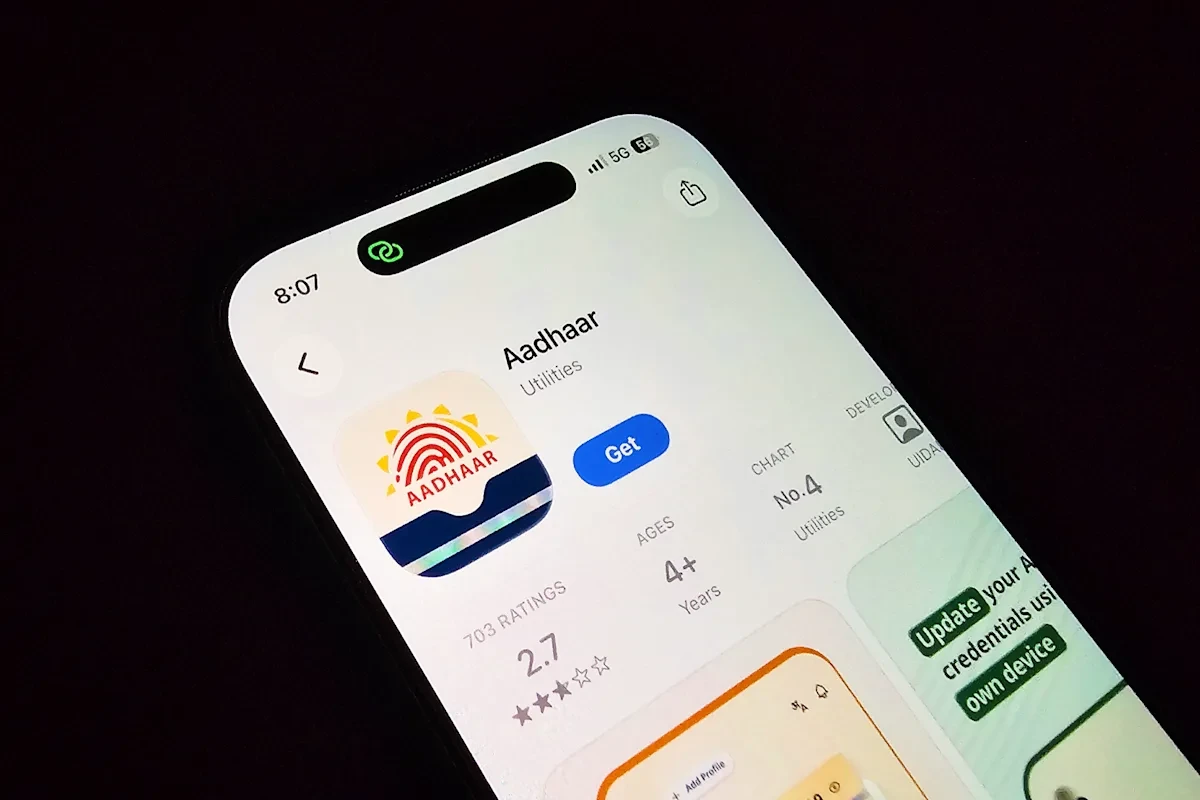
On January 28, 2026, UIDAI launched a completely redesigned Aadhaar mobile application, replacing the aging mAadhaar app. The new app represents a fundamental shift in how citizens interact with their Aadhaar data, introducing privacy-enhancing features that address long-standing criticisms about data exposure.
Key Features of the New App
- Offline Verification: The app can now verify your Aadhaar identity without connecting to the central UIDAI server. This is done through a locally stored, digitally signed XML file that can be shared with verifiers. This addresses the concern that every verification previously required transmitting biometric data to the central database.
- Selective Disclosure: You can now choose which fields to share during verification. For example, if a service only needs to confirm your age, you can share only your date of birth without revealing your full name, address, or photo. This is a significant privacy improvement over the previous all-or-nothing approach.
- QR Code Verification: The app generates dynamic QR codes for in-person verification, eliminating the need to hand over physical Aadhaar cards or share your number verbally.
- Biometric Lock/Unlock: You can lock your biometrics directly from the app, preventing any authentication using your fingerprints or iris. This is a critical security feature — if your biometric data is compromised, locking prevents unauthorized use.
- Update History: View a complete log of every authentication and update performed on your Aadhaar, helping you detect unauthorized access.
Google Wallet Integration: Zero Knowledge Proof
One of the most technically significant developments is the planned integration of Aadhaar with Google Wallet using Zero Knowledge Proof (ZKP) technology. This is expected to roll out in phases starting mid-2026.
What Is Zero Knowledge Proof?
Zero Knowledge Proof is a cryptographic method where one party (the prover) can prove to another party (the verifier) that a statement is true without revealing any information beyond the truth of that statement itself. In the context of Aadhaar and Google Wallet:
- A bar needs to verify you are above 18 years old. With ZKP, your phone can prove "this person is above 18" without revealing your actual date of birth, name, or any other personal information.
- A bank needs to verify you are an Indian resident. ZKP can confirm "this person holds a valid Aadhaar" without exposing the Aadhaar number itself.
This is a paradigm shift in identity verification. Currently, most Aadhaar verification requires sharing your full 12-digit number and often additional personal details. ZKP eliminates this data exposure entirely.
How It Will Work
| Current Process | With Google Wallet + ZKP |
|---|---|
| Share Aadhaar number + personal details | Prove specific claims without sharing any data |
| Verifier stores your Aadhaar data | Verifier receives only a yes/no confirmation |
| Risk of data breaches at every verifier | No personal data transmitted or stored |
| All-or-nothing data sharing | Selective attribute verification |
Biometric UPI Payments: Coming April 2026
The National Payments Corporation of India (NPCI) has confirmed that Aadhaar-linked biometric UPI payments will launch in April 2026. This will allow merchants to accept UPI payments authenticated by the customer's fingerprint or face scan through Aadhaar, eliminating the need for smartphones or UPI PINs entirely.
How Biometric UPI Will Work
- A merchant has a biometric device (fingerprint scanner or camera) connected to the payment system.
- You place your finger on the scanner or look at the camera.
- The system authenticates your identity against Aadhaar and links it to your bank account.
- The payment is processed — no phone, no PIN, no QR code needed.
Why This Matters for India
Consider the scale of the opportunity:
- 600+ million Indians still do not own smartphones. Biometric UPI gives them access to digital payments without needing a phone.
- Rural India, where smartphone penetration is lower and connectivity is inconsistent, can participate in the digital economy through fingerprint-based payments at local shops.
- Elderly citizens who struggle with UPI apps and QR codes can simply use their fingerprint — a far more intuitive interaction.
- Street vendors and small shopkeepers can accept digital payments with a simple, low-cost biometric device instead of a smartphone with a QR code.
Private Sector Authentication: January 2025 Amendment
In January 2025, the Indian government amended the Aadhaar Act to allow private sector entities to use Aadhaar-based authentication. Previously, Aadhaar authentication was restricted to government agencies and a few regulated sectors (banking, telecom). The amendment opens Aadhaar verification to a much wider range of businesses.
What Private Sector Can Now Do
| Sector | Use Case | Benefit |
|---|---|---|
| E-commerce | Verify customer identity for high-value orders | Reduce fraud and returns |
| Healthcare | Patient identity verification at hospitals | Prevent medical identity fraud |
| Insurance | Policyholder verification for claims | Faster claims processing |
| Gig Economy | Driver/delivery partner verification | Trust and safety for customers |
| EdTech | Student identity verification for online exams | Prevent proxy exam-taking |
| Real Estate | Tenant/buyer identity verification | Reduce property fraud |
Private companies must obtain a license from UIDAI, comply with data protection requirements under the Digital Personal Data Protection (DPDP) Act, and cannot store biometric data beyond the authentication transaction.
Face Authentication: The Fastest-Growing Method
Aadhaar face authentication has emerged as the fastest-growing verification method, with a 21.6% monthly growth rate and a single-day record of 1.5 crore authentications. This growth is driven by several factors:
- Convenience: No special hardware needed — a standard smartphone camera works.
- Hygiene: Post-COVID awareness makes contactless verification preferable to fingerprint scanning.
- Accuracy Improvements: UIDAI has upgraded its face matching algorithms, reducing false rejections from around 5% to under 1%.
- Elderly-Friendly: Many elderly citizens have worn fingerprints that cause authentication failures. Face authentication solves this problem.
PAN-Aadhaar Linking: What Happened After the Deadline
The deadline for linking PAN with Aadhaar was December 31, 2025. As of January 1, 2026, any PAN that is not linked to Aadhaar has become inoperative. This means:
- You cannot file income tax returns with an inoperative PAN.
- TDS (Tax Deducted at Source) will be deducted at a higher rate — typically double the standard rate.
- You cannot open new demat or trading accounts.
- Pending tax refunds will not be processed.
- Financial transactions above Rs 50,000 (like property registration or high-value purchases) cannot be completed with an inoperative PAN.
How to Check and Link PAN-Aadhaar
- Visit the Income Tax e-filing portal: incometax.gov.in
- Navigate to "Link Aadhaar" under Quick Links
- Enter your PAN and Aadhaar number
- If not linked, pay the late fee of Rs 1,000 and submit the linking request
- Verification typically takes 48-72 hours
DBT Savings: Rs 3.48 Lakh Crore and Counting
One of Aadhaar's most impactful applications has been in Direct Benefit Transfer (DBT), where government subsidies and welfare payments are transferred directly to citizens' bank accounts linked to their Aadhaar numbers. The cumulative savings from this system have reached Rs 3.48 lakh crore — money saved by eliminating ghost beneficiaries, duplicate accounts, and intermediary corruption.
To put this number in perspective: Rs 3.48 lakh crore is approximately equal to the entire annual budget of the Indian Railways, or roughly 6 times the annual revenue of TCS (India's largest IT company). This represents real money that was previously siphoned off by fraud and inefficiency in the pre-Aadhaar era.
Tamil Nadu: 97.73% Aadhaar Saturation
Tamil Nadu has achieved 97.73% Aadhaar saturation, among the highest of any Indian state. This near-universal coverage means Aadhaar-dependent services — from PDS ration distribution to scholarship disbursements to pension payments — reach almost every Tamil Nadu resident.
However, this high penetration has also brought controversy. The Madras High Court halted a DMK party membership drive that required Aadhaar details, raising concerns about political parties collecting biometric-linked identity data from citizens. The court's intervention highlighted the tension between Aadhaar's utility and its potential for misuse by non-government entities.
Global Export: 23 Countries and Counting
India's Digital Public Infrastructure (DPI) model — built on the Aadhaar-UPI-DigiLocker stack — is being exported globally. 23 countries have signed Memorandums of Understanding (MOUs) with India to adopt or adapt elements of this digital infrastructure:
| Region | Countries | Focus Area |
|---|---|---|
| Africa | Kenya, Nigeria, Ethiopia, Tanzania | Digital identity + mobile payments |
| Southeast Asia | Vietnam, Philippines, Indonesia | UPI-like payment systems |
| Middle East | UAE, Saudi Arabia | Digital identity verification |
| Caribbean/Pacific | Trinidad & Tobago, Papua New Guinea | Full DPI stack adoption |
India positions this as a success story of South-South technology cooperation, offering developing nations a proven, scalable alternative to proprietary Western systems.
Privacy Concerns: The Other Side of the Coin
Despite the benefits, Aadhaar's expansion raises serious privacy and civil liberties concerns that must be honestly addressed:
Key Concerns
- Data Breach Fears: A survey found that 87% of Indians fear data breaches involving their Aadhaar data. While UIDAI insists its central database has never been breached, data leaks at downstream entities (banks, telecom companies, state government portals) have exposed Aadhaar numbers and linked personal details.
- Exclusion: Elderly citizens, manual laborers with worn fingerprints, and people with disabilities sometimes face authentication failures that deny them access to essential services like ration, pensions, and healthcare.
- Surveillance Potential: With Aadhaar linked to bank accounts, phone numbers, PAN, voter ID, health records, and soon Google Wallet, the system creates an unprecedented profile of every citizen's financial, health, communication, and movement data. The potential for surveillance is a structural risk.
- Consent Challenges: Many citizens, particularly in rural areas, do not fully understand what they consent to when they share their Aadhaar for authentication. The selective disclosure features in the new app are a step forward, but digital literacy remains a barrier.
DPDP Act Compliance: Full by May 2027
The Digital Personal Data Protection (DPDP) Act, passed in 2023, provides a legal framework for data protection in India. Full compliance for Aadhaar-related data processing is expected by May 2027. Key provisions include:
- Purpose limitation: Data collected for one purpose cannot be used for another without consent.
- Data minimization: Only necessary data should be collected.
- Retention limits: Data must be deleted after the purpose is fulfilled.
- Grievance redressal: A Data Protection Board will handle complaints.
What You Should Do in 2026
- Download the new Aadhaar app and explore the selective disclosure and biometric lock features. These are powerful privacy tools that every citizen should use.
- Verify your PAN-Aadhaar link immediately if you have not already. An inoperative PAN can disrupt your financial life significantly.
- Lock your biometrics when not in active use. Unlock only when you need to authenticate, then lock again.
- Review your authentication history in the new app regularly to detect any unauthorized access.
- Prepare for biometric UPI launching in April 2026 — understand how it works and decide whether you want to enable it for your bank account.
Conclusion
Aadhaar in 2026 is a fundamentally different system from the one that launched in 2009. It has matured from a simple identity number into a comprehensive digital infrastructure that touches virtually every aspect of Indian life — from opening a bank account to receiving government subsidies to potentially making payments with your fingerprint. The new app's privacy features, Google Wallet integration with Zero Knowledge Proof, and biometric UPI payments represent genuine technological progress.
But this progress comes with real risks. The concentration of identity, financial, and biometric data in a single system creates vulnerabilities that no amount of encryption can fully eliminate. The DPDP Act provides a legal framework, but its effectiveness will depend on enforcement. For citizens, the most important action is to actively manage your Aadhaar — use biometric locks, review authentication logs, and exercise selective disclosure. Aadhaar is not optional in modern India. But how you manage your Aadhaar data is very much in your hands.




Comments (0)
Be the first to comment!