


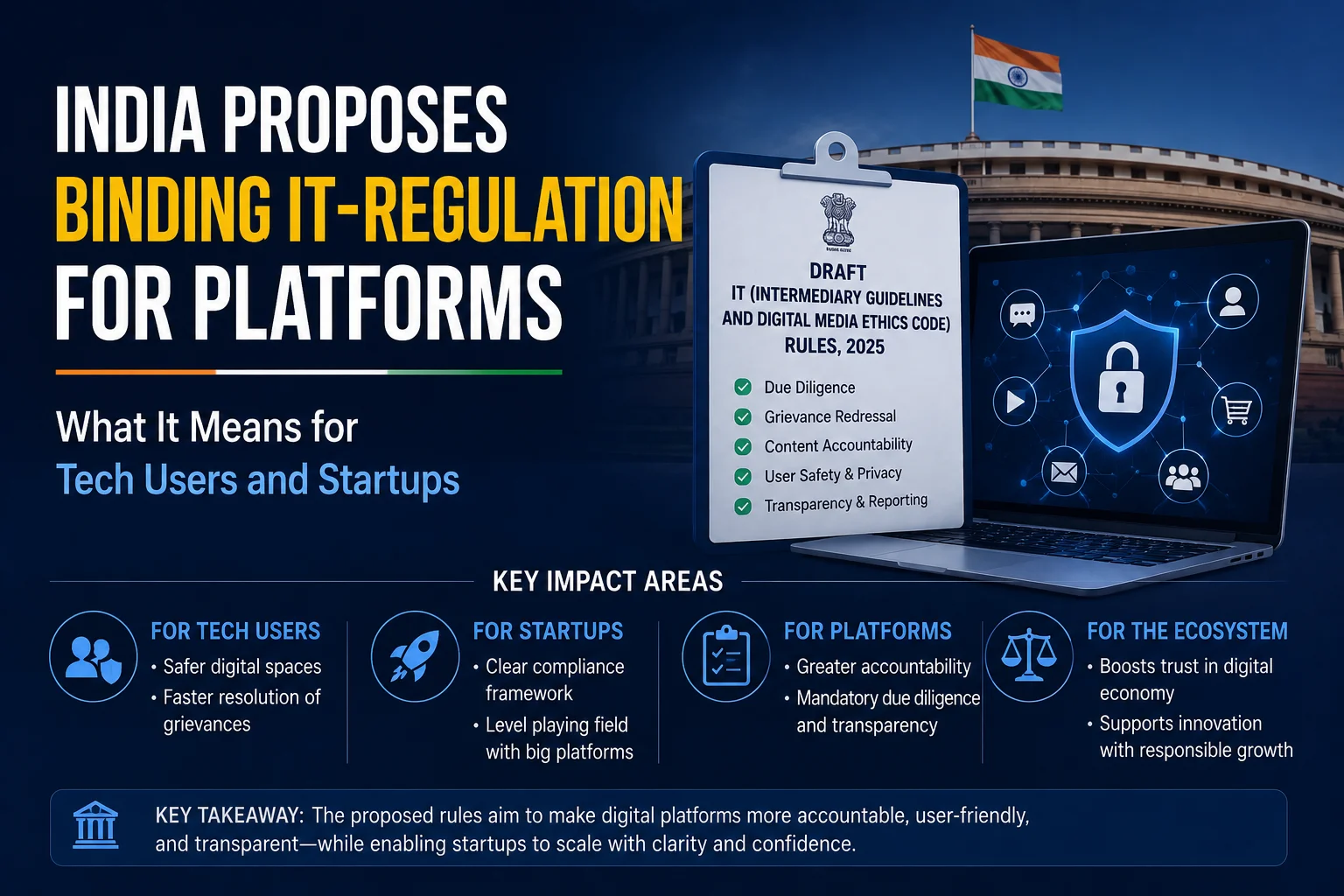
Why I’m writing this right now
It’s 9 am IST and my X feed is already buzzing with screenshots of the Reuters headline: “India proposes making government advisories legally binding on tech giants.” The post has already crossed 12 k likes, a flurry of replies from legal analysts, startup founders and the #TechPolicyIndia hashtag trending at #5 on X India. If you run a digital product, manage a tech team or even just use social media, you need to understand what this proposal could change for you.
The core of the proposal
- Advisories become law: Current IT‑Ministry advisories (think “remove illegal content within 36 hours”) are soft‑law. The draft amendment would turn them into legally binding orders for any platform that wants to retain safe‑harbour protection under Section 79 of the IT Act.
- Scope: All “large‑scale user‑generated content” (UGC) platforms – Meta, Google, X, TikTok, local Indian news apps, and even emerging Indian startups that cross a user‑base threshold (currently set at 5 million active users).
- Penalty: Failure to comply could lead to loss of safe‑harbour, exposing platforms to liability for user‑generated content, plus fines up to ₹5 crore per violation.
- Public feedback window: 15 days (ends 14 April 2026). Ministry has opened a portal for comments, but most tech‑law firms are already issuing position papers.
What sparked the move?
Two high‑profile incidents last year drove the government’s urgency:
- The viral spread of deep‑fake videos of politicians on X that were not taken down within the existing 36‑hour window.
- A court case where a victim of online harassment sued a platform for not acting on an IT‑Ministry advisory; the court ruled the advisory had no binding power.
Both highlighted a perceived gap between advisory intent and enforceability, prompting the Ministry to tighten the legal teeth.
Key reactions – the vocal crowd on X
- Startup founders: Worried about compliance costs. “We’re a 6‑million‑user fintech app. Turning every advisory into a legal order will force us to hire full‑time legal teams,” wrote a founder of a Bangalore‑based payments startup.
- Legal experts: Point out that Section 79 was designed to protect platforms that act in good faith. Making advisories binding could erode that shield, effectively turning platforms into “censors”.
- Big‑tech reps: Meta’s India head responded on X, “We are committed to complying with Indian law, but we urge the government to consider proportionality and due process.”
- Consumer groups: Celebrate the move as a step toward accountability, especially for hate speech and misinformation.
Potential impact on different stakeholders
| Stakeholder | Opportunity / Benefit | Risk / Action Needed |
|---|---|---|
| Big Tech (Meta, Google, X) | Clear legal framework, predictable compliance requirements. | Invest in compliance infrastructure, legal teams, and faster takedown pipelines. |
Indian Startups (
Frequently asked questions1
|


Comments (0)
Be the first to comment!