


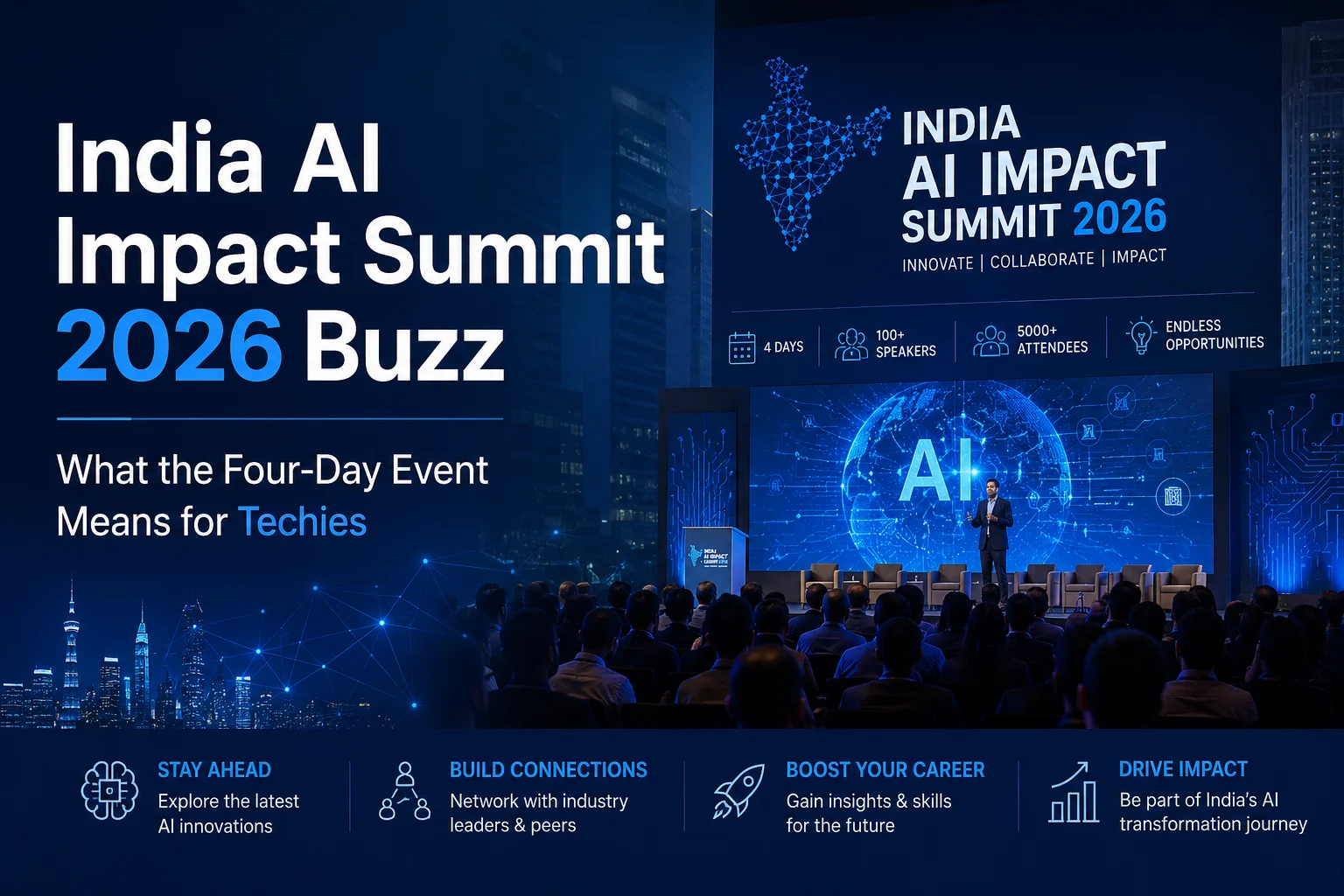
Why I’m writing this right now
It’s 7 am IST and my X timeline is already flooded with screenshots of Sundar Pichai, Sam Altman and Prime Minister Narendra Modi sharing selfies from the summit. The hashtag #IndiaAI has crossed 250 k mentions in the last 12 hours and the trending chart on Google Trends shows a 64 % spike in “AI summit India” searches. If you’re a coder, a startup founder or just a tech‑curious Tamil reader, you need the low‑down before you start tweeting your own take.
The headline numbers
- Visitors: Organisers claimed 250 000 physical and virtual attendees over four days.
- Funding: The government announced a $1.1 bn state‑backed venture fund for AI and advanced‑manufacturing startups.
- Corporate commitments: OpenAI, Anthropic, Nvidia, Microsoft, Google, Cloudflare and Reliance pledged new R&D centres, data‑center capacity and talent‑upskilling programmes.
- Diplomacy: 88 countries signed the “New Delhi AI Declaration” on responsible AI development.
Who showed up?
Besides the usual tech giants, a few surprising faces made the stage:
- OpenAI: Sam Altman announced two new Indian offices (Bengaluru and Mumbai) and reiterated that India now has 100 million weekly active ChatGPT users, second only to the U.S.
- Anthropic: Dario Amodei unveiled an Indian‑focused research hub in Bengaluru, promising a “Claude‑India” model trained on local data sets.
- Nvidia: Launched the “DGX‑India‑Series” – a line of on‑premise AI super‑computers priced for Indian enterprises.
- Microsoft: Unveiled a joint Azure‑AI cloud partnership with Tata Digital, promising 100 MW of compute by 2028.
- Reliance‑Jio: Announced a 5‑year plan to roll out AI‑enabled 5G services in tier‑2 cities.
Deal flow – where the money went
Three big rounds stole the headlines:
- Blackstone & Neysa: Blackstone bought a majority stake in AI‑startup Neysa in a $600 million equity raise, with a follow‑on $600 million debt tranche to fund the deployment of 20 000 GPUs across data‑centers.
- C2i Series A: Bengaluru‑based power‑solution startup C2i raised $15 million (₹1.2 bn) from Peak XV, Yali DeepTech and TDK Ventures to build AI‑data‑center cooling modules.
- Cartesia x Blue Machines: Voice‑AI startup Cartesia partnered with Indian firm Blue Machines to create privacy‑first multilingual voice assistants, targeting banking and telecom sectors.
Policy & governance – the diplomatic side
The “New Delhi AI Declaration” was the most talked‑about diplomatic output. It commits signatories to:
- Develop AI aligned with Sustainable Development Goals.
- Share model weights for non‑military use.
- Establish transparent audit mechanisms for high‑risk AI systems.
Indian officials framed it as a “soft‑power” move to shape global AI norms, but critics on X argue the declaration lacks enforcement teeth.
What does this mean for the Indian tech ecosystem?
1. Startup fundraising becomes turbo‑charged
Venture capitalists are already lining up to tap the $1.1 bn fund. According to PitchBook data released during the summit, AI‑focused Indian startups saw a 23 % increase in median valuation YoY, with average round size jumping from $3 million to $7 million.
2. Talent pipelines will shift
Both OpenAI and Anthropic announced scholarship programmes for 5 000 Indian students, covering tuition, a stipend and guaranteed internships. This is likely to accelerate the migration of talent from traditional IT services to AI‑first product roles.
3. Hardware and data‑center landscape will change
The Tata‑OpenAI 100 MW compute partnership, combined with Nvidia’s DGX‑India‑Series, promises the country’s first truly sovereign AI compute stack. Expect a wave of latency‑critical services – real‑time translation, autonomous vehicle pilots, and edge‑AI for manufacturing – to sprout over the next 18 months.
4. Regulatory watchfulness is rising
While the summit was celebratory, the Ministry of Electronics & Information Technology (MeitY) hinted at new “AI‑risk” guidelines that could require explicit user consent for generative‑AI outputs. Early‑stage founders should start building compliance layers now.
Quick takeaways for different audiences
| Audience | Opportunity | Action / Risk |
|---|---|---|
| Founders | Access to $1.1 bn fund and corporate pilots. | Prepare a detailed AI‑use‑case deck now; watch for upcoming “AI‑risk” compliance. |
| Developers | New on‑premise DGX hardware and Azure‑AI credits. | Upskill on model optimisation for low‑latency edge workloads. |
| Investors | Deal flow is accelerating; valuations trending up. | Do deeper due‑diligence on data‑sovereignty clauses. |
| Policymakers | Influence global AI norms via the New Delhi Declaration. | Balance innovation incentives with safety safeguards. |
What to watch in the next 6‑12 months
- Localized large‑language models: Anthropic’s “Claude‑India” and Google’s “Gemini‑Regional” are slated for beta in Q4 2026.
- AI‑regulation rollout: MeitY is expected to publish draft “AI‑risk” guidelines by end‑October 2026.
- Data‑center upgrades: Tata‑OpenAI and Nvidia projects aim to deliver 200 MW of AI‑specific compute by 2028.
- Talent pipelines: Scholarship cohorts start in Jan 2027; expect a wave of AI‑first hires in Bengaluru and Hyderabad.
FAQs
- Q: Is the $1.1 bn AI fund already open for applications?
A: Yes. Applications opened on the last day of the summit and will be evaluated on a rolling basis. - Q: Will OpenAI’s new Indian offices focus on research or product localisation?
A: Both. The Bengaluru office will host a research team for multilingual models, while the Mumbai office will handle localisation for APIs and Enterprise services. - Q: How will the New Delhi AI Declaration affect Indian startups?
A: Signatories agree to share non‑sensitive model weights, which could give Indian startups easier access to baseline models. However, compliance reporting may add overhead. - Q: Are there any immediate regulatory risks for companies using generative AI?
A: MeitY’s draft “AI‑risk” rules may require clear labeling of AI‑generated content. Early adopters are advised to implement labeling now to stay ahead. - Q: Which city is expected to become the new AI hub in India?
A: Bengaluru remains the clear leader, but Hyderabad is catching up fast due to the Microsoft‑Azure partnership and a growing fintech ecosystem.
Bottom line: the India AI Impact Summit isn’t just a media spectacle; it’s a catalyst that could reshape funding, talent, hardware and policy for the whole Indian tech ecosystem. Stay tuned, start building compliance into your product road‑maps, and don’t miss the next wave of AI‑first startups that will likely dominate the market by 2028.



Comments (0)
Be the first to comment!