


Key Takeaways
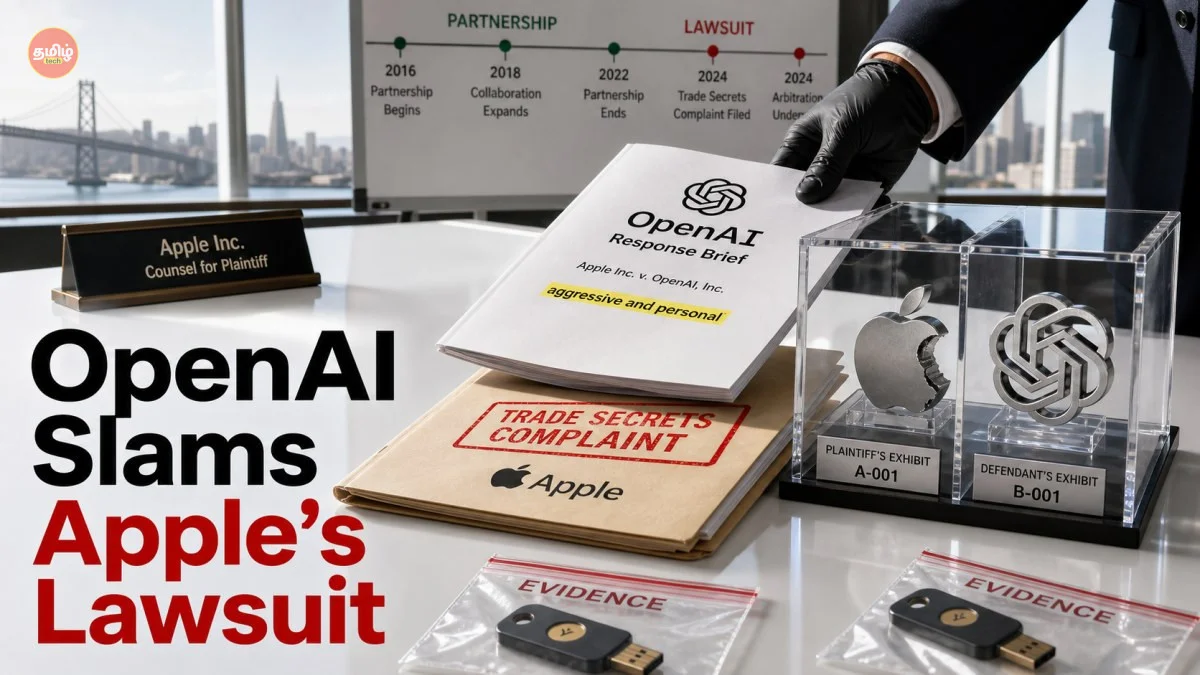
- OpenAI filed a formal 120-page response in federal court on August 4, 2026, dismissing Apple's trade secret claims as baseless.
- Apple's lawsuit alleges that OpenAI systematically poached over 40 high-level engineers from its 'Apple Intelligence' team to build GPT-5.
- OpenAI claims Apple is using the legal system to intimidate former employees, describing the lawsuit as "oddly personal" toward leadership.
- The legal battle could potentially delay the rollout of advanced Siri-OpenAI integrations for iPhone users in India and globally.
- TamilTech’s Verdict: This isn't just about IP; it's a desperate move by Apple to slow down OpenAI’s dominance in the AI hardware space.
The Tech Divorce of the Century
So, here’s the thing—remember when everyone was hyped about Apple and OpenAI joining hands for 'Apple Intelligence' back in the day? Well, that honeymoon period is officially over. We are now in August 2026, and the relationship has turned into a messy, high-stakes legal drama. OpenAI has just responded to Apple’s massive trade secrets lawsuit, and they didn't hold back. They’ve called Apple’s legal tactics "aggressive and oddly personal," which is tech-speak for "you're being a bully."
It’s wild because just a year or two ago, these two were the ultimate power couple. But as OpenAI started moving closer to launching its own hardware—the rumored 'AI Phone'—the friction became a fire. Apple isn't just suing for a few leaked documents; they are claiming that OpenAI has built its latest models using 'stolen DNA' from Apple’s proprietary neural engine research. OpenAI, on the other hand, says Apple is just mad because their top talent prefers working in San Francisco rather than Cupertino.
What exactly is Apple complaining about?
Apple’s lawsuit, which was filed earlier this year, claims that OpenAI engaged in a "coordinated campaign" to lure away key architects of the Apple Neural Engine. According to the court documents we’ve been tracking, Apple alleges that these engineers didn't just bring their brains; they brought encrypted drives filled with trade secrets about how Apple handles on-device AI processing. Apple is particularly protective of its 'Privacy-First AI' architecture, which they claim OpenAI is now trying to copy to make their cloud-based models more efficient on local hardware.
But OpenAI’s response, filed yesterday, tells a completely different story. They argue that Apple is trying to revive the 'non-compete' culture that has been legally dying out. OpenAI points out that the lawsuit specifically targets individual interactions between Sam Altman and former Apple VPs, making it "oddly personal." They claim Apple is naming names and bringing up private conversations that have nothing to do with code or patents, simply to create a narrative of a 'betrayal.' It’s a classic corporate move: if you can’t out-innovate them, sue them in a way that makes them look like the bad guy.
The "Oddly Personal" Angle: Why now?
Why did OpenAI use the phrase "oddly personal"? In the tech industry, lawsuits are usually about patents, licensing fees, or breach of contract. But Apple’s filing apparently includes details about private dinners, text messages, and even personal grievances against former employees who left for OpenAI. OpenAI’s legal team argues that this is a scare tactic. By making the lawsuit personal, Apple is sending a message to every other engineer currently working at Apple: "If you leave us for the competition, we won't just sue the company—we will come for you personally."
From what we see, this is a massive shift in Apple’s strategy. Historically, Apple has been the one being sued (think Epic Games or the DOJ). For them to go on the offensive like this suggests they feel genuinely threatened. With OpenAI’s GPT-5 now being integrated into rival devices and even standalone AI gadgets that compete with the iPhone, Apple’s 'Walled Garden' is under siege. They are using their massive legal budget to throw sand in the gears of OpenAI’s progress.
How this affects us in India
You might be wondering, "Why should I care about two US giants fighting in court?" Well, it hits closer to home than you think. First, the 'Apple Intelligence' features we’ve been waiting for in India might get caught in the crossfire. If the court grants an injunction, certain features that rely on OpenAI’s technology within iOS might be disabled or delayed. We’ve seen this happen before with patent disputes—remember when the Apple Watch Ultra was briefly banned in the US? This could be much bigger.
Second, India is a massive hub for AI talent. Many of the engineers mentioned in these lawsuits are of Indian origin or have teams operating out of India. This legal battle creates a 'chilling effect' on the job market. If high-level engineers are afraid to switch companies because they might get sued personally, it slows down innovation across the board. For the thousands of AI startups in Bengaluru and Hyderabad, this sets a dangerous precedent for how 'Trade Secrets' are defined in the age of Generative AI.
The Comparison: Apple vs. The World
If we compare this to the Google vs. Oracle fight from years ago, this is much messier. That was about APIs and code. This is about people and "intent." Apple is basically saying, "You didn't just hire our people; you stole our soul." OpenAI’s defense is simple: "Your people wanted to leave because your AI progress was too slow." It’s a battle of cultures. Apple is secretive, slow, and polished. OpenAI is fast, open (at least in name), and aggressive. When these two cultures clash, the lawyers are the only ones who truly win.
Pros of OpenAI’s stance: They are fighting for employee mobility and the right to hire the best talent. Cons: If they actually did use Apple’s internal hardware secrets to optimize GPT-5, that’s a major ethical and legal breach. Pros of Apple’s stance: Protecting years of R&D investment. Cons: They look like a jealous ex-partner trying to control who their former employees talk to.
TamilTech’s Honest Take: Who is right?
Look, we’ve been following both companies for a long time. In our opinion, Apple is definitely being a bit too aggressive here. The tech industry has always been built on talent moving from one company to another—that's how Silicon Valley works! By making this "personal," Apple is showing a bit of panic. They know that in the world of Generative AI, they started late, and OpenAI is currently the king of the hill.
However, OpenAI isn't exactly a saint either. They have a history of 'moving fast and breaking things,' including copyright laws and data privacy. If Apple has hard evidence of stolen files, OpenAI is in deep trouble. But if this is just about "he said, she said" and engineers switching jobs, then Apple needs to take the L and focus on making Siri actually useful for once. What do you think? Is Apple being a bully, or is OpenAI playing dirty? Let us know in the comments!





Comments (0)
Be the first to comment!