


Key Takeaways
- Iran-linked hackers shut down a British power plant for four days, marking the first confirmed Tehran-linked cyberattack to disrupt UK critical infrastructure
- India's power sector is rapidly digitizing with smart meters and IoT devices, making it increasingly vulnerable to state-sponsored cyber attacks
- The UK incident shows how cyber attacks can cause real-world physical disruption, not just data breaches
- India's power grid handles 1.4 billion people's electricity needs - a successful attack could be catastrophic
- India needs to strengthen its cybersecurity framework for critical infrastructure, similar to how UPI was secured for digital payments
What's the News
Iran-linked hackers have successfully shut down a British power plant for four days, marking the first confirmed Tehran-linked cyberattack to disrupt UK critical infrastructure. This isn't just another data breach or ransomware attack - it's a physical disruption that affected real people's lives. The incident, which occurred last month, demonstrates how state-sponsored cyber warfare has evolved from targeting governments and corporations to directly attacking essential services that keep societies functioning.
The attackers gained access to the plant's control systems and deliberately shut down operations, causing power outages in the surrounding area. While the UK government hasn't officially confirmed the perpetrators, cybersecurity experts have traced the attack back to Iranian-linked groups with a history of targeting critical infrastructure. This represents a dangerous escalation in cyber warfare tactics, moving from digital disruption to physical infrastructure attacks.
Details of the Attack
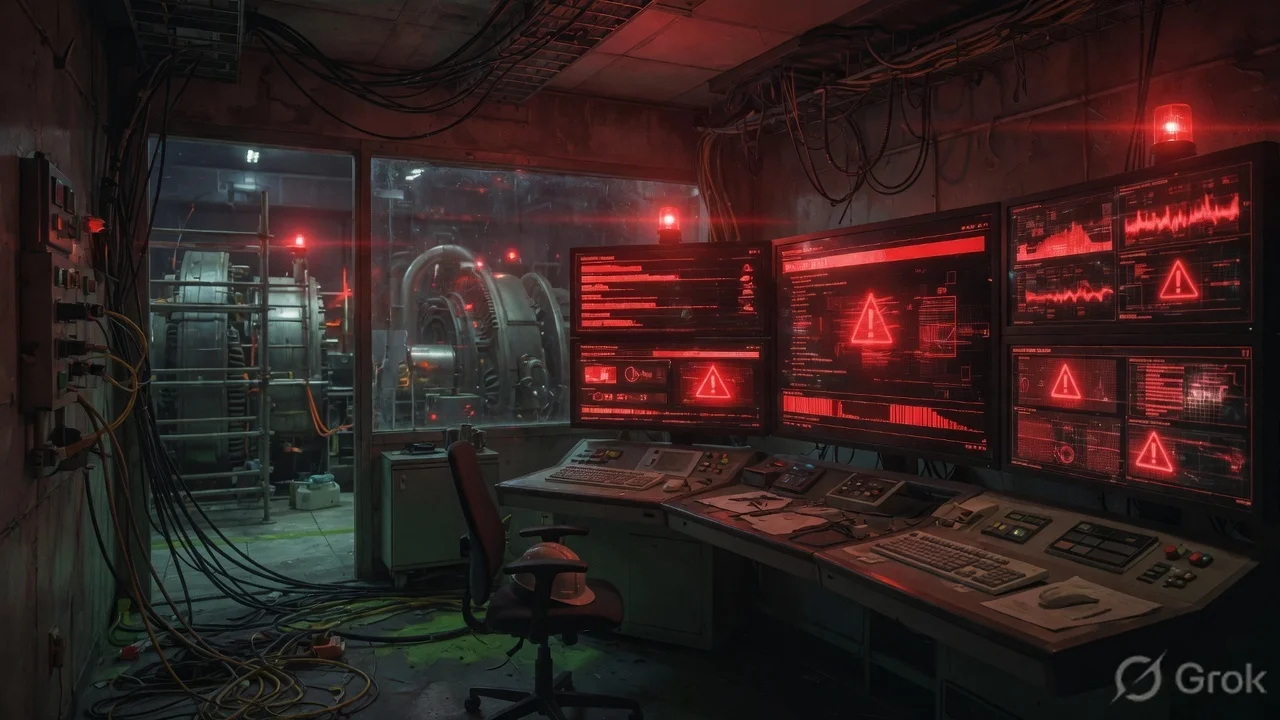
The cyberattack targeted the plant's industrial control systems (ICS), which are the digital brains that manage physical operations like power generation and distribution. The attackers used sophisticated malware specifically designed to compromise these systems, bypassing multiple layers of security. Once inside, they systematically disabled safety protocols and operational controls, forcing a complete shutdown of the facility.
What makes this attack particularly concerning is its precision and persistence. The hackers didn't just cause random disruptions - they methodically took control of specific systems to maximize impact while minimizing detection. The four-day duration suggests they weren't just testing their capabilities but deliberately demonstrating their ability to sustain prolonged attacks on critical infrastructure. Security experts believe the attackers likely had insider knowledge or extensive reconnaissance before launching the operation.
India Impact: Why This Matters for Bharat
India's power sector is undergoing rapid digital transformation. With initiatives like the Smart Grid Mission and massive rollout of smart meters across states, our critical infrastructure is becoming increasingly connected and vulnerable. The UK incident should send shivers down the spine of every policymaker and industry leader in India's power sector.
Consider this: India's power grid serves over 1.4 billion people, with more than 200 million households now having smart meters. The Smart Grid Mission aims to deploy 140 million smart meters by 2026, creating one of the world's largest IoT deployments in the power sector. Each connected device represents a potential entry point for cyber attackers. The UK attack shows how these vulnerabilities can be exploited to cause real physical disruption.
Beyond the power sector, India's digital infrastructure expansion makes us vulnerable in other ways. The same digital payment systems that revolutionized UPI-based transactions could be targeted. The 5G rollout, while essential for India's digital future, creates new attack surfaces. Even the BharatNet project, connecting 250,000 gram panchayats, could be compromised if not properly secured.
Use Cases: What India Can Learn and Implement
The UK incident provides valuable lessons for India's cybersecurity strategy. First, we need to adopt a zero-trust architecture for critical infrastructure - assuming no system or user is trustworthy by default. This means implementing strict access controls, continuous monitoring, and immediate isolation of compromised systems.
Second, India should establish a dedicated cybersecurity framework for critical infrastructure, similar to how the RBI created specific guidelines for digital payments. This framework should include mandatory security audits, regular penetration testing, and incident response protocols specifically designed for power sector attacks.
Third, we need to invest in indigenous cybersecurity solutions. Just as India developed its own UPI infrastructure to avoid foreign dependencies, we should build domestic capabilities for securing critical infrastructure. This includes developing our own security monitoring tools, threat intelligence platforms, and incident response teams.
Fourth, public-private partnerships are crucial. India's power sector is dominated by state-owned utilities like NTPC, Power Grid Corporation, and various state electricity boards. These entities need to collaborate closely with private cybersecurity firms and academic institutions to share threat intelligence and develop coordinated defense strategies.
Honest Take: Are We Ready for This Fight?
Let's be honest - India is not adequately prepared for state-sponsored cyber attacks on critical infrastructure. While we've made impressive progress in digital payments and e-governance, our approach to critical infrastructure security remains fragmented and reactive.
The UK attack reveals a fundamental weakness in our cybersecurity posture: we're still thinking about cyber threats in terms of data breaches and financial losses, not physical infrastructure disruption. We need to shift our mindset to recognize that a cyber attack on a power plant is equivalent to a physical attack on national security.
The good news is that India has demonstrated its ability to secure large-scale digital systems when we prioritize the issue. The success of UPI, with over 11 billion monthly transactions, shows what's possible with focused effort and proper investment. We need similar urgency and commitment for critical infrastructure security.
This isn't about fear-mongering - it's about realistic assessment and proactive preparation. The UK incident isn't a question of if, but when similar attacks will target India's critical infrastructure. The question is whether we'll be prepared when it happens.
Frequently Asked Questions
Q: How vulnerable is India's power sector to cyberattacks compared to other countries?
A: India's power sector is particularly vulnerable due to rapid digitization without corresponding security investments. While developed countries have mature cybersecurity frameworks, India is playing catch-up. The combination of legacy systems, new IoT deployments, and limited skilled cybersecurity professionals creates a perfect storm of vulnerabilities.
Q: What specific measures should India take to prevent similar attacks?
A: India should implement a multi-layered approach including mandatory security standards for all critical infrastructure, regular penetration testing by certified agencies, establishment of a national critical infrastructure protection center, and creation of specialized cyber response teams for the power sector.
Q: Has India faced similar cyber threats before?
A: Yes, India has faced numerous cyber attacks on critical infrastructure, including attacks on power grids in 2012 and 2016, attacks on nuclear facilities, and recent ransomware attacks on healthcare systems. However, these haven't reached the sophistication level of the UK attack.
Q: How does this compare to other countries' experiences with critical infrastructure attacks?
A: The UK attack is part of a broader pattern of state-sponsored cyber attacks on critical infrastructure globally. Similar attacks have been reported in the US, Israel, and other countries. What makes the UK case significant is the confirmation of state involvement and the physical disruption caused.
The Bottom Line
The Iran-linked cyberattack on the UK power plant isn't just another headline - it's a wake-up call for India. As we accelerate our digital transformation across all sectors, we must prioritize cybersecurity for critical infrastructure. The cost of prevention is always lower than the cost of recovery from a major cyber attack on essential services.
India has the talent, technology, and determination to secure its critical infrastructure. What we need is the political will and strategic focus to make this happen. The UK incident shows us what's possible when adversaries target our essential services. It's time we took this threat seriously and acted accordingly.





Comments (0)
Be the first to comment!