

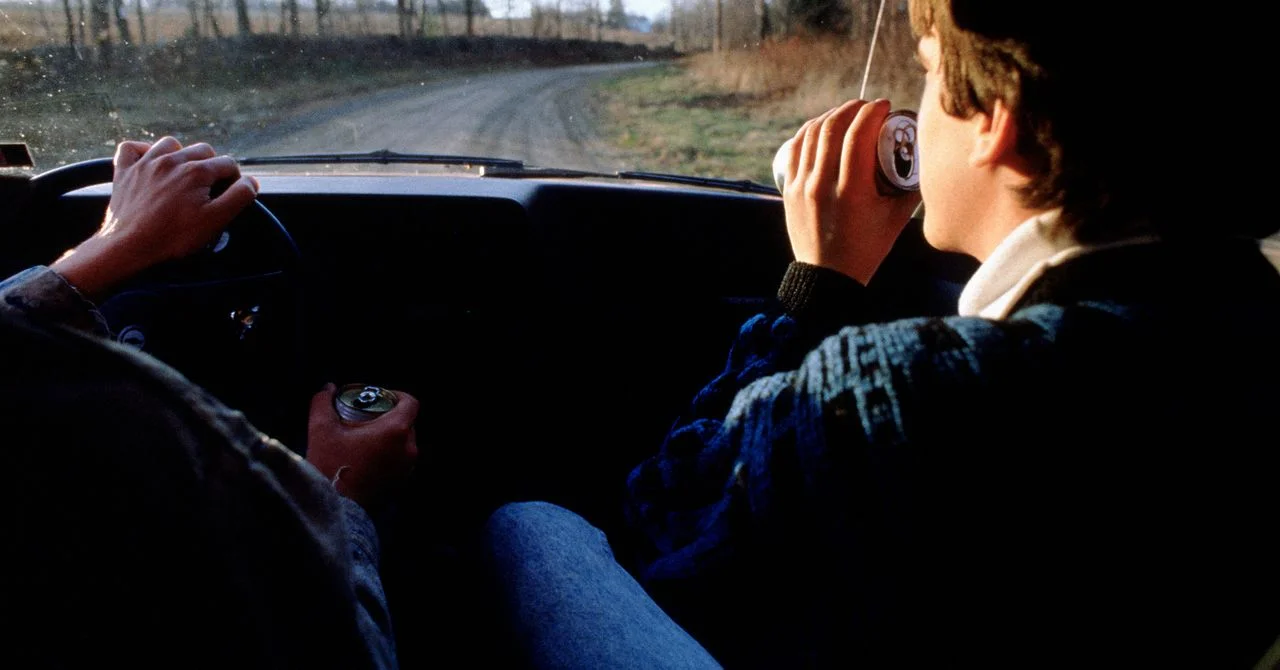
Imagine being stranded because a hacker attacked your car's breathalyzer
Okay this story had me genuinely laughing and cringing at the same time. Picture this: You need to get to work. You haven't had a drop to drink. You sit in your car, do the court-mandated breathalyzer test, blow clean — and your car still won't start. Why? Because the company that makes your breathalyzer got hacked, their servers went down, and your device can't phone home for its routine calibration check.
This actually happened. And 150,000 people were affected.
What actually happened with Intoxalock?
The company involved is Intoxalock, an automotive breathalyzer maker based in the US. They make ignition interlock devices — basically breathalyzers that are installed in the cars of people convicted of drunk driving offenses. Courts mandate these devices as a condition of keeping a driving license. You have to blow into the device before the car starts, and it checks your blood alcohol level.
The breathalyzer devices apparently need periodic calibrations that require connecting to Intoxalock's servers. When those servers went offline due to the cyberattack, devices that were due for calibration refused to work — which meant cars wouldn't start. Drivers were completely stranded.
One Reddit user wrote: "Our vehicles are giant paperweights right now through no fault of ours. I'm being held accountable at work and feel completely helpless."
This isn't just an inconvenience — it's a systemic failure
Let's think about what's really happening here. These are people who have court-mandated devices. They have no choice about using them. They're already in a difficult situation legally, and now a cyberattack has made them look like they're violating their parole conditions when they're doing nothing wrong.
The device worked as designed — it detected no alcohol. But it still prevented driving because of a server dependency. That's a critical design flaw. When the entire functionality of a safety-critical device depends on a cloud connection to a single company's servers, you've created a single point of failure that affects 150,000 people's ability to live their lives.
This is the internet of things (IoT) security problem in its most concrete, human form. It's not abstract. It's someone missing work and potentially violating court orders through zero fault of their own.
The broader security nightmare this week
The Intoxalock attack was just one part of a week full of major security incidents, according to Wired's weekly roundup. US law enforcement took down four major botnets — Aisuru, Kimwolf, JackSkid, and Mossad — that had infected more than 3 million devices worldwide, including home network devices, and were used for record-breaking cyberattacks.
Russian hackers have also been using a new tool called DarkSword that has made hundreds of millions of iPhones vulnerable to data theft. That's not a typo — hundreds of millions of iPhones. If you haven't updated your iOS recently, now is the time.
Oh, and Meta just announced it will remove end-to-end encryption from Instagram Direct Messages starting May 8, 2026. They had long promised E2E encryption as a default for Instagram chat. Security experts are calling this a dangerous precedent — a company publicly promising privacy protection and then quietly removing it.
What this means for Indian tech users
Ignition interlock devices aren't common in India yet — drunk driving enforcement here still relies primarily on breathalyzer checks at police nakabandis rather than mandatory car-installed devices. So you won't be stuck in your car because of this specific attack.
But the bigger lesson is directly relevant. India is rapidly adopting connected devices of all kinds — smart meters from BESCOM and MSEDCL, connected vehicles from Ola Electric and Tata Motors, smart home devices, factory IoT equipment. Every single one of these has a cloud dependency. Every single one could potentially leave you stranded or helpless if the company's servers go down — whether due to a cyberattack, a server failure, or just the company shutting down.
Think about Ola Electric's app-dependent scooters. If Ola's servers went down for 24 hours due to a cyberattack, how many features would stop working? Or imagine IRCTC's booking system going down mid-booking season — which actually happens occasionally, just from load, not attacks. Now imagine that with malicious intent.
The DarkSword iPhone vulnerability is also directly relevant for the millions of Indian iPhone users. Update your iOS immediately if you haven't already.
My honest take — we are building fragile systems
The Intoxalock incident is a perfect example of what happens when we design connected systems with convenience in mind but not resilience. The breathalyzer could absolutely have a local calibration check that works offline with a grace period for server sync. Instead, someone decided a live server connection was required — and 150,000 people paid the price for that design decision.
This is honestly a ridiculous situation when you think about it. A safety-critical, court-mandated device with zero offline fallback. If your car's airbag depended on a server connection to deploy, we'd call that insane. This isn't much different.
India is at a crossroads with connected infrastructure. We're deploying smart meters, smart grids, app-controlled vehicles, and IoT-dependent systems at massive scale. If we don't bake in resilience and offline fallback from the beginning, we're going to have our own version of this — and at Indian scale, that means millions of people affected, not 150,000.
The UPI payment system actually handles this reasonably well — there are offline fallback modes and the system is designed with redundancy. That's the model India should follow for every critical infrastructure system we build. Not the "hope the servers stay up" model that Intoxalock apparently used.
What happens next
Intoxalock will likely restore services and then face serious questions — possibly legal ones — from the 150,000 affected drivers. Some of those drivers may have violated court conditions due to the outage, through zero fault of their own. That's a mess of liability.
More importantly, regulators who mandate these devices need to start requiring offline fallback capabilities. A court order that depends on a private company's server uptime is a deeply flawed system. This incident should force that conversation.
For everyone else: update your devices, especially iPhones. Enable two-factor authentication everywhere. And think twice before buying any 'smart' device where the basic functionality depends entirely on the company staying solvent and their servers staying online.
Frequently asked questions
5
What is an ignition interlock device?
An ignition interlock device is a court-mandated breathalyzer installed in a car for people convicted of drunk driving. The driver must blow into it before the car starts, and it checks blood alcohol levels. If they've been drinking, the car won't start.
What happened in the Intoxalock cyberattack?
Intoxalock, which makes ignition interlock breathalyzers used by 150,000 drivers in the US, was hit by a cyberattack that took down its servers. The breathalyzers require periodic calibration checks that need a server connection — when servers went offline, the devices stopped working, stranding drivers.
What is DarkSword and should iPhone users worry?
DarkSword is a new tool Russian hackers used to steal data from iPhones. It reportedly makes hundreds of millions of iPhones vulnerable. iPhone users should update to the latest iOS version immediately to mitigate this risk.
Is Meta removing Instagram encryption?
Yes — Meta announced it will eliminate end-to-end encryption protections for Instagram Direct Messages starting May 8, 2026. Security experts are calling this a dangerous precedent since Meta had long promised this as a default privacy feature.
Does the Intoxalock hack affect India?
Not directly — ignition interlock devices aren't commonly used in India. But the lesson is highly relevant: India's growing connected infrastructure (smart meters, EV apps, IoT devices) has similar cloud dependencies that could leave people helpless in a cyberattack or server outage.
Get tomorrow’s tech news on WhatsApp
One short update a day, free. Follow the TamilTech channel.
What do you think?

Keerthika is an editor at TamilTech, the Tamil and English technology publication founded by Praveen Kumar S. She covers AI, smartphones, gadgets, EVs, startups and cybersecurity i...
More from KeerthikaAsk TamilTech on WhatsApp
Tech doubt? Ask in Tamil or English — our WhatsApp assistant answers from TamilTech articles in seconds.
Related stories
 1d
A Critical Bug Affecting 70% of Websites Has Engineers Scrambling – What You Need to Know
1d
A Critical Bug Affecting 70% of Websites Has Engineers Scrambling – What You Need to Know
 2d
SBI Finds 3,897 Customer Records on Dark Web: What It Means for Your Account
2d
SBI Finds 3,897 Customer Records on Dark Web: What It Means for Your Account
 1w
AI-Powered Computer Worms: Why Your Smart Devices Are Now a Bigger Target
1w
AI-Powered Computer Worms: Why Your Smart Devices Are Now a Bigger Target
 2w
South Korea Orders Probe Into Bank Data Leaks: Why This Should Worry Every UPI User Too
Next story
A Critical Bug Affecting 70% of Websites Has Engineers Scrambling – What You Need to Know
2w
South Korea Orders Probe Into Bank Data Leaks: Why This Should Worry Every UPI User Too
Next story
A Critical Bug Affecting 70% of Websites Has Engineers Scrambling – What You Need to Know

TamilTech
Install app for faster access
Only the big updates. No spam, switch off any time.
Comments (0)
Be the first to comment!