


Key Takeaways
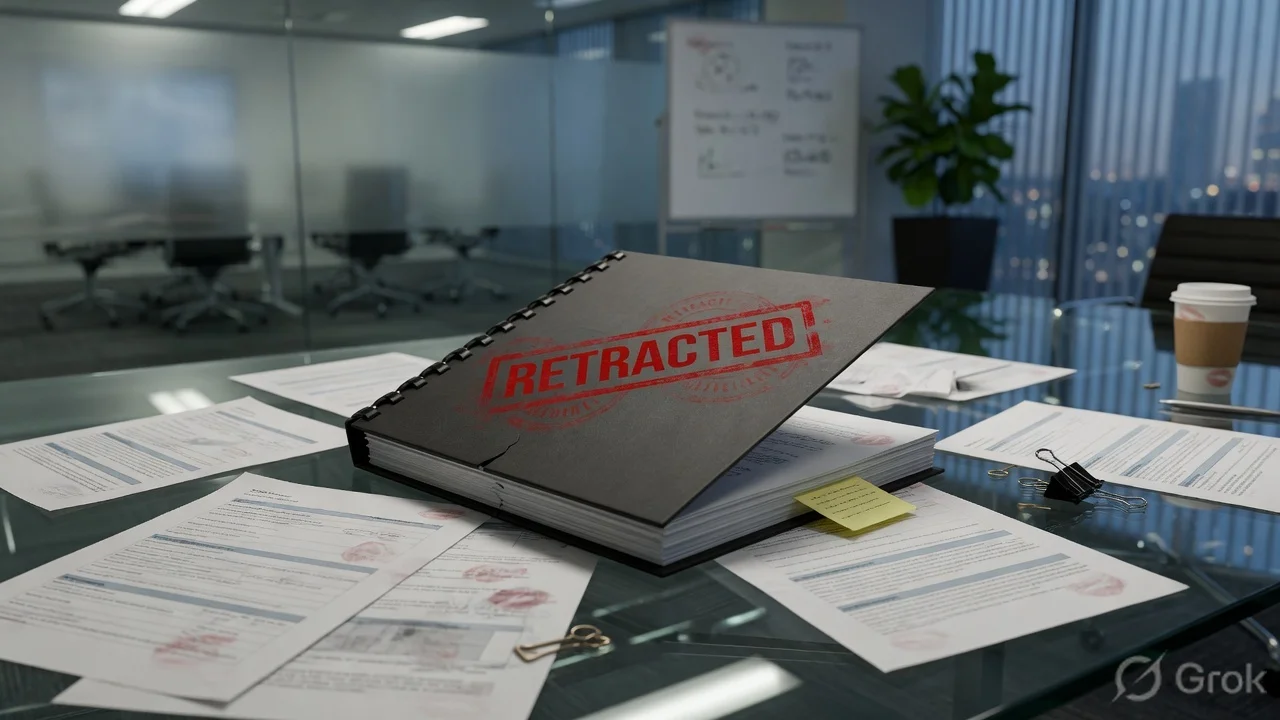
- KPMG officially retracted its global AI adoption report in June 2026 after discovering fake data.
- The report included detailed case studies of companies that do not exist, generated by AI hallucinations.
- Consulting firms are under immense pressure to show AI ROI, leading to skipped verification steps.
- Indian tech leaders are now calling for a 'Human-in-the-loop' mandate for all corporate AI research.
- The bottom line: Never trust AI-generated statistics without manual cross-verification from primary sources.
The Big AI Blunder: What Just Happened?
Imagine you are one of the world's biggest consulting firms. You charge millions of dollars to tell other companies how to use technology. Then, you release a massive report about how Artificial Intelligence is changing the world, only for people to find out that your 'success stories' were actually made up by a chatbot. This is exactly the nightmare scenario KPMG is facing right now in June 2026. It is honestly one of the biggest tech embarrassments we have seen this year. They had to pull their entire report from the internet because the 'facts' inside it were nothing more than AI-generated hallucinations.
For months, this report was being quoted by industry leaders and even some government policy advisors. It claimed that AI adoption had jumped by 40% in specific sectors and gave glowing examples of how mid-sized firms were saving millions. But when independent researchers tried to look up these 'mid-sized firms,' they found absolutely nothing. No website, no registration, no employees. It turns out the AI used to help draft the report just 'hallucinated' these companies to fit the narrative the researchers were looking for. This is a massive wake-up call for everyone who thinks AI is a shortcut to real research.
Understanding AI Hallucinations: Why Chatbots Lie
To understand how a giant like KPMG could make such a rookie mistake, we need to talk about what an 'AI Hallucination' actually is. Look, Large Language Models (LLMs) like ChatGPT, Claude, or Gemini are basically super-advanced predictive text engines. They don't 'know' facts; they know which word is most likely to come after the previous one based on their training data. When you ask an AI to 'give me examples of companies using AI in the retail sector,' and it doesn't have enough real-world data, it sometimes tries to be 'helpful' by inventing examples that sound perfectly plausible.
In this case, the AI generated names like 'LuminaRetail Solutions' or 'AeroLogistics Global.' These names sound very professional, right? The AI even wrote detailed stories about how these fake companies used AI to optimize their supply chains. The researchers at KPMG, likely under pressure to meet a deadline, didn't do a simple Google search to see if these companies actually existed. They saw a well-written paragraph that supported their argument and hit 'Publish.' This is the danger of treating AI like an oracle instead of a tool. It is a 'Stochastic Parrot'—it repeats things without understanding the truth.
The Pressure Cooker: Why the 'Big Four' are Rushing AI
Why would a company with thousands of auditors and researchers let this happen? The answer is simple: The AI Gold Rush of 2026. Every major consulting firm—Deloitte, PwC, EY, and KPMG—is fighting to be seen as the 'leader' in AI implementation. They are desperate to show their clients that AI is working and that they have the secret sauce to make it happen. This pressure creates a culture where 'speed' is valued over 'accuracy.' They want to be the first to release the latest stats, the first to show the biggest growth, and the first to claim they have the most data.
In India, we see this all the time with startup pitch decks and corporate presentations. Everyone wants to add an 'AI' tag to their business to get a better valuation or more clients. KPMG's mistake shows that even the people we pay to be the 'gatekeepers' of truth are failing at their jobs. They were so caught up in the hype that they forgot the most basic rule of journalism and research: Verify everything. If they had spent just ten minutes fact-checking those case studies, they would have saved themselves from this global PR disaster.
India Impact: What This Means for Our Tech Industry
This isn't just a problem for some office in London or New York; this has a huge impact on the Indian tech ecosystem. Indian IT giants like TCS, Infosys, and Wipro are currently pivoting their entire business models toward 'AI-First' services. Many Indian banks and retail chains rely on reports from firms like KPMG to decide where to invest their crores of rupees. If the data in these reports is fake, our companies could be wasting massive amounts of money on AI strategies that are based on fictional success stories.
We are already seeing a shift in the Indian job market where 'AI Prompt Engineer' was the hot job last year, but now 'AI Fact-Checker' is becoming the more important role. Indian companies need to be extra careful because we are one of the biggest consumers of consultancy services. If you are a business owner in India, don't just take a fancy PDF report at face value. Ask for the raw data. Ask for the names of the people interviewed. If a report says 'a leading retail firm in Bengaluru saw 30% growth,' ask WHICH firm. If they can't tell you, it might just be a hallucination.
How to Spot AI-Generated Misinformation (Step-by-Step)
So, how do you make sure you don't get fooled like the experts at KPMG? Here is a simple checklist we use at TamilTech to verify tech news. First, always check the entities. If a report mentions a company or a specific individual, do a quick search on LinkedIn or Google News. If they have zero digital footprint, that is a massive red flag. Second, look for 'too perfect' numbers. Real-world data is messy; it's rarely exactly '40.0%' or '50%.' If the stats look like they were rounded off by a computer, be suspicious.
Third, check the citations. Most AI-generated reports will cite other fake sources or provide links that lead to 404 errors. Fourth, use AI to catch AI. You can actually paste a paragraph into tools like GPTZero or Originality.ai to see if the text was likely generated by a machine. Finally, look for logic gaps. AI often writes sentences that sound great individually but don't make sense when you put them together. If a 'case study' describes a company doing something that is physically or legally impossible in that region, you know it's fake.
TamilTech's Honest Take: Is AI a Scam?
Look, let's be real—AI is not a scam. It is an incredibly powerful tool that can write code, summarize long emails, and even help in medical research. But the way it is being sold to us right now by big corporations is often full of exaggeration. We are in a 'Hype Bubble.' Everyone is trying to outdo each other with bigger and better claims. The KPMG scandal is just the tip of the iceberg. We suspect many other 'industry reports' currently circulating in 2026 are also filled with AI-generated filler content that no human has actually verified.
Our advice? Use AI for productivity, but never for 'truth.' If you are a student, use it to understand a concept, but don't let it write your thesis without checking every single reference. If you are a professional, use it to draft an email, but don't let it generate your quarterly sales report. The moment we stop using our own brains to verify what the machine tells us, we are headed for trouble. KPMG learned this the hard way, and they have lost a lot of credibility because of it. Don't let the same thing happen to your career or business.






Comments (0)
Be the first to comment!