


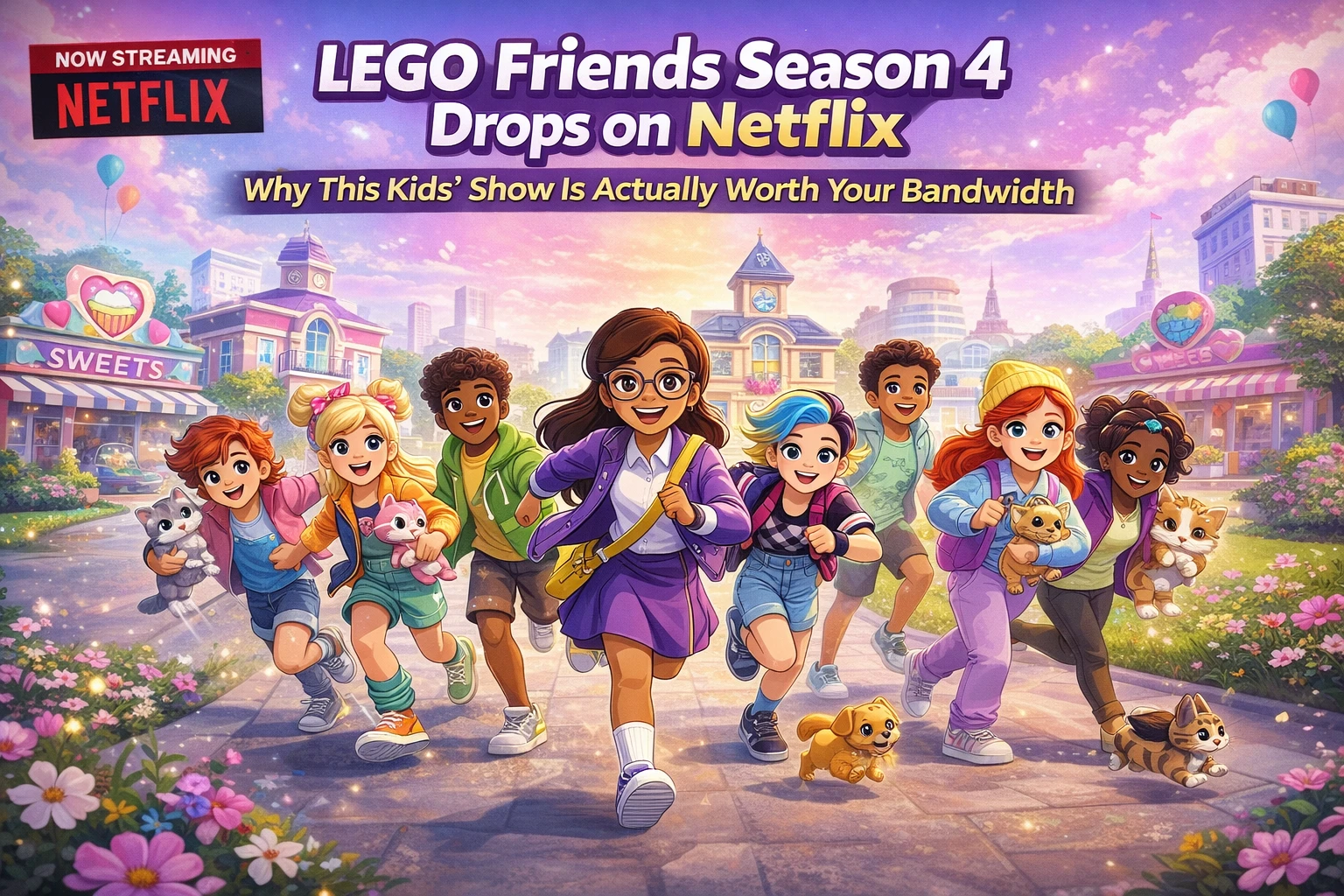
So Netflix dropped LEGO Friends: The Next Chapter Season 4 on April 17, 2026, and I know what you're thinking — "Why is TamilTech covering a LEGO cartoon?" Fair question. But here's the thing: this show has become one of the most-watched kids' programs in India over the past year, and the new season tackles some surprisingly relevant tech and social themes that parents and educators are actually talking about.
I've been tracking this series since Season 1 launched, and what started as a simple reboot of the classic LEGO Friends franchise has evolved into something genuinely interesting. The show follows eight students at Heartlake High — Aliya, Autumn, Leo, Liann, Nova, Olly, Paisley, and Zac — as they navigate school life, friendships, and creative projects. Think of it as a more wholesome, LEGO-fied version of the teen dramas your kids might be sneaking on their phones.
What's Actually New in Season 4
Season 4 brings 10 new episodes, each running about 11-12 minutes. Netflix released the first batch on April 17, and based on their typical release pattern, we're likely getting the remaining episodes in a second drop around mid-2026. The episodes are available in multiple audio tracks including English, Hindi, Tamil, and Telugu — which honestly makes a huge difference for Indian families where kids are more comfortable with regional languages.
The new season kicks off with "Tap Tap Pup Pup" and "Autumn's Stunts Trouble," and from what I've seen in the trailers and early episodes, the focus has shifted more toward creative problem-solving and dealing with social pressures. One episode deals with fake news and journalism ethics when Liann takes over the school newspaper and starts making up stories for clicks. Sound familiar? That's basically what half the news websites in India are doing right now.
Why Indian Parents Are Actually Into This
Look, I'm not a parent, but I've talked to enough friends and colleagues who are, and LEGO Friends keeps coming up. The show's available on Netflix's Standard with ads plan at ₹149/month, which is way cheaper than the ₹649/month Premium plan. For families already subscribed to Netflix for other content, this becomes a no-brainer addition to the watchlist.
The episodes are short enough that kids can watch one or two without it turning into a three-hour binge session. Each episode is under 12 minutes, so you can literally use it as a reward system — "Finish your homework, watch one episode." The show's also rated TV-Y (suitable for all children) in the US and AL (general audiences) in other markets, so there's zero worry about inappropriate content sneaking in.
What's interesting is how the show handles modern issues without being preachy. There's an episode where Nova tries to hide her love for a comic book series because she's worried about what her friend Liann will think. Another episode deals with Leo trying to balance his passion for cooking with his friends' camping plans. These are real conflicts that kids face — the pressure to fit in, the fear of being judged for your interests, the struggle to pursue your passions when they conflict with social expectations.
The Tech Angle Nobody's Talking About
Here's where it gets interesting for a tech audience. LEGO Friends is part of a larger strategy by both LEGO and Netflix to create transmedia experiences. The show isn't just a standalone cartoon — it's connected to physical LEGO sets, mobile games, and digital building experiences. Kids watch the show, then they can buy the Heartlake High LEGO set (available on Amazon India for around ₹4,000-₹8,000 depending on the set), and then they can extend the experience through LEGO's digital building apps.
This is the kind of integrated ecosystem that tech companies dream about. Apple does it with their devices, Google does it with their services, and LEGO's been quietly building this for years with their various franchises. The difference is that LEGO's doing it in a way that actually encourages creativity and hands-on building rather than just passive consumption.
The show also subtly introduces kids to concepts like journalism, content creation, entrepreneurship (Leo's pet food business in one episode), and even basic project management when the characters have to coordinate complex tasks. These aren't heavy-handed lessons — they're woven into entertaining stories. But the underlying skills being modeled are genuinely useful.
How It Compares to Other Kids' Content on Netflix
Netflix India has a massive library of kids' content, from Mighty Little Bheem to Chhota Bheem, from international hits like Peppa Pig to educational shows like Ada Twist, Scientist. LEGO Friends sits in an interesting middle ground — it's more sophisticated than preschool shows but less intense than teen dramas.
The animation quality is solid. It's not Pixar-level, but it's clean, colorful, and expressive enough to keep kids engaged. The voice acting is decent across all language tracks, though I've heard some parents say the Hindi dub feels more natural than the Tamil one. The writing is where the show really shines — the dialogue feels authentic to how kids actually talk, without being dumbed down or overly cutesy.
Compared to other LEGO shows on Netflix like LEGO DREAMZzz or LEGO Ninjago, Friends is more grounded in everyday situations rather than fantasy adventures. There are no dragons or dream worlds here — just kids dealing with school projects, friendship drama, and personal challenges. That makes it more relatable for younger viewers who aren't quite ready for action-heavy content.
The Streaming Economics Make Sense
Netflix has been investing heavily in kids' content because it's sticky — families with young children are less likely to cancel their subscriptions. In India, where Netflix faces intense competition from Disney+ Hotstar (₹299/month for mobile plan), Amazon Prime Video (₹179/month), and JioCinema (free with Jio connection), having exclusive kids' content is a major differentiator.
LEGO Friends is part of Netflix's broader strategy to create original content that can't be found anywhere else. The show is produced specifically for Netflix, which means you won't find it on YouTube, Hotstar, or any other platform. For families already in the Netflix ecosystem, this adds value. For those on the fence, a show like this might tip the scales.
The download feature is particularly useful in India where internet connectivity can be spotty. Parents can download episodes on home WiFi and let kids watch them during car rides or train journeys without burning through mobile data. At 11-12 minutes per episode and relatively simple animation, the file sizes are manageable — probably around 100-150MB per episode in standard quality.
What Season 4 Gets Right (and Wrong)
Let's be honest about what works and what doesn't. The show's biggest strength is its character diversity and the way it handles different personalities and interests. You've got Autumn who's into extreme sports, Leo who loves cooking, Nova who's a comic book nerd, and Liann who's the journalist. Kids can see themselves in different characters, which is powerful.
The episodes that deal with social media pressure, creative expression, and friendship conflicts are genuinely well-done. The fake news episode I mentioned earlier? That's actually a smart way to introduce media literacy to kids. The episode where Leo has to choose between a camping trip with friends and a culinary school opportunity? That's a real dilemma that teaches kids about prioritization and communication.
Where the show stumbles is in its pacing sometimes. Some episodes try to cram too much into 11 minutes and end up feeling rushed. The resolution to conflicts can feel a bit too neat and tidy — real life is messier, and kids know that. There's also a tendency to always have everything work out perfectly, which doesn't prepare kids for the reality that sometimes you fail, sometimes friendships end, and sometimes problems don't have easy solutions.
The Physical LEGO Connection
You can't talk about LEGO Friends without mentioning the toy sets. LEGO's been smart about this — the show features locations and scenarios that directly correspond to physical sets you can buy. The Heartlake High school building, the comic book store, various characters' homes — they're all available as LEGO sets.
In India, these sets range from about ₹1,500 for smaller sets to ₹15,000+ for the massive ones. They're available on Amazon India, Flipkart, and in physical stores like Hamleys. The pricing is steep compared to local toy brands, but LEGO's quality and the connection to the show make them popular gifts for birthdays and festivals.
What's clever is how the show encourages creative building without explicitly being a 30-minute toy commercial. Kids watch the characters solve problems by building things, and it naturally makes them want to build their own creations. Whether they use official LEGO Friends sets or just generic LEGO bricks doesn't really matter — the creative impulse is what counts.
Is It Worth Your Netflix Subscription?
Here's my honest take: if you have kids between ages 6-12, LEGO Friends is probably worth having in your content rotation. It's not going to change their lives, but it's solid entertainment that models positive behaviors and creative problem-solving. The new season maintains the quality of previous seasons while tackling slightly more mature themes.
For the ₹149/month Standard with ads plan, you're getting access to LEGO Friends plus Netflix's entire library. That's cheaper than a single movie ticket in most Indian cities. Even if your kids only watch a few episodes a week, the value proposition makes sense.
The show's also a decent option for English language learning. The dialogue is clear, the vocabulary is age-appropriate, and the visual context helps kids understand what's being said even if they miss some words. I've heard from parents who use it as a supplementary tool for their kids' English practice.
What's Coming Next
Based on Netflix's release patterns, we'll likely see the second half of Season 4 drop around June or July 2026. LEGO and Netflix have been pretty consistent about releasing 20 episodes per season split into two batches. There's also talk of a Season 5, though nothing's officially confirmed yet.
The broader trend here is interesting — traditional toy companies like LEGO are increasingly becoming media companies. They're not just selling plastic bricks anymore; they're selling stories, characters, and experiences across multiple platforms. It's the same strategy that's made Marvel and Star Wars so successful, just applied to a younger demographic.
For Indian viewers, the key thing to watch is whether Netflix continues investing in regional language dubs and potentially even India-specific content within these franchises. Imagine a LEGO Friends episode set during Diwali or featuring Indian characters and settings. That's the kind of localization that could really make these shows resonate even more with Indian audiences.
The Bottom Line
LEGO Friends: The Next Chapter Season 4 is exactly what it promises to be — a fun, positive, creative show for kids that parents can feel good about. It's not going to win any Emmy awards, but it doesn't need to. It's doing its job well: entertaining kids while modeling good values and creative thinking.
If you're already a Netflix subscriber, definitely add it to your kids' watchlist. If you're deciding whether to subscribe, this alone probably isn't enough reason, but it's a nice bonus on top of everything else Netflix offers. And if you're a parent looking for content that won't rot your kids' brains, LEGO Friends is a solid choice in a sea of questionable options.
The show's available now on Netflix India with Hindi, Tamil, Telugu, and English audio options. Episodes are downloadable for offline viewing, and the whole season should be fully released by mid-2026. At 11-12 minutes per episode, it's perfect for short attention spans and busy schedules. Worth checking out, especially if your kids are already into LEGO or you're looking for something more substantial than the usual cartoon fare.



Comments (0)
Be the first to comment!