


Key Takeaways
- Ant International's Falcon Time-Series Transformer Model 2.0 is being adopted by six major banks including Citi, HSBC, Deutsche Bank, Standard Chartered, and Barclays
- This AI tool uses transformer architecture specifically designed for forex time-series data, offering unprecedented predictive capabilities
- The adoption signals a significant shift in how forex markets operate, with AI-driven trading strategies becoming mainstream
- For India, this development could impact forex market dynamics involving the Indian rupee and inspire more AI adoption in Indian banking
- While powerful, these tools aren't infallible and may lead to more homogeneous market behavior if widely adopted
What's the News?
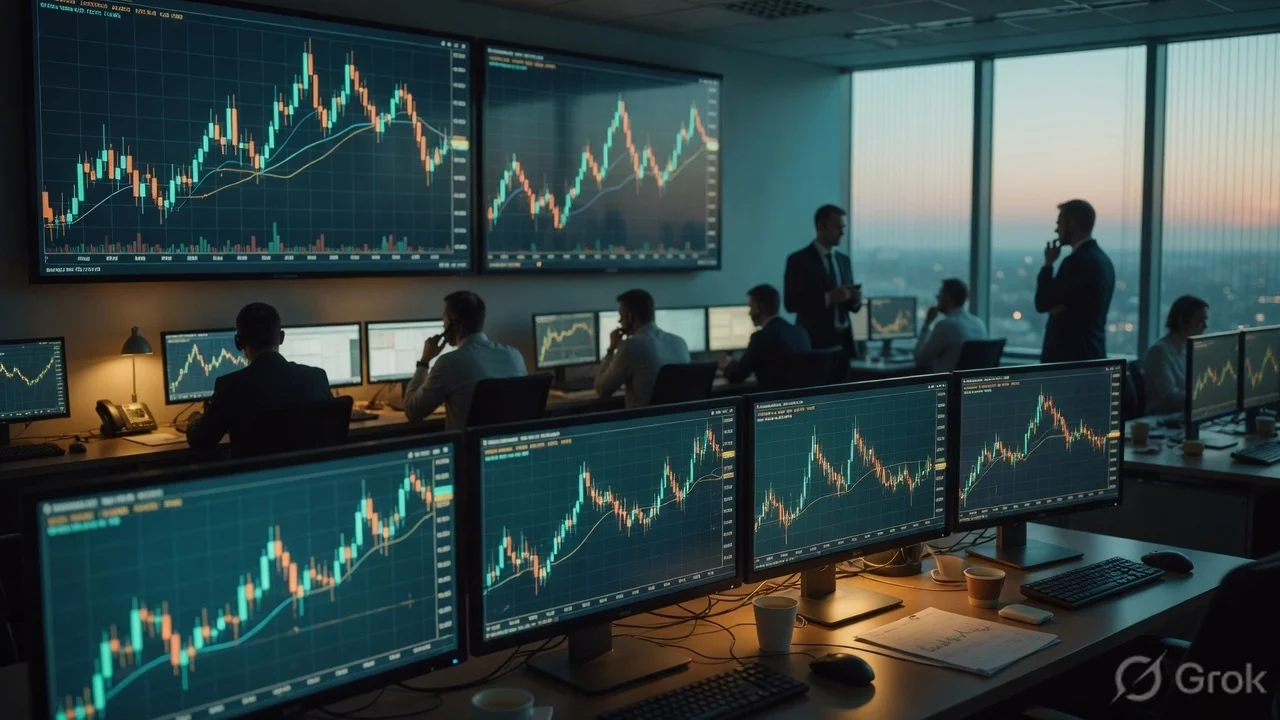
Hold onto your keyboards, folks! Ant International, the Singapore-based fintech powerhouse, has just dropped a bombshell that's shaking up the forex world. Their Falcon Time-Series Transformer Model 2.0 is now being used by six major banking giants - Citi, HSBC, Deutsche Bank, Standard Chartered, and Barclays. This isn't just another tech upgrade; it's a fundamental shift in how trillions of dollars in forex trading are executed daily.
According to Kelvin Li, Ant International's general manager of platform tech, this adoption represents a significant milestone in applying artificial intelligence to financial markets. The fact that these banking behemoths are putting their money where their mouth is speaks volumes about the potential of this technology. We're talking about institutions that move more money in a day than most of us will see in a lifetime, and they're betting on Ant's AI to give them an edge.
The Nitty-Gritty Details
So what exactly is this Falcon Time-Series Transformer Model 2.0 that's got the banking world so excited? Unlike traditional AI models that struggle with sequential data, this transformer-based model is specifically engineered to handle time-series data - the lifeblood of financial markets.
Think of it this way: forex markets are like complex dance sequences where every move matters and timing is everything. Traditional AI models might see individual dance moves, but the Falcon model understands the entire choreography, spotting patterns that humans would miss. It can analyze years of forex data in seconds, identifying subtle correlations and predictive signals that could mean the difference between profit and loss.
What makes this particularly impressive is the transformer architecture - the same technology that powers ChatGPT and other large language models, but fine-tuned specifically for financial time-series data. This specialized approach means the model understands market-specific nuances, from central bank announcements to geopolitical events, and how they impact currency movements.
Why Should India Care?
Now, you might be wondering why this matters for us here in India. Well, let me break it down:
First off, this development signals the growing importance of AI in financial services - a sector that's rapidly evolving in India. Our own banks and financial institutions are likely watching this closely, and we might see similar AI adoption in Indian banking sooner rather than later.
Secondly, this could significantly impact forex market dynamics involving the Indian rupee. With major international banks using sophisticated AI tools, the volatility and liquidity patterns in currency pairs involving INR might change. This could affect everything from import costs to NRI remittances - things that directly impact our wallets.
Thirdly, it highlights the growing influence of Asian fintech companies like Ant International in setting global financial technology standards. This should inspire our own Indian fintech startups to develop specialized AI solutions for financial markets, potentially putting India on the map as a fintech innovation hub.
Real-World Applications
So how exactly are these banks using the Falcon model? The applications are pretty fascinating:
1. Predictive Trading: The model can forecast currency movements with impressive accuracy, helping banks optimize their trading strategies and potentially boost profits.
2. Risk Management: By analyzing historical patterns and potential market scenarios, banks can better manage their forex exposure and minimize risks.
3. Market Making: Banks can use the AI to provide more competitive bid-ask spreads in the forex market, benefiting all participants.
4. Arbitrage Opportunities: The model can identify and capitalize on arbitrage opportunities across different currency pairs and markets.
5. Portfolio Optimization: Financial institutions can use the insights from the model to optimize their forex portfolios for better returns.
The Honest Take
Now, before we get too excited about AI taking over forex trading, let's keep it real. These tools are powerful, but they're not magic wands. The forex market is influenced by numerous factors - geopolitical events, economic policies, market sentiment - that might not always be captured by historical data patterns.
There's also a potential downside to consider. If all major banks start using similar AI tools, we might see more homogeneous market behavior, where everyone's making similar decisions based on similar predictions. This could potentially reduce market efficiency and increase systemic risk - not exactly what we want in financial markets.
That said, the adoption of Ant International's Falcon Time-Series Transformer Model 2.0 represents a significant step forward in applying AI to financial markets. It's likely we'll see more innovation in this space in the coming years, and that's something to watch closely.
Frequently Asked Questions
Q1: What exactly is the Falcon Time-Series Transformer Model 2.0?
A: It's an AI tool developed by Ant International specifically for forex trading. It uses transformer architecture (like in ChatGPT) but is specialized for analyzing time-series data in financial markets.
Q2: How is this different from traditional forex trading systems?
A: Unlike traditional systems that rely on technical indicators and human analysis, the Falcon model can analyze vast amounts of historical data, identify complex patterns, and make predictions with higher accuracy. It processes information much faster and at a larger scale than humans or traditional systems.
Q3: Will this replace human forex traders?
A: While the AI tool can enhance trading decisions and automate certain aspects, it's unlikely to completely replace human traders soon. Human oversight and strategic decision-making remain crucial in financial markets.
Q4: How might this affect retail forex traders in India?
A: The adoption could lead to more efficient markets and potentially lower transaction costs for retail traders. However, it might also make it more challenging for individual traders to compete with institutional players using sophisticated AI.
Q5: Is Ant International planning to expand this to other markets?
A: While the current focus is on forex, it's likely Ant International will explore applications in other financial markets like equities, commodities, and derivatives.




Comments (0)
Be the first to comment!