


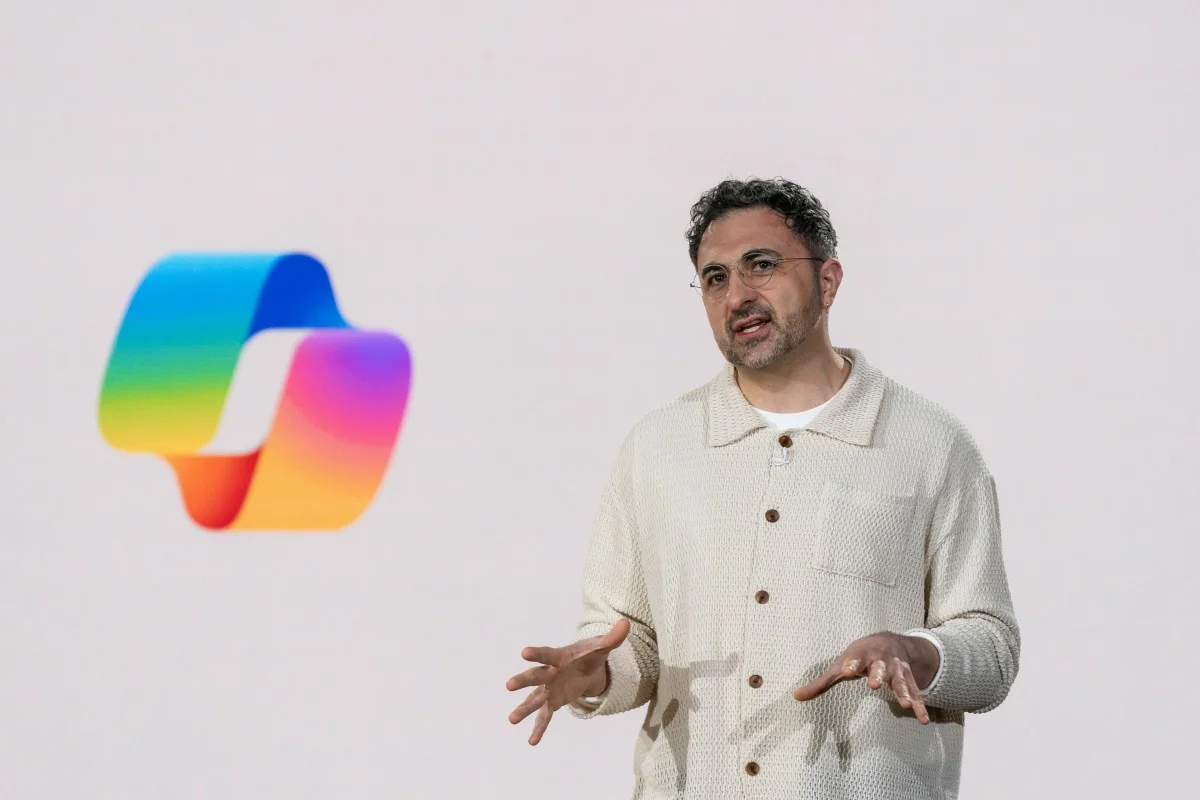
The company that funds OpenAI is now competing with OpenAI
There's something almost absurd about Microsoft's position in the AI market right now. The company has invested over $13 billion into OpenAI, making it the single largest backer of the most talked-about AI company on the planet. OpenAI's models power Microsoft's Copilot products. The two companies are deeply intertwined.
And yet, on April 2, 2026, Microsoft's own AI research lab — called Microsoft AI — quietly launched three foundational models that directly compete with what OpenAI and Google sell. Not as replacements for the OpenAI partnership. Not as an exit from that relationship. Just as... additional options. Available now. Cheaper than the competition.
This is either a sign that Microsoft is hedging its bets brilliantly, or the beginning of one of the most awkward corporate relationship evolutions in tech history. Possibly both.
The three models — what they actually do
Microsoft's new models come from its MAI Superintelligence team, a research group that was only formed and announced in November 2025. That's a fast timeline — less than six months from formation to launching three production-ready models. The team is led by Mustafa Suleyman, Microsoft's CEO of AI and the co-founder of DeepMind and Inflection AI. If you know who Suleyman is, you understand why Microsoft's AI ambitions just got significantly more serious.
MAI-Transcribe-1 is a speech-to-text model. It handles transcription across 25 languages and runs 2.5 times faster than Microsoft's existing Azure Fast offering. For Indian context: this matters because Azure is widely used by Indian enterprises, IT companies, and startups for speech processing. A 2.5x speed improvement in transcription at lower cost directly impacts what Indian development teams building voice applications pay every month.
MAI-Voice-1 is the audio generation model. It can generate 60 full seconds of audio in just one second of processing time. It also supports custom voice creation — feed it a few seconds of a voice sample, and it can replicate that voice. The applications here range from legitimate (personalised AI assistants, accessibility tools, customer service bots) to genuinely concerning (deepfake audio). Both are real.
MAI-Image-2 is the image and visual generation model. It was first released on MAI Playground in March, and is now available on Microsoft Foundry — Microsoft's developer platform for building AI-powered applications. It claimed a top-three spot on Arena.ai's leaderboard and generates images at least twice as fast as its predecessor.
The pricing angle — this is where it gets interesting for developers
Microsoft is making a direct price competition play. MAI-Transcribe-1 starts at $0.36 per hour for transcription. MAI-Voice-1 is priced at $22 per million characters. MAI-Image-2 at $5 per million tokens for text input.
These numbers are aggressively positioned against OpenAI's Whisper (transcription) and DALL-E (image) APIs, and against Google's equivalent offerings. For Indian startups and developers who build on top of these APIs — and there are hundreds of thousands of them — even a 20-30% cost reduction at scale changes the economics of a product significantly.
Indian IT services companies — the Infosys, Wipro, TCS ecosystem that deploys Azure at massive scale for global clients — will be watching this closely. If Microsoft's own models perform comparably to OpenAI's while costing less, procurement conversations at enterprise level become much simpler. Everything runs on Microsoft infrastructure anyway; now the models do too.
MAI Playground — Microsoft's answer to ChatGPT's playground
Alongside the three models, Microsoft has also expanded MAI Playground — a testing environment where developers can experiment with large language models. The transcription and voice models are now available there alongside MAI-Image-2.
Think of it as Microsoft's version of OpenAI's API playground, but specifically for the MAI model family. For developers evaluating whether to build on MAI vs GPT-4o vs Gemini, having a direct playground to test in reduces the decision friction significantly. You can test voice quality, transcription accuracy across Indian languages, and image generation before committing to integration.
What this means for the Microsoft-OpenAI relationship
Microsoft still depends on OpenAI for its flagship Copilot products — the AI assistant built into Windows, Office, and Teams. GPT-4o and the o-series models power most of what Copilot does, and that relationship isn't ending anytime soon. The investment ties are too deep and the product integration too extensive.
But Microsoft is now clearly building an AI capability that doesn't require OpenAI. The MAI Superintelligence team's mandate appears to be: develop Microsoft's own foundational models that can power Microsoft products independently when needed, and offer them to enterprise customers as an alternative at competitive pricing.
This reduces Microsoft's dependency risk. If OpenAI raises prices significantly, if the partnership terms change, if regulatory scrutiny forces changes to the relationship — Microsoft now has fallback options it didn't have a year ago. From a strategic standpoint, this is just good business.
From OpenAI's standpoint, it's complicated. Their biggest investor is now a competitor in the model market. Suleyman — who built Inflection AI's Pi assistant before Microsoft acquired Inflection's talent — has a proven track record of building compelling AI products. The MAI team is not a side project.
The India enterprise picture
India's AI market is one of the fastest growing in the world. Indian enterprises spent roughly $6 billion on cloud AI services in 2025, with Azure, AWS, and Google Cloud as the dominant platforms. Azure specifically has deep penetration in India's banking, financial services, and IT outsourcing sectors.
The arrival of Microsoft's own cheaper models on Azure Foundry is directly relevant to Indian enterprise AI deployments. Speech-to-text (MAI-Transcribe-1) is huge in India — call center AI, voice banking, regional language processing, IVR systems for government services. A faster, cheaper transcription model that handles 25 languages including Indian English and regional accents is a meaningful upgrade for any of these use cases.
Indian startups building on Microsoft Azure's AI services now have more model options within the same ecosystem. Instead of choosing between Azure-hosted OpenAI models and third-party alternatives, they can evaluate Microsoft's own MAI models as a lower-cost option without switching cloud providers.
TamilTech's take
Microsoft launching its own foundational models while simultaneously funding and partnering with OpenAI is the kind of strategic move that looks obvious in hindsight but takes real conviction to execute. The AI model market is consolidating fast, and Microsoft isn't content to be just a distribution layer for other people's intelligence. MAI-Transcribe-1 and MAI-Voice-1 are particularly relevant for Indian enterprise use cases — call centers, voice applications, regional language processing. If the performance holds up at the lower price point, expect Indian developers and IT companies to start factoring MAI models into their architecture decisions seriously over the next six months.



Comments (0)
Be the first to comment!