


Key Takeaways
- NCLT directed the resolution professional of Think and Learn Pvt Ltd and the successful bidder to maintain status quo on a ₹16 crore asset sale.
- The freeze is part of the broader corporate insolvency proceedings against the parent company of BYJU’.
- Rival claims or creditor objections over asset ownership have prevented the transfer from going ahead.
- Even nominal-value sales in high-profile liquidations are becoming contested under the Insolvency and Bankruptcy Code.
- India’s edtech sector is watching whether near-worthless assets can ever translate into meaningful creditor recovery.
What's the news
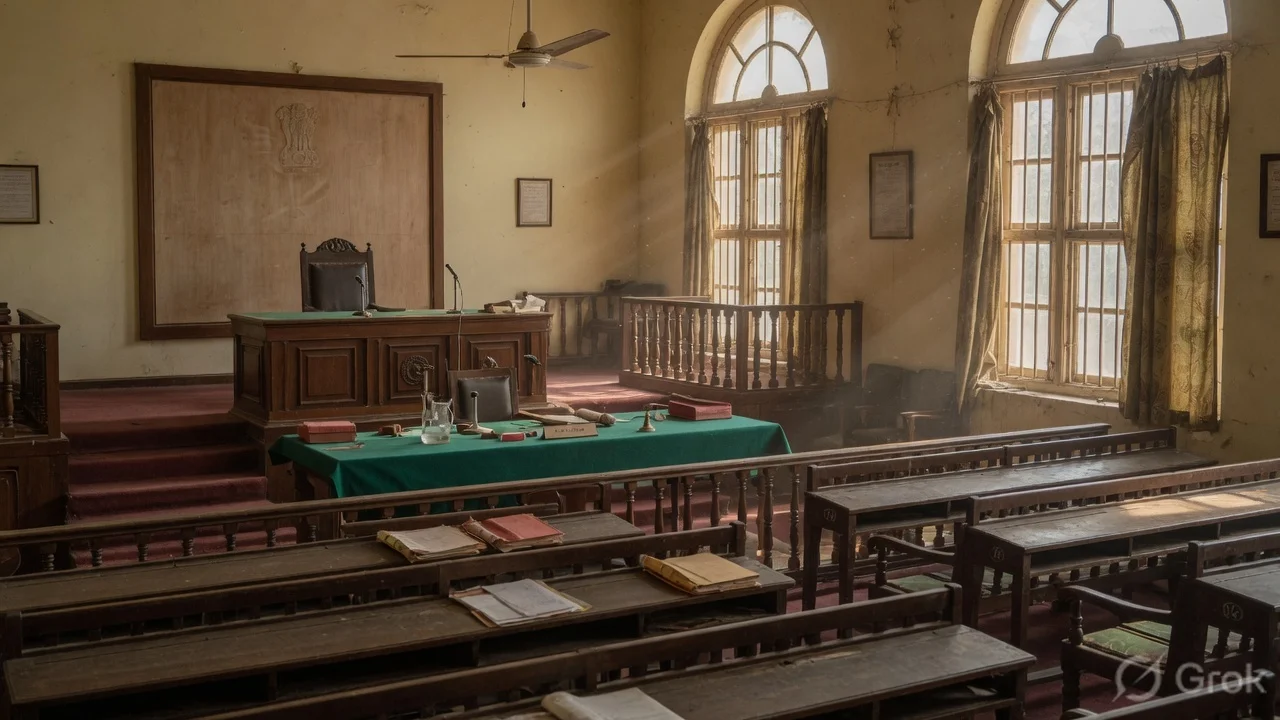
The National Company Law Tribunal has imposed a status quo order on a proposed asset sale tied to Think and Learn Pvt Ltd, the parent company behind the once-dominant BYJU’S edtech platform. The tribunal has directed the resolution professional handling the corporate insolvency of TLPL, along with the successful bidder identified for the transaction, to maintain the status quo. This essentially freezes the transfer of whatever assets have been bundled into the ₹16 crore sale package. The case underscores how even nominal-value disposals in the BYJU’S insolvency process are not turning into quick cash but instead feeding into prolonged tribunal timelines. For stakeholders, the immediate effect is a pause button on what was supposed to be a straightforward creditor liquidity event.
Details
To understand why the NCLT felt the need to step in, one has to look at the profile of TLPL’s remaining estate. When insolvency proceedings were initiated, the corporate debtor did not hold the sexy global deals or the massive subscription base that once justified a ₹22,000 crore valuation. Instead, it retained a scatter of corporate assets: leased offices, hotel bookings, abandoned gym partnerships, unclaimed deposits, and a few equity stakes in unrelated ventures. The resolution professional, appointed under the leadership of the Committee of Creditors, has been methodically monetising these items to build a cash pool. The successful bidder for the latest ₹16 crore tranche offered a clean-dollar figure, yet claimants argue that the assets in question are subject to prior liens, unresolved litigation, or creditor objections that the current sale structure fails to address. Unless the NCLT is satisfied that the sale is clean, it defaults to freezing the transaction. This is not unusual in Indian corporate insolvency, where the tribunal routinely blocks specific transactions when a minority stakeholder or a related-party objection surfaces. What makes this episode notable is that it involves a public-facing brand, so any delay is scrutinised by journalists, former employees, and retail users who still hold pending refund claims. The resolution professional’s challenge is no longer just about extracting value from a struggling network marketing outfit. It is about navigating a legal minefield where every asset has a shadow claim.
During the past several cycles, TLPL’s estate has sent a signal that founder-led high-growth companies in India can accumulate impressive user metrics while leaving behind corporate skeletons that actual sale prices barely cover. The ₹16 crore package was likely chosen precisely because it appeared uncontroversial on paper. Yet the NCLT’s intervention suggests that uncontroversial is not the same as unencumbered. For the resolution professional, each freeze imposes additional administrative burden: petitions must be filed, arguments scheduled, and status reports updated. The faster these backlogs are cleared, the sooner creditors can access any recovered value. Until then, the ₹16 crore remains effectively locked in a legal vault with no guarantee of when, or if, the title will clear.
India impact
The freeze carries implications that extend well beyond the ₹16 crore headline. India’s edtech sector, which saw a massive capital influx between 2020 and 2022, is indirectly taking lessons from the BYJU’S saga. Foreign and domestic investors had assumed that a well-funded user growth story would translate into premium resale multiples or strategic exits. Instead, the reverse happened. Byju's ownership structure, with its maze of parent entities, sibling apps, and founder-controlled holding companies, became a textbook case of why venture capital in the Indian startup space requires rigorous corporate governance checks. The NCLT's intervention demonstrates that the Insolvency and Bankruptcy Code is not a soft glove; when resolution professionals push premature sales without resolving quiet title issues, the tribunal acts as a brake. For the startup ecosystem, this means that lightning-fast acquisitions and complex offshore portfolios will face deeper scrutiny during insolvency. Lenders, both banks and non-banking finance companies, may begin to factor asset freeze risk into their credit terms. Consumers who pre-paid for long-term learning programs via UPI or other digital wallets are also stuck in a limbo where refund orders exist but enforceable recovery depends on years of litigation. Policymakers, meanwhile, have another signal that the uniform education sector regulations still do not prevent financial engineering that separates operating brand value from holding-company liabilities.
Use cases
For legal practitioners and turnaround specialists, the NCLT status quo serves as a live case study in transaction structuring. If the resolution professional had ring-fenced the disputed assets, auctioned them through a transparent competitive process, and escrowed the proceeds, the tribunal might not have needed to step in. Instead, a bundled ₹16 crore sale triggered objections from parties asserting earlier priority. Insolvency consultants can now advise their clients to avoid lump-sum disposal of contested assets and to instead carve out disputed items for separate resolution. Edtech founders, particularly those building similar franchise or subscription models, should take note that asset cleanliness matters more than valuation. In the past, founders created separate councils for real estate, SCM, and even crypto-adjacent holdings. The BYJU’S experience suggests that once insolvency hits, the parent company cannot wash its hands of these subsidiaries without a fight. Creditors’ committees, too, should draft explicit protocols for what constitutes a non-controversial sale, perhaps setting a threshold above which no sale can proceed without supermajority approval.
Honest take
Let us not dress this up. A ₹16 crore asset sale stuck behind a tribunal status quo is the sound of a slow-motion undressing. The NCLT is not saving the BYJU’S brand; it is merely determining how little it has left to salvage. For entrepreneurs, the real pain point is that India’s largest edtech company, which once spent tens of millions on advertisements and stadium naming rights, now cannot legally shift a hotel booking without a judge’s permission. That is the new normal of founder liability. For investors, the signal is clear: do not trust complex holding structures when the operating unit burns cash. The edtech sector was supposed to be the next frontier after fintech and healthtech. Instead, it joined the list of sectors where the exit is harder than the entry because of emotional attachment to brands and weak legal separation between founders and company assets. The status quo order will likely last until some claimant, perhaps one with deeper pockets or deeper legal knowledge, decides to pursue the matter aggressively. Until then, the resolution professional will continue sending periodic status reports to the NCLT, and the news cycle will move on to the next startup failure.
The broader lesson is that India’s insolvency framework is doing its job in theory but offers little speed in practice. For a company that collapsed from a ₹22,000 crore valuation to roughly the value of a few moving vans, every rupee of recovered cash is a rounding issue. Yet the delay still matters because it tells the market that even nominal assets can be buried under procedural complexity. Any startup founder watching this unfold should ask themselves whether their balance sheet is clean enough to survive a tribunal freeze. If not, the NCLT status quo is just the opening act of a longer song.


Comments (0)
Be the first to comment!