


Key Takeaways
- AM Intelligence has ordered 9,000 Nvidia Vera Rubin NVL72 systems, a massive GPU deployment for India's AI infrastructure.
- The hardware will power the first 30-megawatt phase of AMI's AI factory in Hyderabad, scheduled for delivery in Q1 2027.
- This order underscores a major commitment to building large-scale AI compute capacity within India, reducing reliance on foreign cloud infrastructure.
- The move is expected to accelerate AI research, development, and deployment across various Indian industries, from healthcare to finance.
- It positions Hyderabad as a key hub for AI innovation and high-performance computing in the country.
What's the News?
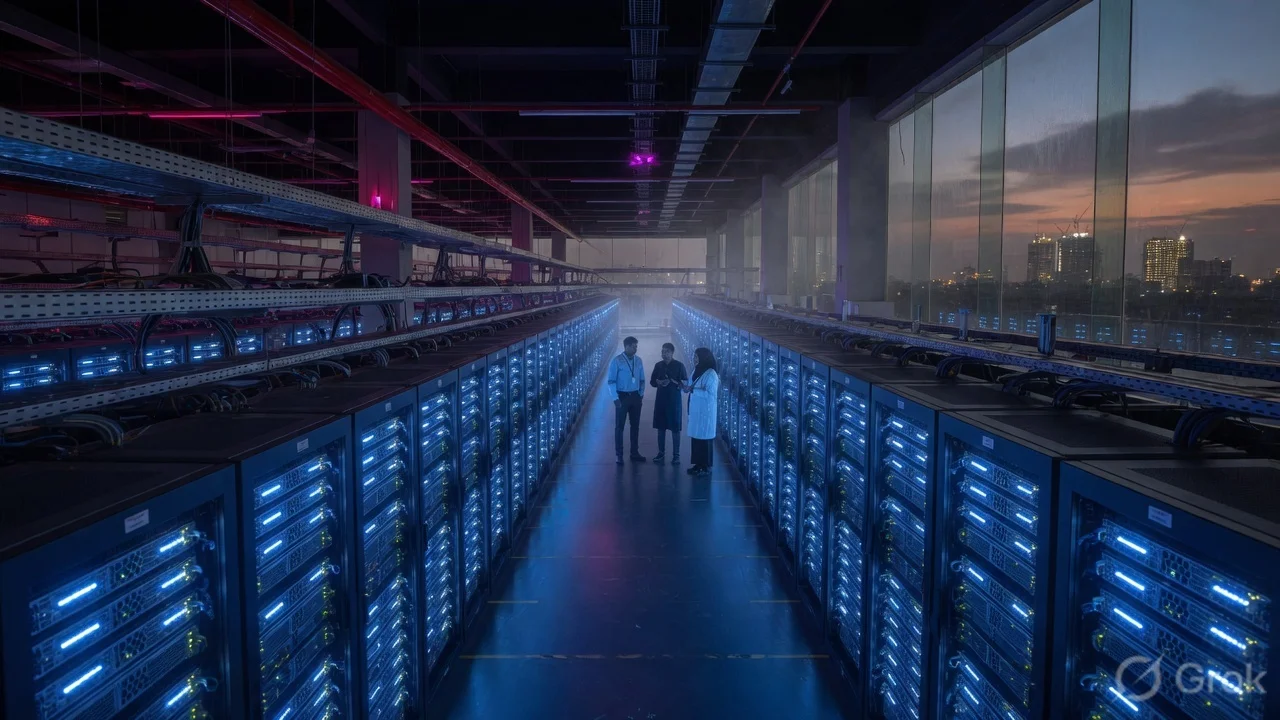
In a move that's sending ripples through the tech world, AM Intelligence (AMI) has placed a colossal order for 9,000 Nvidia Vera Rubin GPUs. This isn't just another hardware purchase; it's a foundational investment in a dedicated AI factory in Hyderabad. The order, which includes 9,000 Vera Rubin NVL72 rack-scale systems, is set to be delivered in the first quarter of 2027. This massive compute power will kickstart the first 30-megawatt phase of AMI's ambitious AI factory project. Think about the scale of this. We're talking about a facility designed from the ground up to handle the most demanding AI workloads. The Vera Rubin architecture is Nvidia's latest and greatest, built specifically for the massive parallel processing that modern AI models, especially large language models (LLMs), require. This isn't about buying a few servers for a startup; this is about building an industrial-scale AI powerhouse.Details of the Hyderabad AI Factory
The Hyderabad AI factory is more than just a room full of servers. It's being designed as a comprehensive ecosystem for AI development and deployment. The 30-megawatt initial phase is just the beginning. The plan is to scale this up significantly, creating a multi-megawatt data center that can handle the computational demands of training and running some of the world's most advanced AI models. The choice of Hyderabad is strategic. The city has been steadily emerging as a major technology hub in India, with a growing pool of talent and supportive government policies. By establishing a state-of-the-art AI factory there, AMI is tapping into this ecosystem and contributing to its growth. The facility will be equipped with the necessary infrastructure, including power, cooling, and connectivity, to ensure the GPUs can operate at peak efficiency. The Nvidia Vera Rubin NVL72 systems are the heart of this operation. These are not off-the-shelf graphics cards; they are entire rack-scale systems. Each NVL72 system contains multiple GPUs interconnected with high-speed networking, allowing them to work together as a single, cohesive unit. This is crucial for training large AI models, which require immense computational power and fast data transfer between processors.India Impact: A Game Changer for AI Infrastructure
This development is a significant milestone for India's AI journey. For years, Indian companies and researchers have had to rely on foreign cloud providers like AWS, Google Cloud, and Azure for their high-performance computing needs. This has several drawbacks, including data sovereignty concerns, high costs, and potential latency issues. AM Intelligence's move to build a domestic AI factory addresses these concerns head-on. By bringing this level of compute power in-house, India can:- Boost Data Sovereignty: Sensitive data, whether from government, healthcare, or finance, can be processed within India's borders, adhering to local regulations.
- Reduce Costs: While the initial investment is huge, long-term operational costs can be lower than relying on expensive foreign cloud services.
- Foster Innovation: A local AI factory will enable startups, researchers, and enterprises to experiment and innovate without being constrained by the limitations or pricing models of foreign providers.
- Develop Local Talent: Building and operating such a facility will create high-skilled jobs for engineers, data scientists, and AI researchers in India.
Use Cases: What Can This AI Factory Do?
The potential applications for a facility with this much computational power are virtually limitless. Here are a few areas where it could make a significant impact:- Healthcare: Training AI models for drug discovery, medical imaging analysis, and personalized medicine. The ability to process vast amounts of medical data could lead to breakthroughs in diagnosing diseases and developing new treatments.
- Language and Translation: India has a vast linguistic diversity. This AI factory could be used to train models for real-time translation between Indian languages and English, breaking down communication barriers and making information more accessible.
- Autonomous Systems: Developing and testing AI models for self-driving cars, drones, and other autonomous systems. The high-performance computing power would be essential for simulating and training these complex systems.
Honest Take: Ambitious, But Not Without Challenges
While this is undoubtedly a bold and exciting move, it's not without its challenges. Building and operating a 30-megawatt AI factory is a monumental task. It requires significant investment, not just in the hardware but also in the supporting infrastructure, including power and cooling. There's also the challenge of talent. While India has a large pool of tech talent, finding and retaining experts with the specific skills needed to manage and operate a facility of this scale will be a key priority. Furthermore, the success of this venture will depend on how effectively AM Intelligence can leverage this compute power. It's not enough to just have the hardware; you need the right software, the right data, and the right talent to make it all work together. That said, this is a crucial step for India. It's a statement of intent and a foundation for future growth. If successful, it could pave the way for more such initiatives, creating a virtuous cycle of investment, innovation, and economic growth. It's a high-risk, high-reward bet, but one that could pay off handsomely for India's tech ecosystem.Frequently Asked Questions (FAQs)
Q1: What exactly are Nvidia Vera Rubin GPUs?
A1: The Nvidia Vera Rubin GPUs are part of Nvidia's latest architecture, specifically designed for AI and high-performance computing. They are not just individual chips but are part of larger NVL72 rack-scale systems that allow multiple GPUs to work together as a single, powerful unit.
Q2: Why is the Hyderabad AI factory important for India?
A2: It's important because it builds India's own large-scale AI computing infrastructure. This reduces reliance on foreign cloud services, enhances data sovereignty, and fosters local innovation and talent development in the AI sector.
Q3: When will the AI factory be operational?
A3: The first 30-megawatt phase, powered by the 9,000 GPUs, is scheduled for delivery in the first quarter of 2027. The full facility is expected to be scaled up in subsequent phases.
Q4: What industries will benefit the most from this AI factory?
A4: While many sectors will benefit, key areas include healthcare for drug discovery and medical imaging, finance for risk modeling and fraud detection, agriculture for crop management, and language technology for translation services.
Q5: How does this compare to other AI initiatives in India?
A5: This is one of the largest single investments in AI compute infrastructure in India to date. While other companies and government initiatives are working on AI, this move by AM Intelligence represents a significant private-sector commitment to building a dedicated, large-scale AI factory.





Comments (0)
Be the first to comment!