


Key Takeaways
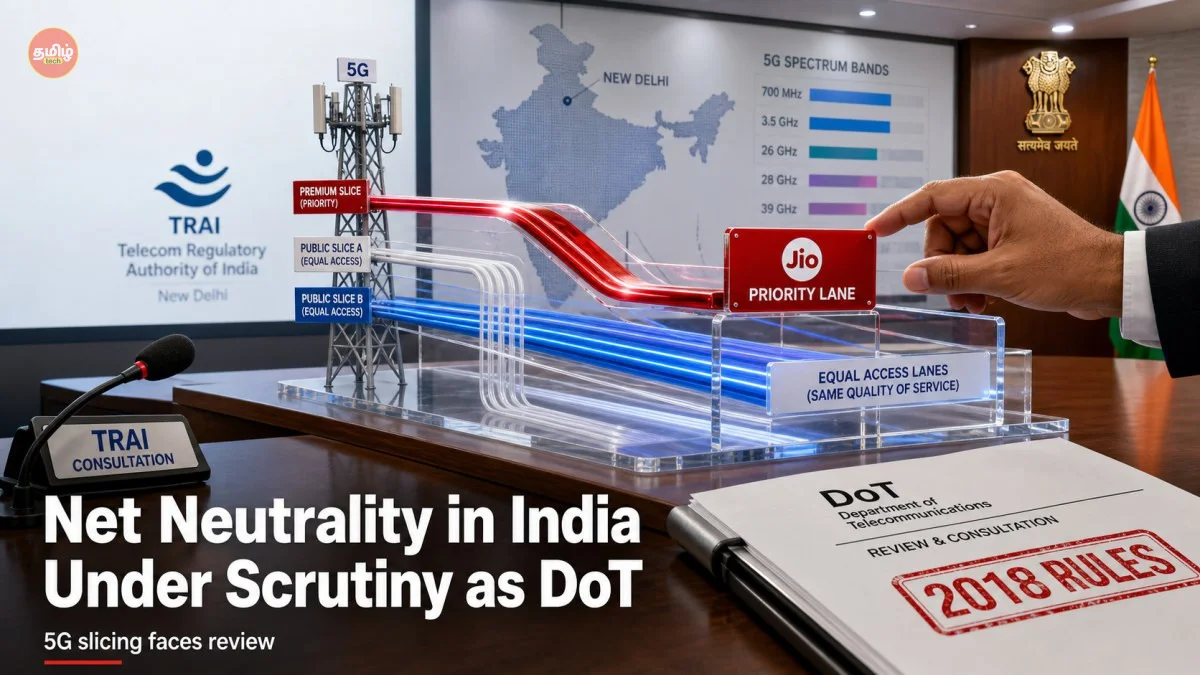
- The Department of Telecommunications (DoT) has formally requested TRAI to review the existing 2018 Net Neutrality framework to align with 5G technology.
- Jio is aggressively pushing for 'Network Slicing,' a technology that allows telcos to create dedicated virtual lanes for specific services like 4K streaming or cloud gaming.
- Telecom operators are demanding a 'Fair Share' contribution from high-traffic OTT platforms like Netflix and YouTube to offset infrastructure costs.
- If implemented, this could mean users might have to pay extra for 'specialized services' or premium speeds on specific apps, potentially ending the era of equal data treatment.
The Big Shift: Why Net Neutrality is Under Fire in 2026
For nearly a decade, India has been a global poster child for Net Neutrality. We all remember the massive 2016 movement that stopped Facebook's Free Basics and ensured that every bit of data on the internet is treated equally. Whether you are browsing a small local blog or watching a massive 4K movie on Netflix, your ISP (Internet Service Provider) cannot slow one down to favor the other. But now, as we sit in August 2026, the ground is shifting. The Department of Telecommunications (DoT) has reached out to TRAI (Telecom Regulatory Authority of India) to take another look at these rules. Why? Because 5G isn't just about faster downloads anymore; it’s about a technology called Network Slicing.
The argument from the government and telcos is simple: the rules written in 2018 were meant for a 4G world. Back then, the internet was mostly about browsing and video. Today, in 2026, we have remote surgeries, autonomous drones, and massive VR environments that require zero latency. The DoT feels that keeping the old, rigid Net Neutrality rules might be holding back the true potential of India's 5G and upcoming 6G infrastructure. They want a framework that allows for 'Specialized Services' without breaking the back of the open internet. It is a delicate balancing act that could either make India a tech superpower or make the internet more expensive for the average user.
Understanding Jio’s Move: What is Network Slicing?
Let’s talk about Jio. While other telcos are also interested, Jio has been the most vocal about how they want to use their 5G Standalone (SA) network. Imagine a ten-lane highway. In the old 4G world, every vehicle—from a bicycle to an ambulance—had to use the same lanes. If there was a traffic jam, everyone got stuck. Network Slicing allows Jio to 'slice' that highway. They can reserve two lanes exclusively for ambulances (emergency services), three lanes for high-speed buses (gaming and VR), and leave the rest for general traffic. This sounds great in theory, right? If you are a pro-gamer, you would love a dedicated 'slice' of the network that guarantees 5ms latency, even in a crowded stadium.
However, this is where the Net Neutrality alarm bells start ringing. If Jio can sell a 'gaming slice' for an extra ₹200 a month, what stops them from slowing down the 'general' lane to make the premium slice look better? Jio argues that slicing is a technical necessity for 5G-Advanced services and not a way to discriminate against traffic. They believe that as long as the 'public internet' remains functional and fast, offering premium slices for specific industrial or entertainment use cases should be allowed. This is the core of the debate that TRAI has to settle this year.
The 'Fair Share' War: Telcos vs OTT Platforms
There is another layer to this story that directly affects your pocket: the 'Fair Share' fee. For the past two years, Indian telcos including Jio and Airtel have been arguing that OTT platforms like YouTube, WhatsApp, and Netflix are getting a 'free ride' on their networks. These platforms generate nearly 70% of the total data traffic in India, but they don't contribute a single rupee to building the towers or laying the fiber optics. The telcos want these giants to pay a usage fee based on the traffic they generate. They argue that this money is needed to expand 5G coverage to rural India.
On the other side, the OTT platforms and digital rights activists are furious. They argue that users already pay the telcos for data. If Netflix also has to pay the telco, it’s like a 'double tax.' Furthermore, if a small Indian startup can't afford to pay this 'Fair Share' fee to Jio or Airtel, their app might load slower than a deep-pocketed competitor like Amazon Prime. This would kill innovation and give even more power to the big tech companies. TamilTech’s take on this is clear: any move that creates an entry barrier for new startups is a bad move for the Indian ecosystem.
How This Impacts You: The Indian Consumer Perspective
So, what does this mean for you, the person reading this on your phone? In the short term, nothing changes. But if TRAI relaxes the rules, your mobile bill structure could look very different by 2027. We might see 'App-Specific Packs' making a comeback. Remember the days when you bought a 'WhatsApp pack' or a 'Facebook pack'? We might see a '4K Streaming Slice' or a 'Lag-Free Gaming Slice' being sold as add-ons to your regular data plan. While this offers choice, it also complicates things. The beauty of the current internet is its simplicity—you buy 2GB a day and do whatever you want with it.
Another concern is the price of basic internet. If telcos start prioritizing premium slices, the 'standard' internet that most students and low-income families use might become the 'slow lane.' In a country like India, where the internet is a tool for education and financial inclusion via UPI, any move that creates a digital divide is risky. We have seen how Jio transformed India with cheap data in 2016; it would be ironic if the same technology lead to a more expensive, fragmented internet experience in 2026.
TamilTech’s Verdict: Innovation vs. Equality
Here is what we think at TamilTech. Technology must evolve. We cannot use 2018 rules to govern 2026 technology. Network Slicing is genuinely useful for things like telemedicine, smart cities, and industrial automation. These 'Specialized Services' should definitely be allowed. However, the 'Fair Share' demand from telcos feels like a slippery slope. If we allow telcos to charge websites for 'using the pipes,' we are essentially giving them the power to decide which website succeeds and which one fails.
The government needs to ensure that while Jio and others innovate with Network Slicing, the 'Best Effort' internet (the one we use every day) doesn't get degraded. We shouldn't have to pay extra just to get the speeds we were promised. The next few months of TRAI consultations will be crucial. We will be tracking every move and every filing to make sure you know exactly how your digital life is being reshaped. Stay tuned to TamilTech for the most honest breakdown of this complex issue.



Comments (0)
Be the first to comment!