


Key Takeaways
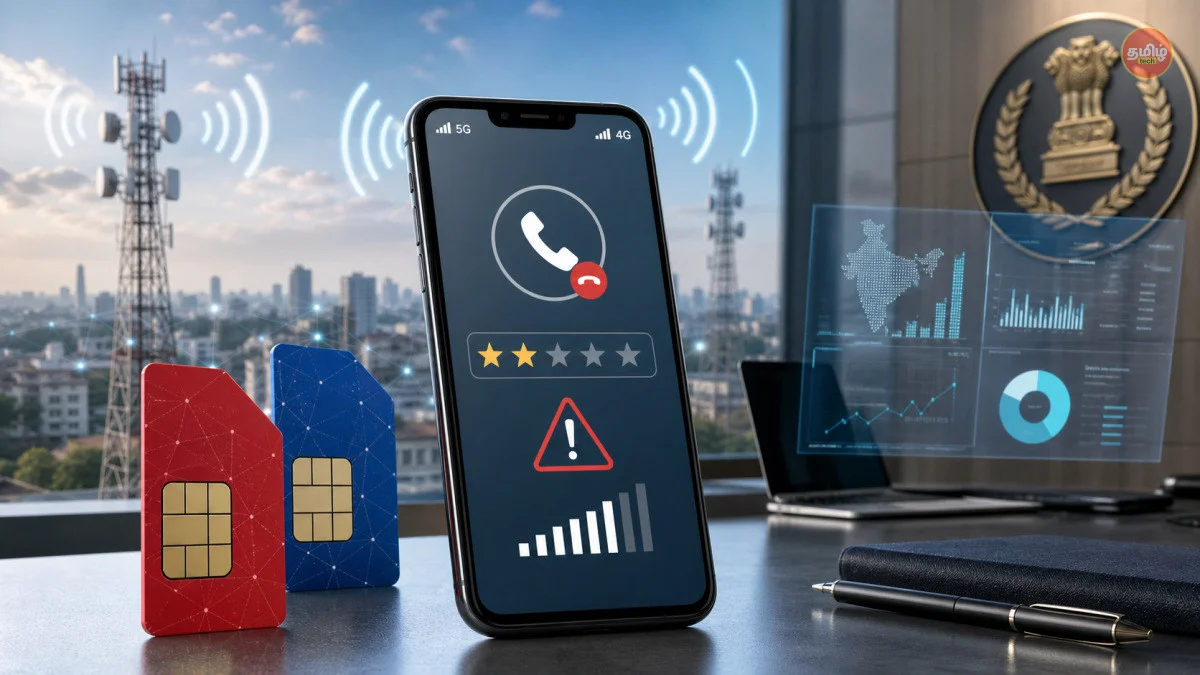
- The revamped TRAI MyCall app allows users to provide real-time ratings (1 to 5 stars) immediately after a voice call ends.
- The app now captures critical network data like signal strength, network type (4G/5G), and location (indoor/outdoor) to help TRAI identify dark zones.
- This update is part of the 2026 Quality of Service (QoS) crackdown to hold Jio, Airtel, and Vi accountable for frequent call drops.
- Users can now report specific issues like 'noise', 'silence', or 'call drop' directly through a simplified pop-up interface.
The Never-Ending Struggle with Call Drops in 2026
Even in 2026, with 5G reaching almost every corner of India and talks of 6G trials beginning, one problem remains surprisingly stubborn: call drops. We have all been there—right in the middle of an important office meeting or a deep conversation with a friend, the voice starts cracking, and suddenly, the call is gone. It is frustrating, and most of the time, we just redial and move on, thinking there is nothing we can do about it. But TRAI (Telecom Regulatory Authority of India) wants to change that. They have officially revamped the 'MyCall' app, turning it into a powerful weapon for the common man to fight back against poor service quality. This isn't just a minor update; it is a complete overhaul of how we communicate our network grievances to the authorities.
The big news here is that TRAI has realized that automated data from telecom towers doesn't always tell the full story. A tower might show 'full signal' on the company's dashboard, but for a user sitting inside a basement or a high-rise apartment, the experience might be terrible. By revamping the MyCall app, TRAI is shifting the power to the users. Now, your personal experience becomes the data point that forces companies to improve. If you have been feeling that your monthly recharge is getting expensive while the service quality is going down, this is the tool you need to start using today. Let's dive deep into what has changed and how you can use this to make your voice heard.
How the Revamped MyCall App Actually Works
The core philosophy of the new MyCall app is 'Real-Time Feedback.' In the previous version, the interface was a bit clunky, and people often forgot to report issues after they happened. In the 2026 version, the app is much smarter. Once you finish a call, a small, non-intrusive pop-up can appear (if you enable it) asking you to rate the call quality from 1 to 5 stars. If you give it a low rating, it immediately asks for the specific reason—was it a total call drop? Was there a one-way speech issue? Or was the voice just too noisy? This level of detail helps TRAI understand exactly what is going wrong with the network in your specific area.
But the real magic happens in the background. While you provide the star rating, the app securely captures anonymized technical data. It looks at whether you were on a 4G or 5G network at that moment, what the signal strength (measured in dBm) was, and even your approximate GPS location. Crucially, the 2026 update includes an 'Indoor/Outdoor/Traveling' toggle. This is a game-changer because network behavior changes drastically when you are moving in a car versus sitting in your living room. All this data is bundled together and sent to TRAI's central servers, where it is mapped out on a national 'Quality of Service' dashboard that the public can also view. It is like a heat map for bad network zones across India.
Why This is a Big Deal for Indian Users
In India, we have some of the cheapest data rates in the world, but our voice call quality has often been the 'sacrificial lamb' in the race for high-speed internet. Telecom companies like Jio, Airtel, and Vi are constantly under pressure to meet TRAI's strict benchmarks. However, the 2026 guidelines are much tougher. TRAI has recently increased the penalties for call drops, and they are using the data from the MyCall app to verify the claims made by telcos. If a company claims 99% connectivity in a city but the MyCall app shows thousands of users reporting drops in the same area, TRAI can now take legal and financial action based on that crowdsourced evidence.
For the average user in Chennai, Mumbai, or even a small village in Tamil Nadu, this means accountability. We often complain on Twitter or call customer care, only to be told that 'everything is fine at our end.' With the MyCall app, you aren't just complaining; you are contributing to a massive database that the government uses to monitor these giants. It also helps in identifying 'blind spots' in cities where new buildings might be blocking signals. By using this app, you are essentially helping the regulator build a case against poor service, which eventually leads to better infrastructure and more towers in your locality.
Step-by-Step: How to Set Up and Use MyCall 2.0
Setting up the app is straightforward, but there are a few permissions you need to get right for it to be effective. First, download the official TRAI MyCall app from the Google Play Store or Apple App Store. Upon opening, it will ask for permissions to access your call logs and location. This is necessary because the app needs to know when a call ends to trigger the feedback mechanism and where you were to map the signal strength. Don't worry, TRAI has clarified that they do not record your conversations; they only look at the technical metadata of the connection itself.
Once installed, you can choose how often you want to be prompted for feedback. You can set it to ask after every call, or only after calls that last longer than a certain duration. When the rating window pops up, simply tap the stars. If it was a bad call, select the category—'Call Drop' is the most important one to report. You can also add a small note if you want. If you are worried about battery drain, the 2026 version of the app has been optimized to use 'Low Energy' background scanning, so it won't kill your phone's battery life. It is a 'set it and forget it' type of app that only comes alive when you actually need to report a problem.
TamilTech’s Honest Take: Will This Actually Stop Call Drops?
Here at TamilTech, we think this is a step in the right direction, but it is not a magic wand. The success of the MyCall app depends entirely on how many people use it. If only a few thousand people report issues, the telcos can easily dismiss it as 'isolated incidents.' But if millions of Indians start rating their calls, the data becomes impossible to ignore. It is a classic case of 'unity is strength.' We have seen similar initiatives work in the past with the DND (Do Not Disturb) app, which significantly reduced spam calls for those who used it correctly.
However, we also believe that TRAI needs to be more transparent about the actions taken. While the app collects data beautifully, we want to see monthly reports on which telco was fined and how much, based specifically on MyCall feedback. Our advice? Download the app and keep it on your phone. The next time you are frustrated by a call drop, don't just get angry—open the app and give that 1-star rating. It takes exactly two seconds, but it is the only way to ensure that the ₹700 or ₹800 you spend on your quarterly recharge actually gives you the service you deserve. Let's hold these companies accountable, one star at a time.


Comments (0)
Be the first to comment!