


- Zero outside influence: The Department of Financial Services confirmed that India sets UPI fee rules purely on domestic economic priorities, completely rejecting claims of foreign trade pressure.
- No special perks: NPCI circulars apply the exact same regulatory rules to every player, offering zero backdoor concessions or unique advantages to global card networks.
- Daily payments stay free: Standard bank-to-bank UPI transfers and QR payments at your local tea shop or grocery store remain free with zero MDR.
- Response to USTR: The official statement answers complaints highlighted in the US Trade Representative 2026 report regarding market access for overseas payment giants.
What is this fight actually about?
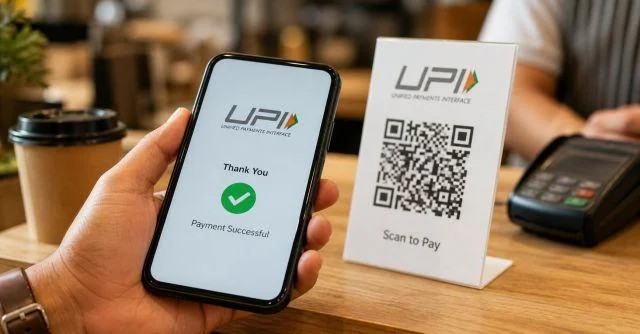
You pull out your phone at a roadside tea stall, scan a paper QR sticker on the glass jar, pay ₹15 for a hot chai, and leave. The shopkeeper gets every single rupee credited to their bank account instantly. No gateway commission. No cut taken away. That effortless setup is the backbone of daily life across India.
For global payment corporations, that massive volume looks like an untapped goldmine. Every year, billions of transactions move through India without handing over the traditional swipe fees that card companies built their business empires on.
The US Trade Representative published its 2026 report, expressing frustration over how American electronic payment service providers operate in India. The report argued that foreign card networks face an uneven playing field when trying to participate in the UPI ecosystem, particularly for credit-linked payments.
The Department of Financial Services under the Ministry of Finance has stepped in to settle the debate. The government clarified that India did not alter or shape its UPI Merchant Discount Rate policies under any foreign pressure. It also made clear that circulars issued by the National Payments Corporation of India do not offer any special benefits to international credit card networks.
Why are global card giants upset with UPI?
To understand the disagreement, look at how traditional credit card swipes generate revenue. When you swipe a plastic card at a supermarket, the shopkeeper pays a Merchant Discount Rate fee. This fee usually ranges between 1.5% and 2% of your entire bill.
That 2% cut gets split between the card network, the issuing bank, and the swipe machine provider. On a ₹5,000 purchase, the shop loses ₹100 just to process the payment. For decades, that business model generated dependable profits for global networks.
India flipped the entire system upside down. When UPI rolled out, it operated on a zero-MDR mandate for ordinary bank account transfers. Small shops and large chains adopted UPI instantly because they did not have to surrender a slice of their revenue on every single sale.
When NPCI opened the door for credit transactions through Credit on UPI, it introduced a specific interchange model. Transactions under ₹2,000 made through linked RuPay credit cards at small merchant locations carry zero merchant charges. Only higher-value transactions at larger commercial businesses attract standard processing fees.
Global card providers want the freedom to plug their existing high-fee commercial setups directly into India's UPI rails. When trade bodies complain about access barriers, what they really want is the ability to run their legacy fee models inside India's public payment grid.
What did the Finance Ministry clear up?
The Department of Financial Services made India's regulatory position unmistakably clear. Every policy decision around UPI merchant fees and settlement structures is crafted to protect local consumers, support small retailers, and keep the domestic financial framework stable.
The Ministry explained that NPCI guidelines apply equally across the board. If an international card network wants to connect with UPI or offer credit services, it must follow the exact same domestic rules, technical protocols, and fee caps that apply to RuPay and Indian banks.
There are no special shortcuts. No hidden exemptions exist for overseas payment giants. The government confirmed that foreign entities are free to operate within India as long as they follow local regulatory standards rather than expecting bespoke commercial privileges.
What does this mean for your daily payments?
For regular users who open GPay, PhonePe, or Paytm every morning to buy milk, book an auto ride, or recharge mobile numbers, nothing changes at all. Your daily bank-to-bank transfers stay lightning fast and completely free.
You do not have to worry about surprise charges showing up when scanning a merchant QR code. The zero-MDR rule for standard UPI transfers remains rock solid.
If you use a RuPay credit card linked to your UPI app, your spending experience continues without disruption. You can pay small merchants up to ₹2,000 seamlessly, while larger retail stores and online shopping platforms process higher-ticket payments under the existing framework.
How does this affect shopkeepers and small businesses?
Small shop owners and Kirana merchants can breathe a huge sigh of relief. The biggest fear among neighbourhood retailers has always been the sudden return of mandatory card swipe fees on everyday QR scans.
Because the government held its ground on MDR guidelines, small merchants can keep their QR standees on the counter without worrying about losing 2% on every vegetable bundle or packet of biscuits they sell.
For bigger merchants and online portals like Swiggy, Flipkart, and IRCTC, the system remains orderly. They continue processing payments through regular merchant gateways with clearly defined, regulated commercial rates that prevent arbitrary fee hikes.
What should you do now?
Continue running your daily transactions exactly as you do today. The underlying UPI rail remains one of the most reliable, cost-effective digital payment networks in the world.
If you manage a business, make sure your merchant profile is set up properly with your bank. Keep your basic UPI QR active for general customer payments. If you want to accept credit payments from linked credit cards, check the fee terms with your payment provider for transactions crossing the ₹2,000 mark.
If you are a card user, explore linking an eligible credit card to your UPI app if your bank supports it. It gives you a short interest-free credit window for regular shopping while keeping your bank balance untouched until bill day. India's payment ecosystem is built around customer convenience, and the latest clarification guarantees that priority will not change anytime soon.


Comments (0)
Be the first to comment!