


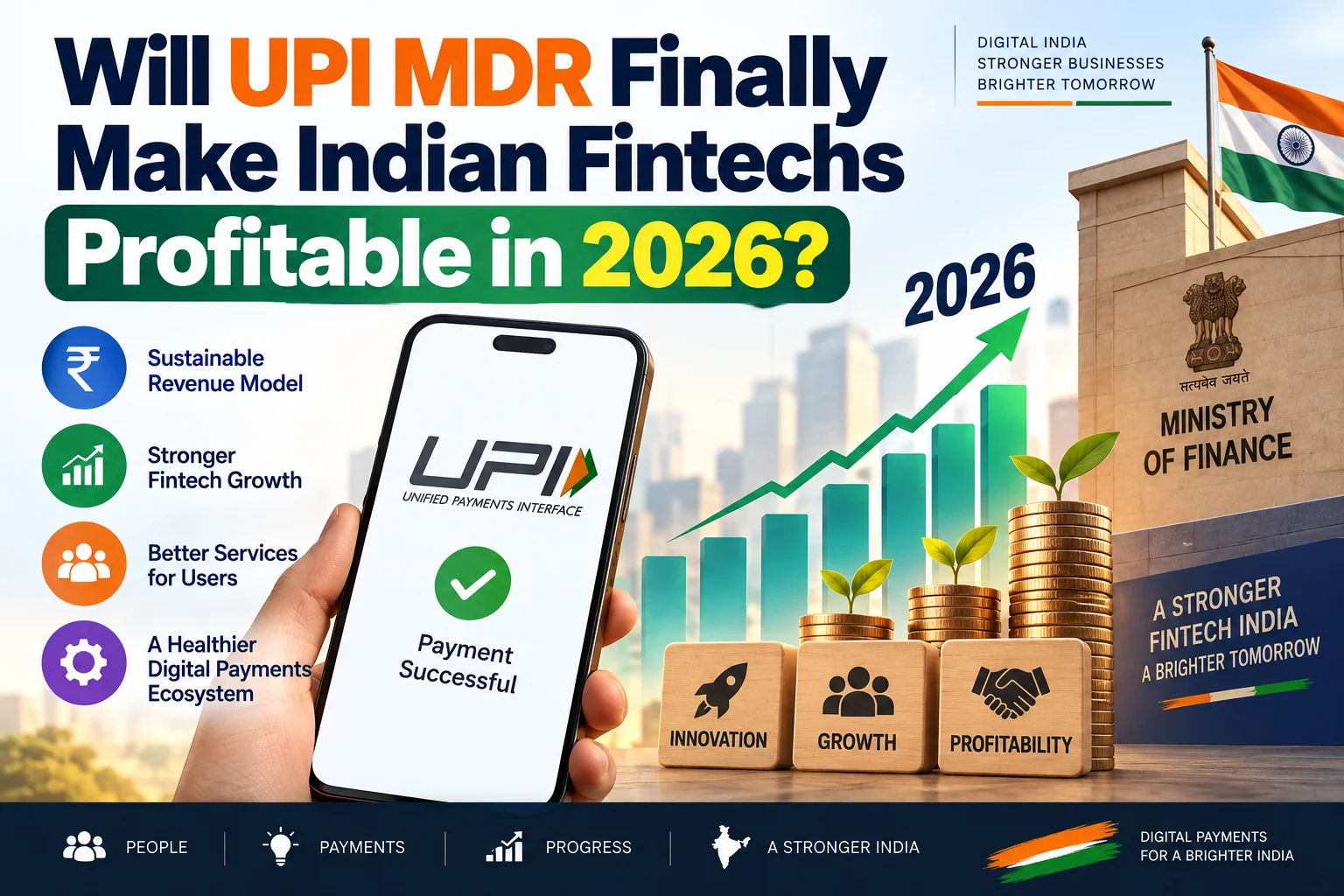
- Discussions around a 0.4% Merchant Discount Rate (MDR) on select UPI payments above Rs 2,000 are picking up across the payment industry in 2026.
- Fintech platforms like PhonePe, Google Pay, and Paytm built massive daily volume, but zero-fee rules left core payment processing operating without direct income.
- Small daily tea stall payments, milk purchases, and local retail scans under Rs 2,000 remain completely untouched and free.
- The big question is whether merchants absorb the small fee like credit card charges or look for clever billing workarounds.
Why is everyone talking about a 0.4% UPI fee now?
Walk up to any roadside tea stall, scan a QR stand, and pay Rs 12. The speaker box announces the payment within three seconds, and nobody pays a single paisa as processing fee. We have taken this digital convenience for granted for years across India.
Behind that instant three-second chime, a massive digital machinery is spinning non-stop. Payment apps, sponsor banks, cloud server farms, and fraud detection networks work together on every single tap. For a long time, fintech companies ran these systems largely out of their own investor funds or relied on limited government subsidies. Every time you paid for an auto ride or street food, payment companies spent money maintaining that digital railway track without earning a direct cut from the transaction itself.
Now, conversations across the financial ecosystem are zeroing in on MDR, or Merchant Discount Rate. The idea is simple: introduce a 0.4% fee on select merchant transactions crossing Rs 2,000. That seemingly modest cut has sparked lively debate across Dalal Street and the startup ecosystem, with observers asking if payment apps can finally turn their high-volume platforms into self-sustaining business operations.
How does this 0.4% MDR actually work at the billing counter?
Merchant Discount Rate is simply the fee a business pays to financial networks for processing electronic payments. When someone swipes a regular credit card at a clothing store, the store pays roughly 1.5% to 2% to the card network and bank. That high fee is why many neighbourhood shops historically kept card swipe machines hidden under the counter.
UPI exploded across the country because zero MDR removed that friction entirely. Street vendors and small shop owners adopted QR codes rapidly because every single rupee sent by the customer reached their bank account in full. But for payment apps, zero fees meant looking for roundabout ways to generate revenue, like charging monthly rents for audio soundboxes, distributing personal loans, or selling mutual funds.
Under the proposed 0.4% framework, your daily small-ticket payments stay 100% free. When you go to a supermarket and spend Rs 3,000 on monthly provisions, a 0.4% fee amounts to exactly Rs 12. That Rs 12 gets shared between the merchant's payment provider, the customer's payment app, and the participating banks to cover operational expenses.
Because the country processes billions of transactions every month, even a small 40-basis-point slice on high-value payments adds up to a substantial revenue stream across the entire payments network.
What happens to your local chai stall and grocery store?
For everyday shoppers, the payment experience remains identical to what you use today. Buying morning tea, hiring an auto rickshaw, picking up vegetables, or sending money to a friend sits safely below the Rs 2,000 threshold. No extra charges, no convenience fees, and no changes at checkout.
For small street vendors, nothing changes either. A fruit seller or neighbourhood bakery where individual bills rarely cross a few hundred rupees will not face deductions. The policy design specifically shields small retail commerce to ensure digital adoption continues without resistance.
For larger retail outlets, electronic showrooms, and mid-sized supermarkets, the fee is a small operational consideration. A store doing Rs 1,00,000 in daily high-ticket UPI sales would see around Rs 400 deducted as processing charges. Compared to traditional card swipe fees that take Rs 1,500 to Rs 2,000 on the same volume, 0.4% remains significantly cheaper for the merchant while providing instant bank settlement.
Where will fintech firms see the real financial impact?
For years, Indian payment companies operated under a peculiar business model. They spent heavy capital building world-class payment rails, acquired hundreds of millions of users, and then had to sell third-party financial products just to cover basic server bills. Core payments, which drove all the traffic, ran as a cost centre.
A workable MDR structure on high-ticket transfers changes that dynamic. Instead of treating payment processing purely as a lead generator for loans or credit cards, the payment rail itself begins generating steady, recurring revenue. It gives apps a direct financial return on the transaction volume they handle daily.
However, industry analysts point out that higher top-line projections do not automatically mean pure bottom-line profit. Running high-speed transaction networks requires continuous investments in cybersecurity, server capacity, customer support, and compliance. The revenue generated from MDR will first help plug existing operational deficits before translating into surplus profits.
Will merchants find clever workarounds?
The biggest unknown in this transition is merchant psychology. Indian business owners are famously cost-conscious, and their response to even small transaction fees can reshape payment patterns.
Some mid-sized shops might attempt to split a single Rs 3,500 bill into two smaller transactions under Rs 2,000 to avoid the fee. Others might nudge shoppers toward direct net banking or cash for high-ticket purchases. If large numbers of merchants actively discourage high-value QR scans, the overall volume of taxable transactions could shrink.
At the same time, convenience often wins out over minor frictional costs. Managing physical cash carries handling risks, theft concerns, and cash-deposit fees at commercial banks. For most modern retailers, paying Rs 8 or Rs 12 on a large sale is a reasonable trade-off for immediate settlement, clean digital bookkeeping, and shorter billing queues.
So, what should you keep an eye on next?
If you use UPI for daily expenses, keep doing what you normally do. When shopping online on platforms like Flipkart or booking flights, take a quick glance at your payment breakdown to confirm that platforms are absorbing the processing cost rather than adding payment surcharges at the final screen.
If you manage a business, review your monthly digital collection statements. Check what share of your daily sales falls above the Rs 2,000 mark, compare the 0.4% rate against your existing card machine charges, and evaluate whether your current payment aggregator offers competitive settlement terms.
For those tracking India's digital economy, the coming quarters will reveal how smoothly the ecosystem transitions from free, subsidized growth to self-reliant digital infrastructure. The platforms that succeed will be the ones that deliver enough reliability and speed that merchants gladly treat the fee as a standard cost of doing business.

Comments (0)
Be the first to comment!