


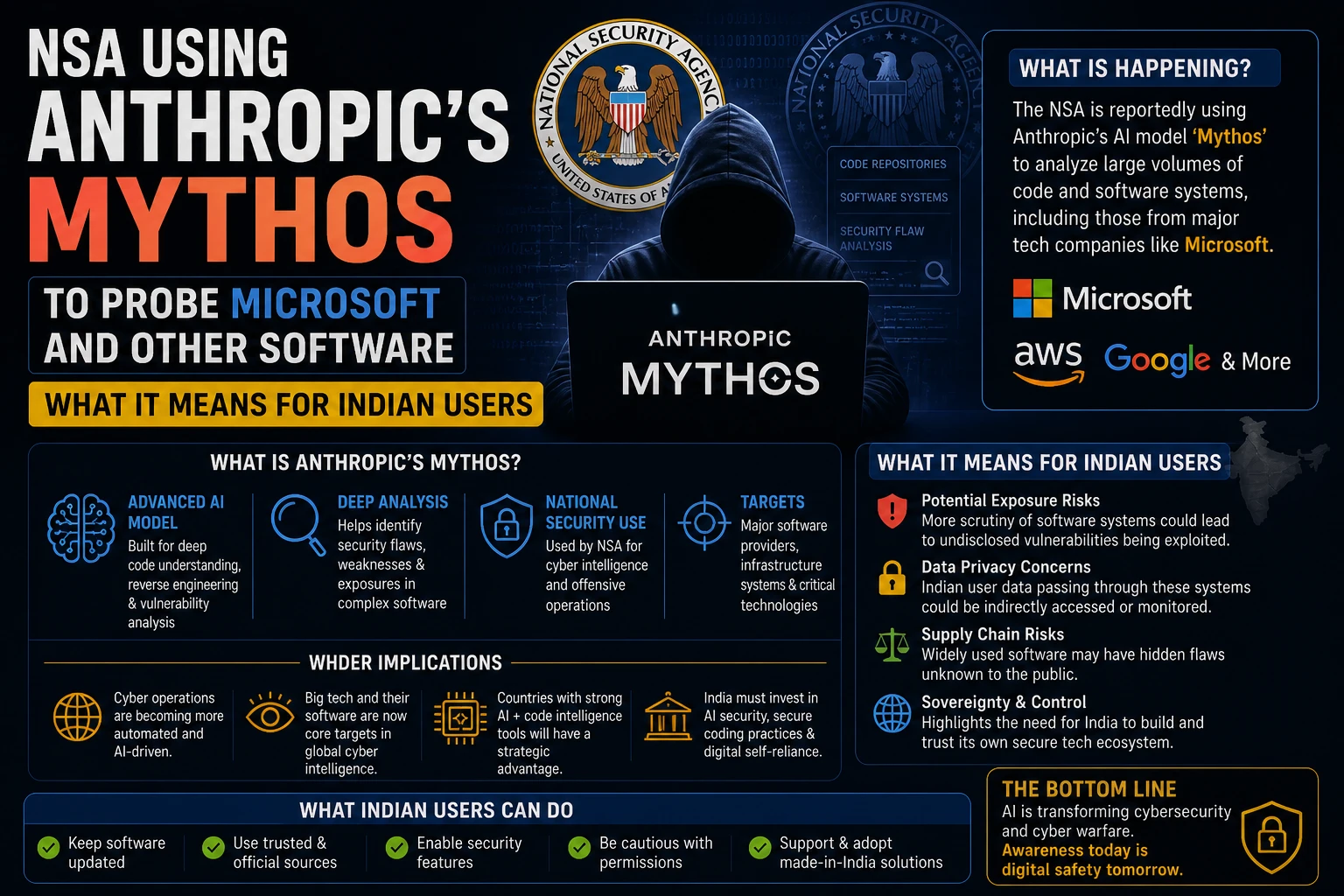
What’s the buzz?
In plain words: the National Security Agency (NSA) has started running Anthropic’s latest large‑language model, Mythos, against Microsoft products and a bunch of other widely‑used software. The goal? To see if the AI can discover hidden vulnerabilities that could be exploited later.
It’s not the first time a government agency has turned to AI for security research, but the combination of a cutting‑edge model and the sheer scale of Microsoft’s ecosystem makes this a story worth tracking, especially for us in India where a huge chunk of daily digital life runs on Windows, Office 365, Azure, and even the Teams app.
How does Mythos work?
Mythos is Anthropic’s answer to the likes of GPT‑4, but with a twist: it’s trained to think like a security researcher. Instead of just answering questions, it can generate code snippets, craft exploit payloads, and even simulate how a bug might behave in a live environment.
Think of it as a super‑charged pen‑tester that never sleeps. The NSA feeds it source‑code snippets, API documentation, or even binary logs, and asks it to “find a way to bypass authentication” or “trigger a buffer overflow”. The model then proposes a step‑by‑step approach, sometimes even writing the exact command line you’d need.
Why Microsoft? Why now?
Microsoft dominates the enterprise market: Windows runs on 80% of Indian corporate PCs, Office 365 is the default productivity suite for schools and businesses, and Azure powers a growing number of Indian startups. A single flaw in any of these platforms can affect millions of users, from a small Tamil Nadu startup using Azure Functions to a government office running Windows 10.
Besides, the recent wave of supply‑chain attacks (think SolarWinds) has shown that state actors love to exploit trusted software. By using Mythos, the NSA can automate the discovery phase and potentially hand‑off the most promising bugs to its own cyber‑operations teams.
What else is in the cross‑hairs?
Besides Microsoft, the reports say the agency is also testing Mythos on:
- Google Chrome extensions used for ad‑blocking.
- Popular open‑source libraries like OpenSSL and libcurl.
- Enterprise‑grade VPN clients that Indian remote workers rely on.
In short, anything that sits on a typical Indian workstation or server.
Impact on Indian users
1. Potential exposure to zero‑day exploits. If Mythos finds a vulnerability and it’s not patched quickly, attackers (including ransomware gangs) could weaponise it against Indian companies.
2. Supply‑chain ripple effects. Many Indian SaaS products are built on Azure or use Microsoft Graph APIs. A flaw there could cascade to local services like online banking apps or e‑commerce platforms.
3. Regulatory attention. The Indian Computer Emergency Response Team (CERT‑In) may have to issue advisories faster, and compliance frameworks like ISO 27001 could see tighter audit clauses.
What can you do right now?
While you can’t control what the NSA does, you can tighten your own security posture.
- Make sure Windows Update is set to automatic. Most critical patches for OS‑level bugs are delivered here.
- Enable Multi‑Factor Authentication (இரண்டு-நிலை பாதுகாப்பு) on all Microsoft accounts – Office 365, Azure, Teams.
- Use the latest version of Office apps. Microsoft 365 updates roll out monthly, and they often include security fixes.
- If you run any on‑premise servers, consider migrating critical workloads to Azure’s ‘Security Center’ which adds built‑in threat detection.
- Regularly scan your codebase with static analysis tools. Tools like SonarQube can catch the kind of bugs AI models love to exploit.
TamilTech‑ஓட கருத்து
We think this is a wake‑up call for the Indian tech community. AI‑driven security research is no longer a niche hobby; it’s becoming mainstream, and governments are the early adopters. That means the attack surface is widening, but also that defenders have a powerful new ally – AI‑based vulnerability scanners.
For Indian startups, the message is clear: invest in proactive security now, or risk being the next headline in a ransomware attack. The good news is that most of the tools we mentioned are either free or come bundled with existing licences.
What’s next?
Analysts expect the NSA to keep feeding Mythos more complex targets – think Azure Kubernetes Service (AKS) and Microsoft’s AI services. If a serious flaw surfaces, we’ll likely see a coordinated patch roll‑out from Microsoft within weeks, but the window of exposure could be enough for opportunistic attackers.
Keep an eye on official security bulletins from Microsoft and CERT‑In, and stay tuned to TamilTech for any break‑downs of upcoming patches.





Comments (0)
Be the first to comment!