


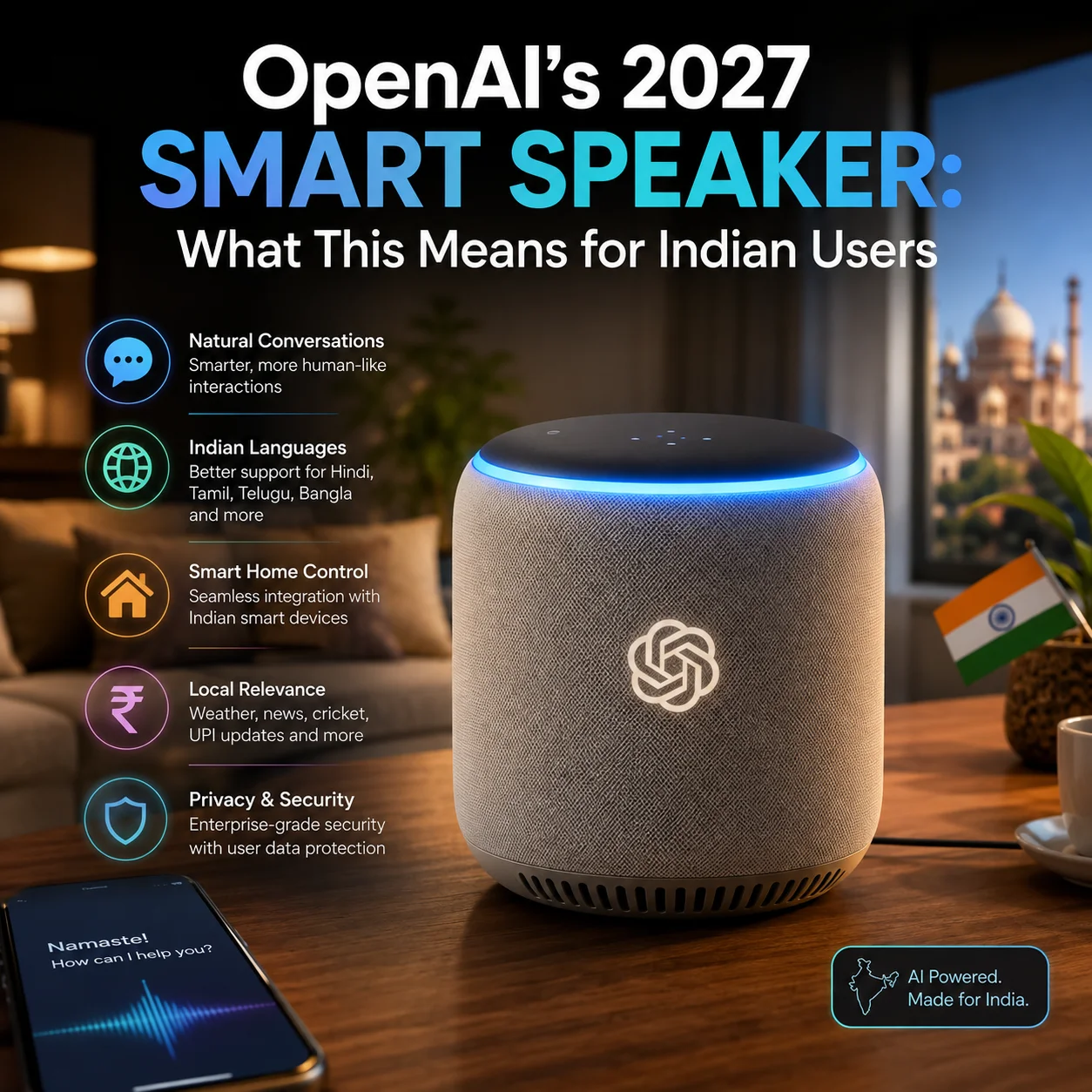
Key Takeaways
- OpenAI's rumored 2027 smart speaker will likely cost over $300 (around ₹25,000+ in India)
- Moving parts and personality features could differentiate it from Alexa/Google Home devices
- Privacy concerns may be higher than current smart speakers in India
- Import pricing and availability in India remains uncertain
- For most Indian students and families, current phone-based solutions remain more practical
What's the news
OpenAI is reportedly planning a consumer device for 2027 - a hockey-puck-sized smart speaker with moving parts that give it personality. The device is expected to be priced above $300, which would make it a premium product in the Indian market. This news has sparked discussions about how it might compete with existing smart speakers from Amazon and Google in India.Technical details and features
The device is said to have moving parts that give it personality, making it different from current smart speakers. It's expected to be hockey-puck sized, which is compact but substantial. The $300+ price point puts it in the premium category, well above most smart speakers available in India. The moving parts suggest some form of physical interaction or expression, possibly making it more engaging than current voice-only devices.Comparison with current smart speakers in India
When we look at the current smart speaker market in India, devices like Amazon Echo range from ₹2,000 to ₹8,000, while Google Nest devices cost between ₹4,000 and ₹10,000. These devices have become quite popular in Indian households, especially in urban areas. They work well with Indian languages and accents, and integrate smoothly with local services like Jio, Airtel, and various Indian apps. The OpenAI device, if it comes to India, would be significantly more expensive. At $300, that's roughly ₹25,000 at current exchange rates. Adding import duties, GST, and other taxes, the final price could easily exceed ₹35,000. This puts it in a completely different category from the devices most Indian families use.Pricing analysis in India
The pricing strategy for this device would be crucial in the Indian market. At $300, it's already expensive for most Indian consumers. When we factor in import duties (typically 18-28% for electronic devices), GST (18%), and other charges, the final price could be around ₹40,000-45,000. This is more than what many Indian families spend on their monthly household expenses. For comparison, a good smartphone in India costs between ₹15,000 and ₹30,000. So the OpenAI smart speaker would cost as much as a premium smartphone, but with more limited functionality. This pricing strategy might work in very affluent urban areas, but it's unlikely to appeal to the mass market.Privacy and data concerns
As an OpenAI device, it would likely collect extensive data to power its AI features. Indian users should carefully review privacy policies and understand data handling practices, especially given recent concerns about data localization in India. The device would need to comply with India's data protection laws, which are becoming stricter. There are also concerns about how the device would handle Indian languages and accents. While OpenAI has shown strong capabilities with Indian languages in its software products, hardware implementation might have different challenges. The device would need to work well with various Indian accents and dialects, which can be quite diverse.Use cases for Indian students and families
For Indian students and families, this device might offer advanced AI capabilities, but the high price point makes it impractical for most. It could be useful for tech enthusiasts, developers, or wealthy households looking for cutting-edge AI interaction. The moving parts and personality features might appeal to children, but safety concerns in Indian homes with young kids need consideration. Students preparing for competitive exams might benefit from advanced tutoring features, but again, the cost would be prohibitive. Most Indian students already use AI features on their smartphones, which are much more affordable and versatile. The device might find use in educational institutions, but even there, budget constraints would be a major factor.Market impact and competition from Indian companies
The entry of a premium OpenAI device could have some impact on the Indian smart speaker market, but it's unlikely to be significant. Indian companies like Jio and Julep are also working on affordable AI solutions that might serve the mass market better. These companies understand the Indian market better and can offer products at more competitive prices. The smart speaker market in India is still growing, and most consumers are looking for affordable, reliable solutions. A premium device from OpenAI might create some buzz in tech circles, but it's unlikely to change the buying behavior of most Indian consumers.Honest assessment
While OpenAI's rumored device sounds innovative, the $300+ price point makes it inaccessible for most Indian users. Current smart speakers from Amazon and Google already offer good functionality at much lower prices. For most Indian families, using AI on their phones or through existing smart devices remains the most practical solution. The device might find niche appeal among tech enthusiasts, but its impact on the broader Indian market will likely be limited. Indian companies are better positioned to serve the mass market with affordable AI solutions. The device could be useful in specific scenarios, like in high-end corporate offices or luxury homes, but it's not a game-changer for the average Indian consumer.Future outlook
If OpenAI does release this device in India, it would be interesting to see how they price it and what features they include. The company might need to consider a lower-priced version for the Indian market, or they might focus on very specific use cases. The success of such a device would depend on how well it addresses the needs and constraints of Indian consumers. For now, most Indian users will continue to rely on their smartphones and existing smart speakers for AI assistance. These devices offer good value for money and are well-suited to the Indian context. The OpenAI device, while innovative, is unlikely to change this landscape significantly in the near future.Q1: When will this device be available in India?
While the device is rumored for 2027, official availability in India hasn't been announced. If released, it would likely face high import duties and taxes, increasing the final price significantly beyond the base $300.
Q2: How does this compare to Alexa and Google Home in India?
The device would be significantly more expensive than popular options like Amazon Echo (₹2,000-8,000) and Google Nest (₹4,000-10,000). It might offer more advanced AI capabilities but at a premium price point that most Indian consumers would find difficult to justify.
Q3: What are the privacy implications?
As an OpenAI device, it would likely collect extensive data to power its AI features. Indian users should carefully review privacy policies and understand data handling practices, especially given recent concerns about data localization in India.
Q4: Will it work with Indian languages and accents?
OpenAI has shown strong capabilities with Indian languages, but specific support for regional accents and dialects would need verification. The device would likely support Hindi and major Indian languages, but regional language performance remains to be seen.
Q5: Is it worth the price for Indian users?
For most Indian users, the high price makes it impractical. The device would be better suited for tech enthusiasts or those specifically needing OpenAI's advanced AI capabilities. Most Indian families would get better value from existing smart speakers or even just using AI features on their smartphones.





Comments (0)
Be the first to comment!