


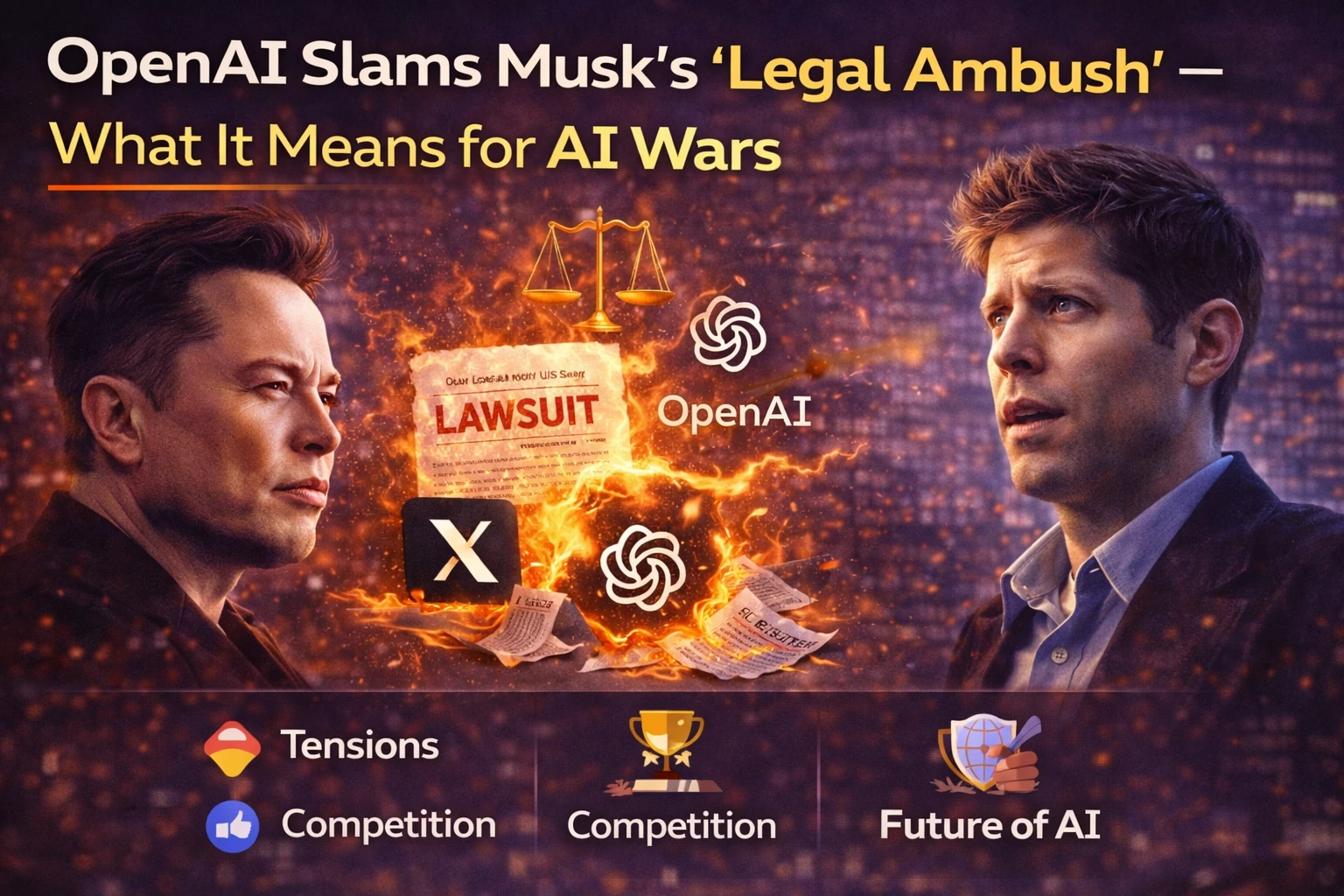
What’s the drama?
OpenAI just dropped a bombshell in court: it says Elon Musk’s recent changes to his lawsuit are a “legal ambush” – basically, a move that’s both “legally improper” and “factually unsupported”. In plain English, OpenAI claims Musk is trying to rewrite the rules of the case at the last minute, without any real evidence.
Both sides are fighting over the same thing – who owns the right to train AI on publicly available data, and whether Musk’s new company, xAI, can use OpenAI’s tech without a licence. The stakes? Billions of dollars, massive data pipelines, and the future direction of generative AI.
How the court battle unfolded
Back in March, Musk filed a lawsuit accusing OpenAI of violating antitrust laws and misusing data. OpenAI responded with a counter‑claim, saying Musk’s company was stealing its proprietary models. Fast forward to this week, Musk filed an amendment – a new set of allegations that OpenAI says were added just to “ambush” the court.
OpenAI’s legal team laughed at the amendment, calling it “legally improper” because it adds claims that were never part of the original filing. They also said the facts Musk cites don’t exist – basically, it’s a house of cards.
Key points from the filing
- OpenAI says Musk’s amendment violates procedural rules – you can’t just throw new claims at the last minute.
- The new claims are said to be “factually unsupported”, meaning there’s no evidence in the record.
- OpenAI is asking the judge to strike the amendment and keep the case focused on the original issues.
Why Indian startups should care
India’s AI scene is booming – from Bengaluru’s deep‑tech labs to Hyderabad’s chatbot startups. Most of these companies rely on open‑source models and publicly available data, just like the data in dispute here. If a court decides that using public data without a licence is illegal, it could ripple through the Indian ecosystem.
Imagine a scenario where every AI startup has to sign a licence with a big player like OpenAI before training on any web‑scraped data. That could raise costs, slow innovation, and push Indian talent to look abroad.
TamilTech’s take
We think Musk’s move is a classic high‑stakes legal poker play. He’s trying to force OpenAI into a corner, hoping the court will side with a narrative that paints OpenAI as a monopoly. But the judge’s job is to keep the process fair – and sudden rule‑changing isn’t usually welcome.
From an Indian perspective, the case is a warning sign. The next time a startup in Chennai wants to train a model on news articles, they might have to think twice about the legal grey area.
What could happen next?
- The judge could strike the amendment – keeping the case on its original track.
- If the amendment survives, we could see a longer, more complex trial that drags on for years.
- Either way, the final ruling will set a precedent for how AI data is treated in US courts, and that influence often spreads to other jurisdictions, including India.
Bottom line for Indian readers
Stay alert. If you’re building AI products, start documenting where your training data comes from. Use clear licences, and keep a paper trail. It might feel like extra work now, but it could save you from a legal nightmare later.
Also, keep an eye on policy updates from the Ministry of Electronics & IT – they’re watching the global AI wars closely and may introduce local guidelines soon.





Comments (0)
Be the first to comment!