


Key Takeaways
- Finance Minister confirmed zero MDR on Person-to-Person UPI transactions, effective immediately
- New taxation bill introduces simplified tax slabs for digital services across India
- Bill aims to boost digital economy while maintaining revenue targets
- P2P UPI transactions under ₹1 lakh remain completely free for users
- Tax compliance for digital platforms streamlined through single-window system
What's the News
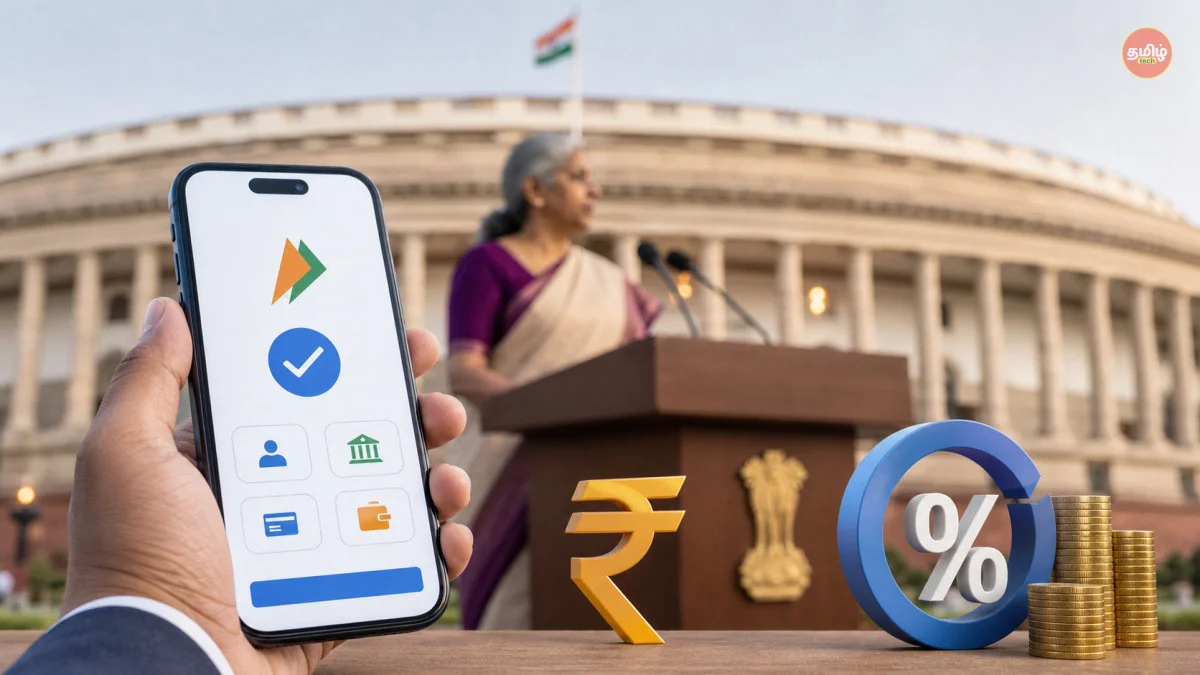
Parliament has given its nod to a comprehensive taxation bill that promises significant changes to India's digital payment ecosystem. The bill, which cleared both houses with overwhelming support, comes with a crucial reassurance from the Finance Minister regarding UPI payments. In a recent statement, the Minister confirmed that no Merchant Discount Rate (MDR) will be imposed on Person-to-Person (P2P) UPI transactions, effectively maintaining the current free-of-cost structure for peer-to-peer digital transfers.
Details
The newly passed taxation bill introduces several key provisions affecting India's digital economy. For digital services, the bill proposes a simplified tax structure with three slabs: 5% for transactions up to ₹10,000, 8% for amounts between ₹10,001 and ₹50,000, and 12% for transactions exceeding ₹50,000. This tiered approach aims to balance revenue generation with digital adoption.
The bill also addresses the long-standing issue of MDR on digital payments. While MDR will continue to apply to merchant transactions (P2M), P2P UPI transfers will remain completely free of charge. This distinction is crucial as it protects the everyday user while ensuring businesses continue to benefit from digital payment infrastructure.
Additionally, the legislation introduces a unified compliance framework for digital platforms operating in India. Companies like Jio, Paytm, PhonePe, and others will now have a single-window system for tax compliance, reducing administrative burden and improving transparency.
India Impact
This development comes at a critical juncture for India's digital payment landscape. With over 750 million UPI users and billions of monthly transactions, the reassurance of zero MDR on P2P payments is expected to drive further adoption, especially in tier-2 and tier-3 cities. The move aligns with India's vision of becoming a digital-first economy.
The simplified tax structure for digital services is likely to benefit both consumers and businesses. Startups and small enterprises will particularly appreciate the reduced compliance burden and predictable tax structure. This could potentially boost the startup ecosystem, with companies like Flipkart and other e-commerce platforms seeing increased transaction volumes.
From a fiscal perspective, the government aims to maintain its revenue targets while promoting digital inclusion. The bill's design suggests a careful balance between encouraging digital adoption and ensuring sustainable revenue generation.
Use Cases
The implications of this taxation bill extend across various sectors. For individuals, daily P2P transactions for splitting bills, sending money to family, or paying for services remain free. This includes rent payments, utility bills, and informal transactions that form the backbone of India's economy.
Businesses, especially small and medium enterprises, benefit from the predictable tax structure. A kirana store owner using UPI for customer payments will face minimal tax burden, while larger enterprises have clarity on their tax obligations. The single-window compliance system particularly benefits companies operating across multiple states.
The digital service providers themselves stand to gain from the streamlined regulations. With clearer tax guidelines, companies can better plan their business strategies and investment decisions. This clarity is especially valuable for emerging technologies like UPI Lite, which aims to enable small-value transactions without internet connectivity.
Honest Take
While the zero MDR assurance on P2P UPI payments is a welcome relief for users, it's worth examining the broader implications. The government's approach appears to be balancing digital adoption with revenue needs, but the long-term sustainability of this model remains to be seen.
The simplified tax structure for digital services is a step in the right direction, though some industry experts argue that the rates might still be high for certain services. The three-tier structure, while logical, may not account for the varying cost structures across different digital services.
What's particularly encouraging is the focus on single-window compliance. This addresses a major pain point for digital platforms and could significantly reduce operational costs. However, effective implementation will be crucial – the system must be genuinely streamlined and not just another bureaucratic hurdle.
Overall, this bill represents a thoughtful approach to regulating India's rapidly evolving digital economy. The zero MDR assurance on P2P payments sends a strong signal about the government's commitment to digital inclusion, while the tax reforms provide a framework that could support sustainable growth in the sector.






Comments (0)
Be the first to comment!