


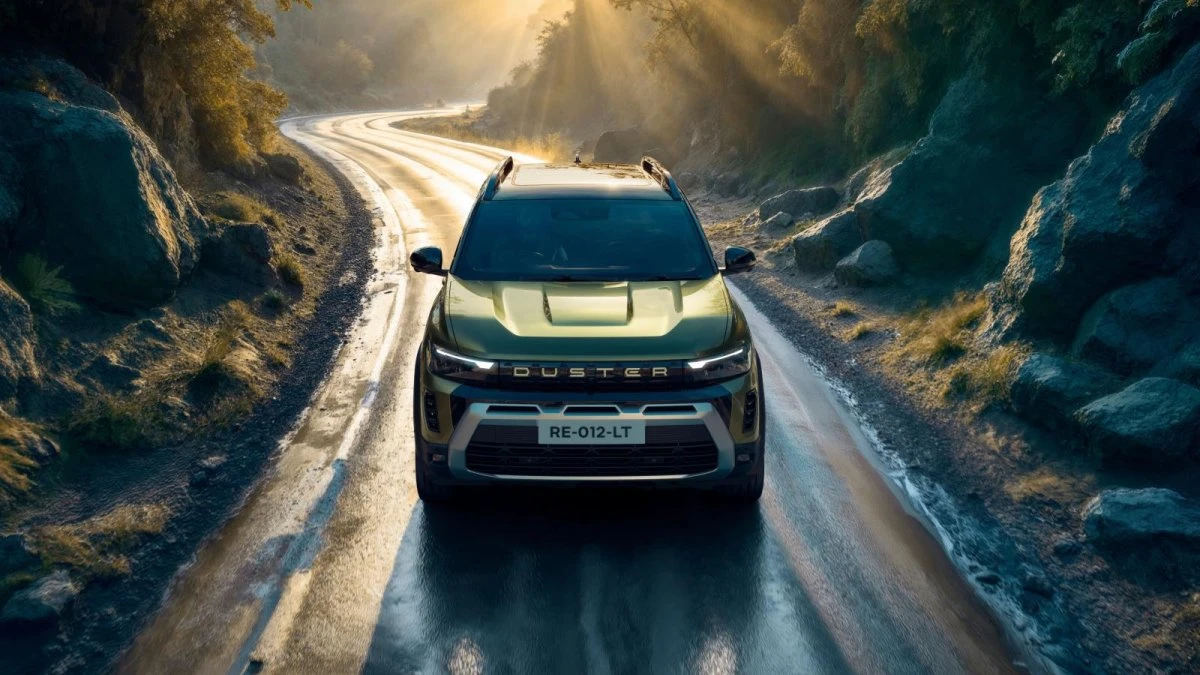
Renault finally released the Duster's official mileage — and the numbers are solid
When Renault relaunched the Duster in India this year, it ticked almost every box. Looks, performance, ride quality, features — the car impressed reviewers across the board. But mileage figures were missing from the announcement, and for Indian buyers, that number is often the final decision-making factor.
Renault India has now officially released the ARAI-certified fuel efficiency figures for the 2026 Duster's top-performing engine — the 1.3L TCe 160 turbo petrol — and the numbers are genuinely good.
DCT automatic: 18.45 km/l
6-speed manual: 17.75 km/l
ARAI figures are tested under controlled conditions, so real-world mileage will be lower — typically 20-25% below ARAI certification in mixed city and highway use. But these are the benchmark numbers and they're meaningful for comparison.
What does 163 PS and 280 Nm actually mean?
The 1.3L TCe 160 engine is not a compromise choice — it's the most powerful engine in its displacement class in the Indian SUV segment right now. Let's unpack what the numbers mean:
163 PS of peak power — PS (Pferdestärke) is the metric equivalent of horsepower. 163 PS translates to roughly 160 bhp. For an SUV priced between ₹10.29 lakh and ₹18.09 lakh, that's exceptional. Most SUVs in this price range offer 115-140 bhp.
280 Nm of peak torque — Torque is what gives you the push when accelerating, especially from lower speeds. 280 Nm at this displacement is strong. The Creta's 1.5L turbo petrol makes 253 Nm. The Duster makes more with less engine size.
Getting 18.45 km/l ARAI out of an engine making this much power is the impressive part. Usually, more power means worse fuel efficiency. Renault's 1.3L direct-injection turbocharged unit is clearly well-tuned for efficiency without sacrificing punch.
DCT vs Manual — which should you choose?
The mileage difference between the DCT (18.45 km/l) and the manual (17.75 km/l) is 0.7 km/l. In ARAI testing conditions, the DCT is actually more efficient — which sounds counterintuitive but makes sense with modern dual-clutch transmissions that are engineered to shift at optimal RPMs.
In real-world Indian driving conditions — stop-start city traffic, potholes, traffic signals every 200 meters — the actual gap between DCT and manual will likely narrow or even flip slightly in favor of the manual. That's because DCT transmissions can be less efficient in very low-speed crawling traffic compared to a human driver who can select the right gear intuitively.
For highway driving, the DCT will likely maintain its efficiency edge. For predominantly city use, the difference is minimal enough that the choice should come down to driving preference and price, not mileage.
How does this compare to segment rivals?
The Renault Duster competes directly with the Hyundai Creta, Kia Seltos, Maruti Suzuki Grand Vitara, Toyota Urban Cruiser Hyryder, and Skoda Kushaq in the Indian SUV segment.
For context on mileage comparisons: the Creta 1.5L turbo petrol automatic is certified at around 17 km/l ARAI. The Seltos HTK+ 1.5L turbo petrol DCT is in the 16-17 km/l range. The Duster's 18.45 km/l with its more powerful engine positions it favorably against both — more power, better efficiency.
The Grand Vitara and Urban Cruiser Hyryder with mild hybrid technology can hit 19-21 km/l, but those use different powertrain technology and make less peak power (103 bhp) — a different trade-off entirely.
Pricing — where the Duster sits
The 2026 Renault Duster is priced between ₹10.29 lakh and ₹18.09 lakh (ex-showroom). That's a wide range covering multiple variants, with the 1.3L TCe 160 engine commanding a premium over the base variants.
The R Pass offer is valid till March 31, so if you're seriously considering the Duster, the next few days are worth paying attention to from a pricing perspective. After March 31, the pricing structure may change.
At ₹18 lakh for a fully loaded TCe 160 DCT Duster, you're paying less than a top-end Creta or Seltos while getting more engine output and a certified ARAI figure that beats both. The value proposition on paper is strong.
What real-world mileage can you actually expect?
Based on typical ARAI-to-real-world conversion ratios for Indian driving conditions:
City driving (heavy traffic, AC on, frequent stops): Expect 11-13 km/l for the DCT, 12-14 km/l for the manual.
Highway driving (60-100 kmph, moderate AC): Expect 16-18 km/l for DCT, 15-17 km/l for manual.
Mixed city-highway use: Roughly 13-15 km/l is a realistic expectation for most buyers.
These are estimates based on the ARAI figures and typical segment behavior — actual results will vary based on driving style, load, terrain, and AC usage. Chennai and other southern metros, where stop-start traffic and high temperatures increase AC load, will see the lower end of these ranges. Highway drivers in less congested states will see the higher end.
The missing mileage numbers — when will they come?
The mileage figures released so far are only for the 1.3L TCe 160 engine. If Renault offers other engine options for the Duster in India (including any possible diesel or lower-powered petrol variants in future), those ARAI certifications will come separately. For now, the TCe 160 is the engine to evaluate.
TamilTech's take
18.45 km/l ARAI for a 163 PS engine in a properly sized SUV is a number that earns respect. Renault could have launched this car with mediocre efficiency figures and the performance would have carried the sale. The fact that the mileage is competitive too — and in ARAI testing beats several segment rivals with weaker engines — suggests the TCe 160 unit is genuinely well-engineered, not just powerful on paper.
The Duster's comeback in India is looking like a proper one. If you're in the market for an SUV between ₹14-18 lakh, this should be on your test drive shortlist — particularly if you do regular highway runs or value driving engagement over the clinical efficiency of a mild hybrid system.




Comments (0)
Be the first to comment!