


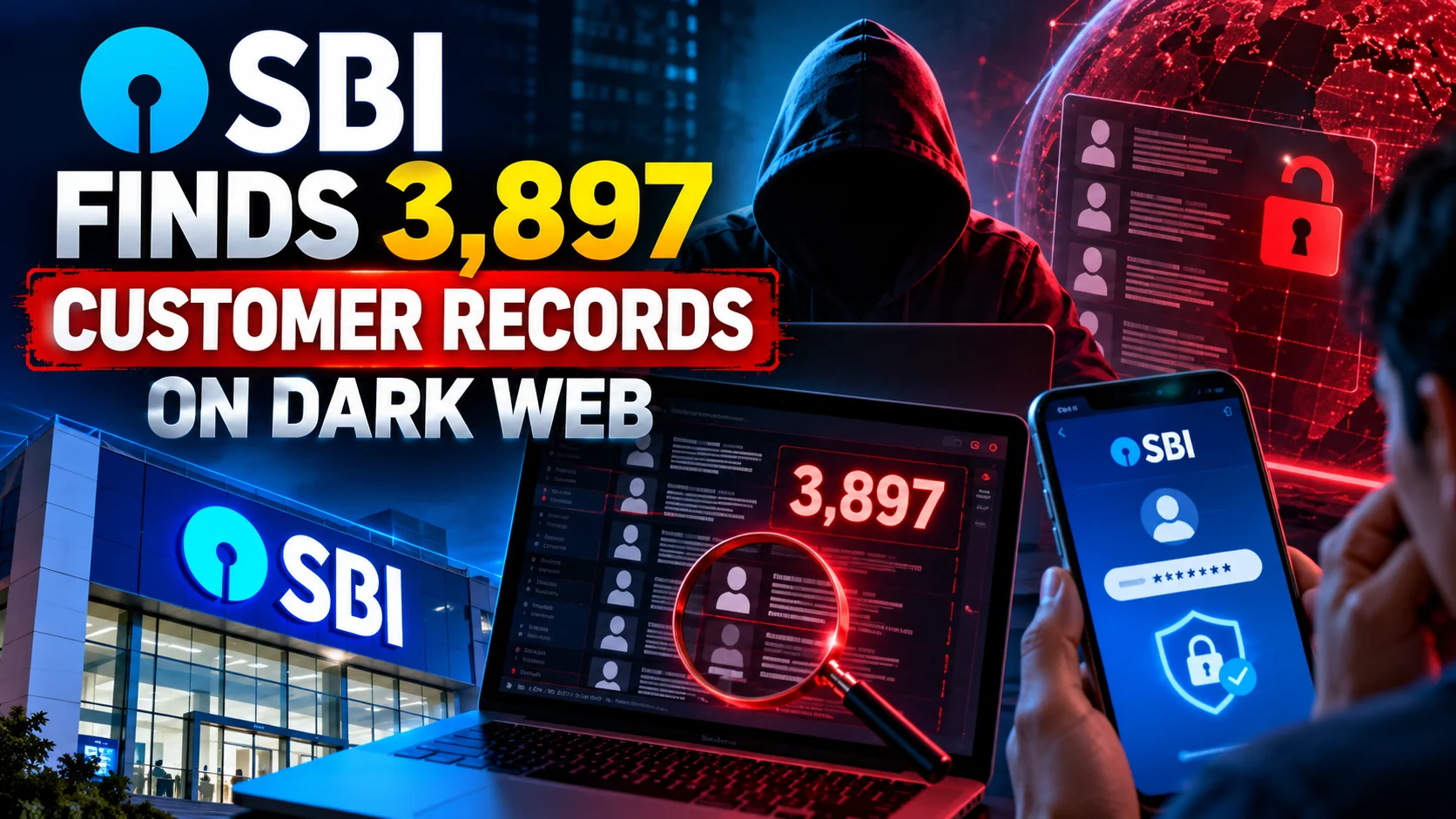
- State Bank of India (SBI) confirmed finding 3,897 customer records on the dark web following claims made by a threat actor.
- The bank launched an investigation after receiving alerts from CERT-In and the Defence Cyber Agency, disclosing the probe in a stock exchange filing.
- While the leaked batch is small compared to SBI's massive base, exposed personal details could fuel targeted phishing and fake KYC scams.
- Bank officials have not reported any direct compromise of core banking infrastructure or unauthorized financial transactions tied to the leak.
- Account holders should stay alert against suspicious calls, SMS links asking for PAN updates, and unsolicited OTP requests.
What just happened?
Imagine checking your phone over morning chai and spotting news that India's biggest public sector lender is scanning the dark web for leaked customer data. That is exactly what happened this week.
State Bank of India made an official regulatory disclosure to the stock exchanges confirming that it found 3,897 customer records floating on dark web forums. The probe kicked off after India's national cybersecurity agency, CERT-In, alongside the Defence Cyber Agency, flagged suspicious claims made by an online threat actor.
A hacker had publicly claimed to hold sensitive data belonging to SBI users. When security teams followed the trail, they identified a cluster of nearly 3,900 customer records uploaded to underground channels. The bank promptly informed the bourses that a forensic investigation is underway to determine how that data got there in the first place.
In the context of SBI, 3,897 records might look like a drop in the ocean. The bank handles over 50 crore customer accounts across India. But for the 3,897 people whose names, contact details, or banking snippets are sitting in a hacker forum, the threat is personal. When cybercriminals get their hands on verified bank records, they do not just sit on them. They test them, trade them, and use them to craft traps.
How does this actually work?
How does banking information end up on an underground forum? Core banking servers in India operate inside tightly watched digital vaults. Regulators like the Reserve Bank of India mandate heavy firewalls, regular audits, and zero-trust policies. Breaking directly into an institution's primary ledger is exceptionally difficult.
SBI has not said how these records leaked, and its investigation is still on. In general, though, in most modern data leaks the crack does not happen at the core. It happens at the edges. Think of third-party vendors, customer onboarding agencies, marketing partners, or secondary support portals. If an external service provider leaves an API unsecured or misconfigures a cloud storage bucket, threat actors scan the web, spot the gap, and scoop up the contents.
Once a hacker grabs that data, they head straight to dark web marketplaces or private Telegram channels. The attacker often posts a small batch of records as "proof of work" to build credibility. That is likely where the 3,897 records surfaced—a sample dump intended to convince buyers or mount pressure.
This is where agencies like CERT-In and the Defence Cyber Agency step in. These teams monitor illicit chatter across threat intelligence networks. When an alert matches an Indian financial institution, they ping the organization's chief information security officer immediately. SBI verified the sample, matched it against internal records, and filed the mandatory disclosure under market transparency norms.
What changes for people in India?
Here is the straight answer: your money is not vanishing simply because a batch of records leaked on the web. India's payment architecture relies heavily on two-factor authentication. A scammer cannot swipe money from your savings account or trigger a UPI transfer without your dynamic OTP or your secret UPI PIN.
The real danger here is not a digital safe-cracker. It is social engineering.
When a fraudster buys a targeted database, they get real names, phone numbers, and bank branch references. Armed with those facts, their phone calls stop sounding like clumsy spam and start sounding like legitimate bank support. You pick up the phone, and someone addresses you by name, mentions your branch, and speaks with polished authority.
The classic attack pattern in India is the dreaded "KYC suspension" scare. You receive an SMS claiming your SBI YONO access will expire by tonight unless you submit your PAN details via an accompanying link. The link takes you to a cloned banking screen that steals your credentials in real time. Because the message uses your real name and references your actual bank, thousands of everyday users drop their guard.
Senior citizens and pensioners are especially vulnerable to this trick. Scammers also use leaked contact details to trigger SIM-swap fraud or spam WhatsApp inboxes with malicious APK files disguised as account statement viewers.
What should you do now?
You do not need to panic or rush to an ATM to withdraw all your cash. But you do need to tighten your personal cyber hygiene immediately. Here is a simple checklist every Indian bank customer should follow today:
First, treat every incoming SMS and WhatsApp message about your bank account with skepticism. SBI never sends SMS messages containing bit.ly, tinyurl, or suspicious third-party links asking you to update your Aadhaar or PAN. If your KYC genuinely needs an update, the official YONO app will show an alert inside your secure login screen, or your home branch will ask you in person.
Second, install apps only from the official Google Play Store or Apple App Store. Never install an APK file sent to you via WhatsApp or Telegram, even if the caller insists it is a "quick KYC support tool" from SBI customer care.
Third, set hard transaction limits on your debit card and UPI. Inside your SBI net banking portal or the YONO app, you can cap daily online card payments, disable international usage, and turn off contactless tap-and-pay until you actually need it. If your details ever leak, low limits act as an instant circuit breaker.
Fourth, keep your OTPs and UPI PIN strictly to yourself. A bank employee will never ask for your PIN to credit money, reverse a wrong charge, or verify your account balance. Remember the golden rule of Indian payments: you only enter your UPI PIN to send money, never to receive it.
Finally, if you notice an unauthorized charge or suspect someone has accessed your profile, act fast. Call the National Cyber Crime reporting helpline at 1930 immediately or log a complaint at cybercrime.gov.in within the first two hours. Speed is the difference between recovering stolen funds and losing them permanently.





Comments (0)
Be the first to comment!