


Key Takeaways
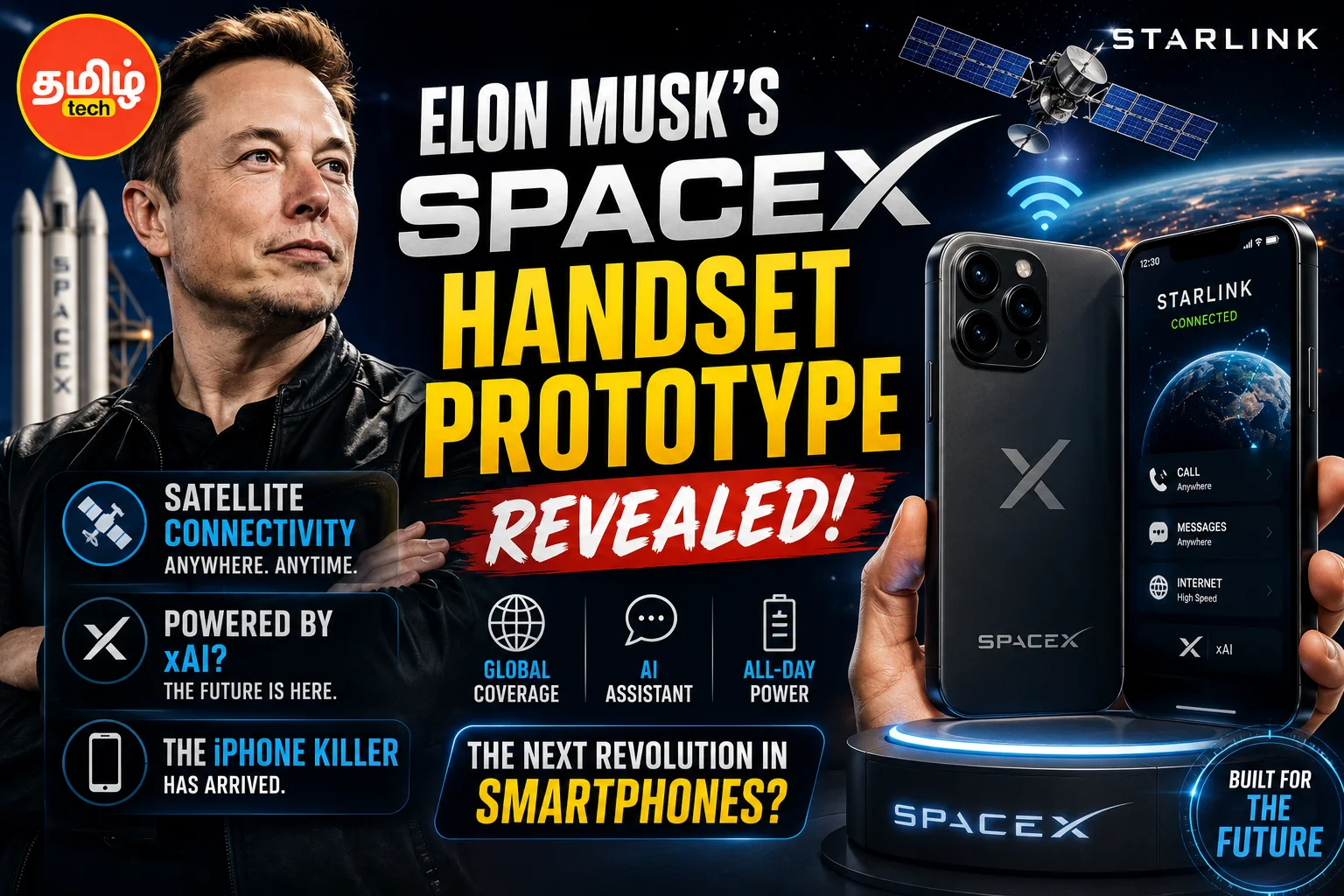
- SpaceX showcased a handset prototype to investors that is physically slimmer than the current iPhone 17 lineup.
- The device features a proprietary OS deeply integrated with xAI’s artificial intelligence, moving away from the Android/iOS duopoly.
- It is powered by a flagship Snapdragon chip optimized for direct-to-cell satellite communication without needing a bulky antenna.
- The estimated India launch price could hover between ₹90,000 and ₹1,25,000, targeting the ultra-premium segment.
- Verdict: This is a direct challenge to Apple and Google, aiming to eliminate dead zones globally using Starlink.
The 'Tesla Phone' is Actually a SpaceX Phone?
For years, the tech world has been buzzing with rumors about a 'Tesla Pi Phone.' We’ve seen countless renders, fake leaks, and concept videos on YouTube. But as of July 2026, the plot has taken a massive turn. It’s not Tesla, but SpaceX that is leading the charge into the mobile hardware market. Recent closed-door meetings with investors have revealed that Elon Musk’s space exploration company is prototyping a handheld device that isn't just another smartphone—it’s a satellite-native communication hub. This makes perfect sense when you look at the big picture. Why would Musk rely on Apple’s App Store or Google’s Play Store when he can build his own ecosystem from the ground up?
This prototype isn't just a rough sketch. Investors who saw the device describe it as something that feels like it’s from five years in the future. The most striking detail? It is significantly slimmer than the iPhone 17. In an era where flagship phones are becoming chunky due to massive camera sensors and cooling systems, SpaceX seems to have found a way to keep the profile razor-thin while packing in hardware that connects directly to low-earth orbit satellites. This isn't just about making a 'cool' phone; it's about control. By owning the hardware, the OS, and the satellite network, SpaceX is positioning itself to be the first truly independent global telecom provider.
Hardware Mastery: Snapdragon Meets Starlink
Under the hood, SpaceX isn't trying to reinvent the wheel with its own silicon just yet. The prototype reportedly runs on a high-end Qualcomm Snapdragon chip—likely a custom variant of the Snapdragon 8 Gen 5 or Gen 6. However, the magic lies in the modem. While current phones are starting to include basic satellite SOS features, this SpaceX handset is built for full-fledged data and voice over Starlink. Imagine being in the middle of the Indian Ocean or deep in the Western Ghats where there's zero cell reception, yet you're still able to stream 4K video or make a crystal-clear WhatsApp call. That is the promise of this device.
The design philosophy seems to be 'minimalism on steroids.' There are no physical buttons, and the chassis is made from a proprietary alloy that is both lighter and stronger than titanium. By using a specialized cooling system that dissipates heat across the entire frame, they’ve managed to keep it slimmer than any iPhone we’ve seen to date. This thinness is a direct challenge to Apple, which has long prided itself on being the king of industrial design. If SpaceX can deliver a satellite-connected phone that is thinner than a standard 5G phone, it will change the hardware game forever.
A New OS Powered by xAI
The most controversial and exciting part of this news is the software. SpaceX is not using Android. Instead, they are developing a proprietary operating system built from the ground up. This OS is reportedly centered entirely around AI, specifically using technology from xAI (Musk’s AI company). Think of it as an OS where you don't 'open apps' in the traditional sense. Instead, the AI—let's call it a supercharged version of Grok—handles tasks for you. You don't open a travel app; you just tell your phone, "Book a flight to Delhi and find a hotel near Connaught Place," and the OS executes it natively.
This move is a direct middle finger to the 'App Store Tax.' By creating their own OS, SpaceX can allow developers to host apps without giving 30% of their revenue to Apple or Google. For users in India, where UPI and digital services are integrated into daily life, an AI-first OS could be a game changer. Imagine a phone that understands your usage patterns so well that it pre-loads your Swiggy order or manages your portfolio based on real-time news from X (formerly Twitter). However, the success of this OS will depend on whether developers are willing to build for a third platform—a hurdle that even Microsoft couldn't clear with Windows Phone.
The India Impact: Will it Work Here?
Now, let’s talk about the Indian context. As of 2026, the satellite spectrum battle in India is at its peak. With the government moving towards administrative allocation of spectrum rather than auctions, Starlink is finally finding its footing in the Indian market. If this SpaceX handset launches, it won't just be a phone you buy at Croma or Reliance Digital. It will likely come bundled with a Starlink India subscription. We expect the handset to be priced as a premium flagship, likely starting around ₹95,000 for the base model. While that sounds expensive, remember that you are essentially paying for a device that never loses signal.
For rural India, this could be revolutionary. Think about government officials, trekkers, or even farmers in remote areas where 5G towers are yet to reach. A phone that works everywhere is a massive safety and productivity tool. However, there will be regulatory hurdles. The Indian government is very strict about satellite communication devices due to national security concerns. SpaceX will need to ensure that all data routed through Starlink complies with local 'Lawful Interception' rules. If they clear that, Jio and Airtel might have some serious competition on their hands, not from each other, but from the sky.
TamilTech’s Verdict: Hype or Reality?
Is this the end of the iPhone era? Not quite yet. Apple has decades of ecosystem loyalty and a polished user experience that is hard to beat. But SpaceX has something Apple doesn't: the satellites. If Elon Musk can actually deliver a phone that is thinner than an iPhone, has a week-long battery life (thanks to AI optimization), and works in the middle of a desert, people will buy it. It’s a bold move that targets the one weakness of modern smartphones—their total dependence on ground-based towers.
We think the real challenge won't be the hardware, but the software. Convincing people to leave their iMessage groups or their Google Photos backup is a monumental task. But then again, people said the same thing about petrol cars when Tesla started. At TamilTech, we’re keeping a close eye on this. If the prototype shown to investors is even 80% of what the final product looks like, the mobile industry is about to have its 'iPhone moment' all over again. Stay tuned, because the next two years are going to be wild for tech enthusiasts in India.




Comments (0)
Be the first to comment!