


Key Takeaways
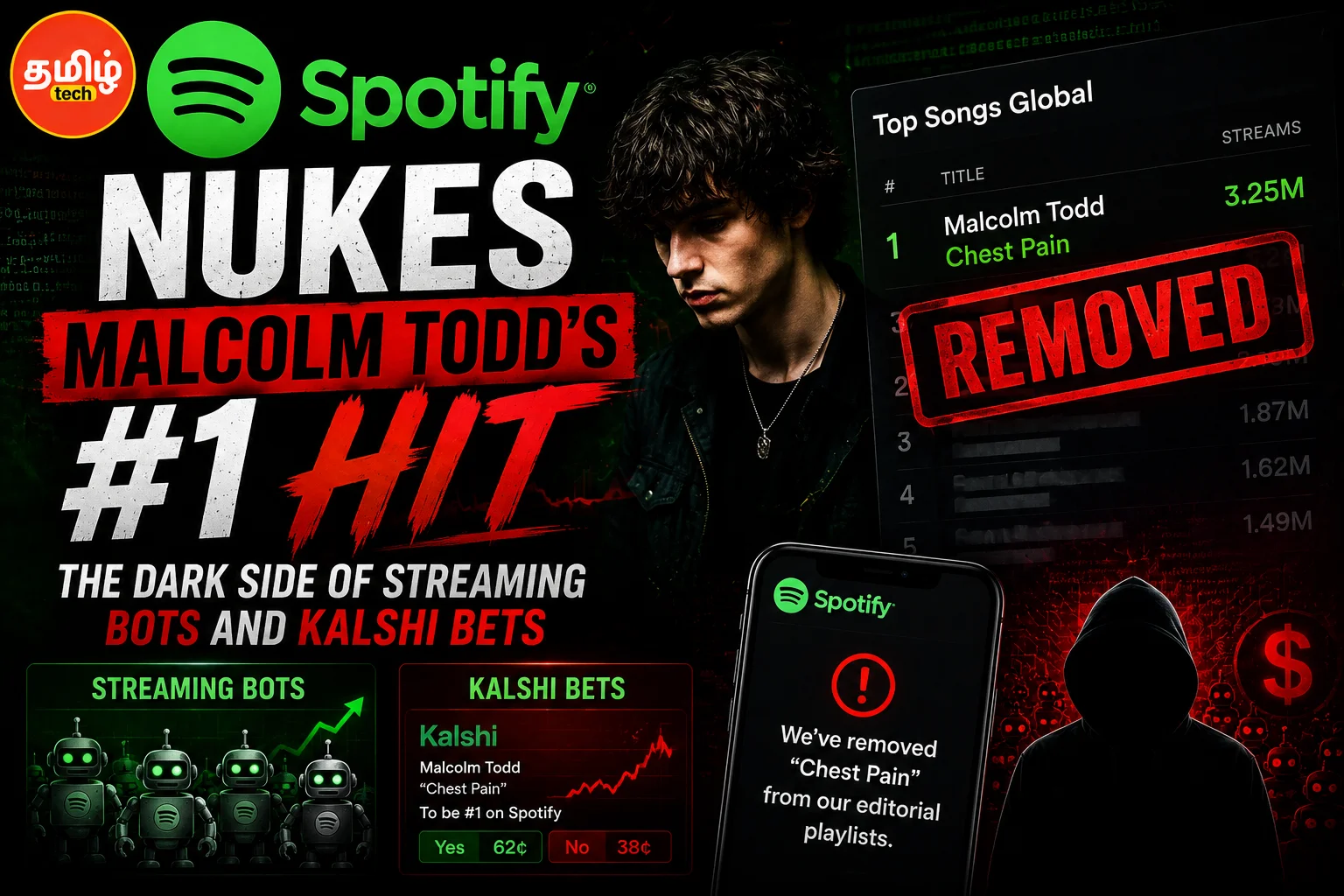
- Spotify removed over 500,000 streams from Malcolm Todd's song 'Earrings' after detecting artificial manipulation.
- The song experienced a massive 70% surge in daily streams, propelling it to the #1 spot on the Spotify USA charts within 24 hours.
- Suspicious high-stakes wagers on the Kalshi prediction market were placed on the song hitting #1 just before the surge occurred.
- This incident highlights a growing trend in 2026 where gambling and streaming bots are being used to hijack music industry charts.
The 24-Hour Rise and Fall of a Viral Hit
Imagine waking up as an indie artist and seeing your song sitting at the #1 spot on the Spotify USA chart, ahead of global icons like Taylor Swift or Drake. That’s exactly what happened to Malcolm Todd with his track 'Earrings.' In a span of just 24 hours, the song saw a staggering 70% increase in daily streams. While viral moments are common in 2026, this particular spike raised immediate red flags within the industry. It wasn't just a TikTok trend or a sudden celebrity shoutout; the numbers looked too 'perfect' to be organic. Spotify, which has been aggressively upgrading its fraud detection algorithms this year, didn't take long to act.
The streaming giant conducted a deep dive into the data and concluded that a significant portion of those millions of streams were fake. In an unprecedented move, Spotify stripped away more than 500,000 streams from the song's total count. This wasn't just a slap on the wrist; it was a public execution of a manufactured viral moment. The removal of these streams caused 'Earrings' to plummet from its top position, leaving the music community questioning how such a massive manipulation could happen in broad daylight. This is a classic example of how the 'numbers game' in the music industry can be easily rigged if you have the right tools—or the right bankroll.
The Kalshi Connection: Betting on the Charts
What makes this story truly bizarre is the involvement of Kalshi, a popular prediction market platform. In 2026, people aren't just betting on sports or elections; they are betting on cultural milestones. Just days before 'Earrings' took its suspicious flight to the top, several high-value wagers were placed on Kalshi, betting that Malcolm Todd would hit the #1 spot on Spotify. This isn't a coincidence. It appears that someone—or a group of people—saw an opportunity to make a massive profit by 'fixing' the charts. By hiring bot farms to inflate the stream counts, they could ensure their bets on Kalshi would pay out big time.
This creates a dangerous feedback loop. In the past, people used bots to boost an artist's ego or to get better record deals. Now, there is a direct financial incentive to manipulate the charts through gambling. If you can spend $10,000 on a bot farm to generate 500,000 streams and win $50,000 on a prediction market, that’s a 400% profit in 24 hours. This is the new frontier of white-collar crime in the digital age. It’s no longer about the music; it’s about exploiting the vulnerabilities of streaming platforms and betting markets for a quick buck. The intersection of fintech and music has officially entered its 'wild west' phase.
How Bot Farms Operate in 2026
You might be wondering, how do you even get 500,000 streams in a single day? In 2026, bot farms have become incredibly sophisticated. They no longer use simple scripts that repeat a song on a loop from a single IP address. Modern bot farms use thousands of 'aged' Spotify accounts with realistic listening histories. These accounts are distributed across residential proxies, making them look like real users from different cities in the US. They even 'listen' to other popular songs to mimic human behavior and avoid detection. However, even the best bots leave a footprint. A 70% jump in 24 hours without a corresponding spike in social media mentions or Google searches is a dead giveaway.
Spotify’s internal security teams use AI-driven pattern recognition to spot these anomalies. They look for 'non-human' listening patterns—like songs being played exactly at the 31-second mark (the minimum time required to count as a stream) or accounts that only listen to one specific artist for 24 hours straight. In the case of Malcolm Todd, the surge was so aggressive that it likely triggered Spotify's 'manual review' protocol. Once the fraudulent nature of the traffic was confirmed, the streams were purged. This is a cat-and-mouse game where the bot creators and the platform developers are constantly trying to outsmart each other, but this time, the platform won.
The India Impact: Why We Should Care
While this happened on the Spotify USA charts, the implications for the Indian music scene are massive. India is home to some of the largest bot farms in the world, often operating out of small tech hubs. These services are frequently used by local artists and labels to inflate their numbers on Spotify India and YouTube. We’ve seen many Punjabi and South Indian tracks gain millions of views in hours, only to have them stagnate later. If gambling markets like Kalshi become more mainstream in India (through various 'prediction' apps), we could see our local charts being manipulated in the same way.
For the average Indian listener, this means the 'Top 50 India' playlist might not actually represent what people are listening to. It might just represent which label or gambler has the biggest budget for bots. This hurts genuine independent artists who are trying to grow organically. If the charts are rigged, a talented singer from Chennai or a rapper from Mumbai has no chance of being discovered because the top spots are already 'bought' by bot farms. It’s a systemic issue that devalues the hard work of real musicians and turns music discovery into a pay-to-play scheme.
TamilTech’s Verdict: The Future of Music Integrity
At TamilTech, we think this is a massive wake-up call for the entire digital entertainment industry. The fact that a song can hit #1 through pure manipulation—and that this manipulation is tied to gambling—is a scary prospect. Spotify did the right thing by deleting those streams, but they need to do more. They need to be transparent about who is behind these surges and potentially ban artists who are repeatedly linked to fraudulent activity. As for Malcolm Todd, whether he was involved or just a pawn in a gambler's game remains to be seen, but his reputation has certainly taken a hit.
What should you do as a user? Don't trust the charts blindly. If a song suddenly appears out of nowhere and sounds mediocre, it’s probably a bot-driven hit. Support artists by following them, sharing their music on social media, and attending live shows. Real engagement is something a bot can never replicate. The music industry in 2026 is at a crossroads: it can either become a playground for gamblers and tech-savvy manipulators, or it can find a way to protect the integrity of the art. We hope for the latter, but the battle is just beginning.



Comments (0)
Be the first to comment!