


Key Takeaways
- Taiwan prosecutors have indicted nine people, including Nvidia and Super Micro employees, for allegedly illegally exporting AI servers to China
- The case involves servers equipped with Nvidia chips that are subject to US export controls
- This crackdown reflects broader US-China tech tensions and Taiwan's strategic position in the semiconductor supply chain
- India's growing AI sector could face similar scrutiny as global tech regulations tighten
- The case highlights the complex interplay between commercial interests and national security concerns in the AI era
What's the News
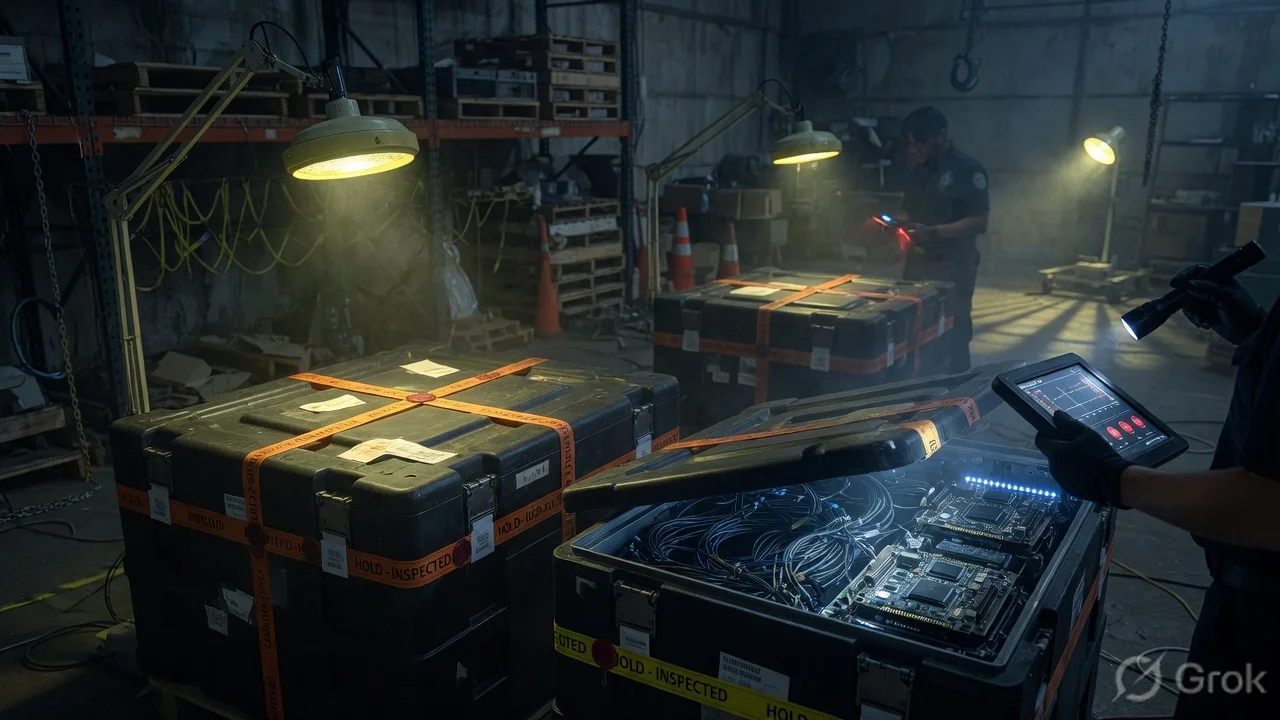
Taiwan prosecutors have taken a significant step in cracking down on illegal technology exports, indicting nine individuals including employees from major tech companies Nvidia and Super Micro. The accused are facing charges related to the illegal export of artificial intelligence servers to China. This development comes amid escalating tensions between the United States and China over advanced technology exports, particularly in the AI and semiconductor sectors.
The case specifically involves servers equipped with Nvidia chips, which are subject to US export controls due to their advanced capabilities and potential military applications. The indictment represents a serious escalation in Taiwan's enforcement of technology export regulations, signaling that authorities are taking a hard line against violations that could potentially strengthen China's technological capabilities.
Details
According to the prosecution's investigation, the illegal export scheme allegedly involved sophisticated methods to bypass export controls and regulations. The accused individuals reportedly coordinated to ship AI servers containing Nvidia's advanced processors to Chinese entities without proper authorization. These servers are particularly valuable for AI applications, including machine learning, data processing, and potentially military uses.
The investigation revealed that the operation was not a small-scale affair but involved significant technical expertise and logistical planning. The servers in question contain some of the most advanced AI chips currently available, which are restricted under US export control regimes due to their potential dual-use applications. The case has raised questions about the effectiveness of existing export control mechanisms and the need for stronger international cooperation to prevent technology diversion.
Nvidia and Super Micro, both major players in the AI server market, have been drawn into the controversy through their employees' alleged involvement. The companies have publicly stated their commitment to complying with all applicable laws and regulations, including export controls. However, the indictment has put them in a difficult position, potentially damaging their business relationships in China while raising concerns about their internal compliance systems.
India Impact
For India's rapidly growing AI sector, this case serves as both a warning and an opportunity. India has been positioning itself as a major player in the global AI landscape, with companies and startups investing heavily in AI research and development. The Taiwan case highlights the importance of robust compliance frameworks and the need for Indian companies to be vigilant about export regulations.
India's own export control regime is evolving, particularly as the country seeks to balance its strategic autonomy with international obligations. The case could influence how Indian regulators approach technology exports, especially to countries with which India has complex relationships. Indian companies looking to expand internationally will need to pay close attention to these developments and ensure their export practices are fully compliant.
Furthermore, the case underscores the importance of domestic AI capabilities for India. As global tech tensions increase, countries are increasingly looking to develop their own AI infrastructure and reduce dependence on foreign technology. This aligns with India's broader strategy of building domestic capabilities in critical technologies, including semiconductors and AI.
Use Cases
AI servers are critical infrastructure for modern artificial intelligence applications across various sectors. In healthcare, these servers power diagnostic systems, drug discovery platforms, and personalized medicine initiatives. In finance, they enable fraud detection, algorithmic trading, and risk assessment models. The manufacturing sector uses AI servers for predictive maintenance, quality control, and supply chain optimization.
The military and defense applications of AI servers are particularly sensitive, which is why they are subject to strict export controls. These systems can be used for autonomous weapons, intelligence analysis, surveillance, and cyber warfare. The Taiwan case highlights how these dual-use technologies can be diverted for unintended purposes if proper controls are not in place.
In the research and academic sector, AI servers enable breakthrough discoveries in fields ranging from climate science to materials research. Universities and research institutions rely on these powerful computing resources to train complex AI models and process massive datasets. The illegal export of such technology could potentially accelerate military capabilities in recipient countries while undermining the intended peaceful applications.
Honest Take
This case represents a significant development in the ongoing tech cold war between the US and China. While the prosecution of those involved in illegal exports is necessary and justified, it also highlights the challenges of enforcing export controls in an era of globalized technology development and supply chains.
The involvement of employees from major tech companies raises questions about corporate responsibility and compliance systems. Companies like Nvidia and Super Micro must ensure their internal controls are robust enough to prevent such violations, while also maintaining legitimate business operations in regions where they operate.
For India, this case serves as a reminder of the importance of developing indigenous capabilities in critical technologies. As global tensions increase, countries will increasingly rely on domestic innovation and production rather than imports from potentially hostile or unreliable sources. This aligns with India's broader strategy of technological self-reliance and could accelerate the development of India's own AI ecosystem.
The case also highlights the need for international cooperation in regulating advanced technologies. As AI becomes increasingly powerful and ubiquitous, countries will need to work together to establish norms and regulations that prevent misuse while promoting beneficial applications. This will be particularly challenging given the strategic importance of AI technologies and the competitive dynamics between major powers.
FAQs
Q: What specific charges are the nine individuals facing in Taiwan?
A: The individuals are facing charges related to illegal export of AI servers containing Nvidia chips, which violate both Taiwanese and international export control regulations. The specific charges likely include violations of export control laws and potentially conspiracy charges related to the coordinated nature of the alleged illegal exports.
Q: How does this case affect Nvidia and Super Micro's business in China?
A: Both companies face significant reputational and business risks. While they have publicly committed to compliance, this case could damage their relationships with Chinese customers and partners. It may also lead to increased scrutiny of their operations in the region and potentially impact their market share in China's lucrative AI server market.
Q: What are the implications for India's AI sector?
A: The case highlights the importance of robust compliance frameworks for Indian AI companies. It also underscores the strategic importance of developing domestic AI capabilities and reducing dependence on foreign technology. Indian regulators may strengthen export controls, and companies will need to ensure their practices align with international regulations.
Q: How do US export controls apply to this case?
A: The US has strict export controls on advanced AI chips and related technology due to their potential military applications. These controls apply to US companies and their subsidiaries, including those operating in Taiwan. The illegal exports likely violated these controls, which are designed to prevent advanced technology from reaching countries or entities that could use it for military purposes.
Q: What measures can companies take to prevent similar violations?
A: Companies should implement robust compliance programs, including regular training on export regulations, strict internal controls on technology transfers, thorough due diligence on customers and partners, and regular audits of export activities. They should also stay updated on changing regulations and maintain open communication with regulatory authorities.





Comments (0)
Be the first to comment!