


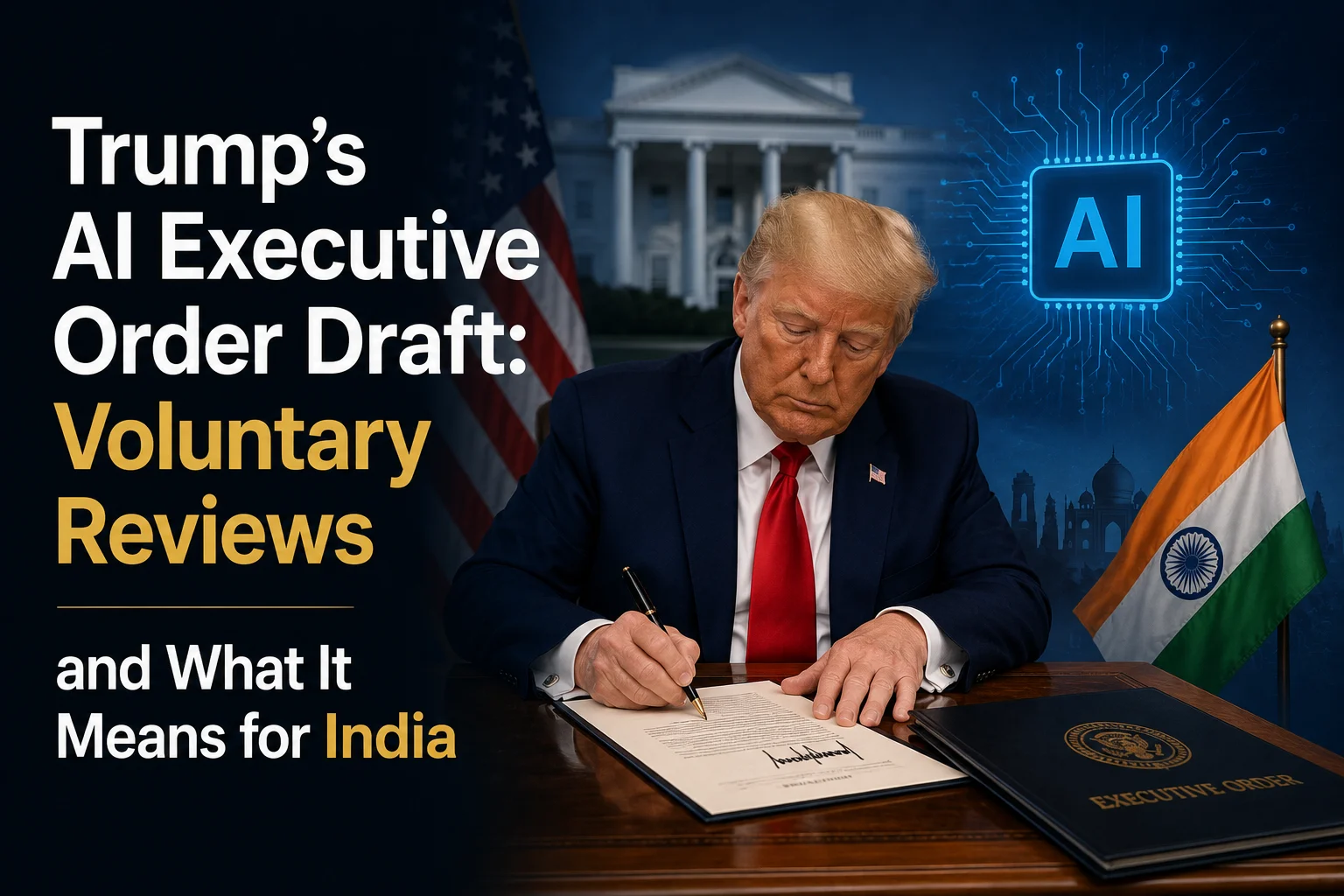
What’s the buzz?
On Thursday, a copy of an AI Executive Order (EO) that President Donald Trump was expected to sign leaked online. The draft never got a signature, but the language inside is crystal clear: any federal review of artificial‑intelligence systems would be voluntary. No mandatory compliance, no penalties – just a suggestion for agencies to "consider" reviewing AI tools they use.
Key points from the draft
- Voluntary review framework – agencies can opt‑in.
- Focus on high‑risk AI, like facial‑recognition and decision‑making tools.
- Encourages transparency, but without enforcement.
- No budget allocation – agencies must use existing resources.
Why does this matter for India?
India’s government is already rolling out its own AI strategy – the National AI Strategy (2023‑2027) – which includes mandatory testing for certain public‑sector AI applications. If the US goes voluntary, Indian regulators might feel pressure to tighten their own rules to stay ahead, especially for sectors like banking, UPI, and health.
Impact on Indian startups
Most Indian AI startups target global markets, including the US. A voluntary US framework could be a double‑edged sword:
- Lower compliance cost – Companies won’t need to build a whole new audit pipeline for US federal clients.
- Trust gap – US customers might still demand third‑party certifications, so startups may invest in private audits anyway.
- Competitive edge – Indian firms that already follow stricter Indian guidelines could market themselves as “privacy‑first” to US clients.
What Indian policymakers could learn
1. Blend voluntary and mandatory – For low‑risk AI, a voluntary model works. For high‑risk, like credit‑scoring, a mandatory audit is safer.
2. Create a sandbox – Allow startups to test AI in a controlled environment before full deployment, similar to the US draft’s “opt‑in” idea.
3. Funding – The US draft lacks budget. India can allocate funds for AI audit labs, giving local firms a home‑grown advantage.
TamilTech’s take
We think the draft is a political compromise – Trump wanted to appear proactive on AI without upsetting big tech. For Indian users, the real story is how this influences the global AI compliance market. If US agencies start voluntarily reviewing, private auditors will become hot commodities. Indian firms that partner with these auditors now can lock in early‑bird credibility.
What’s next?
The draft may never be signed, but the conversation is alive. Watch for:
- Congressional hearings on AI oversight.
- State‑level AI bills in the US – some already propose mandatory reviews.
- India’s upcoming AI‑audit framework expected by Q4 2026.
Bottom line: keep an eye on US policy, but don’t wait for it to dictate your compliance roadmap. Build transparency now, and you’ll be ready for whichever side the pendulum swings.



Comments (0)
Be the first to comment!