


Key Takeaways
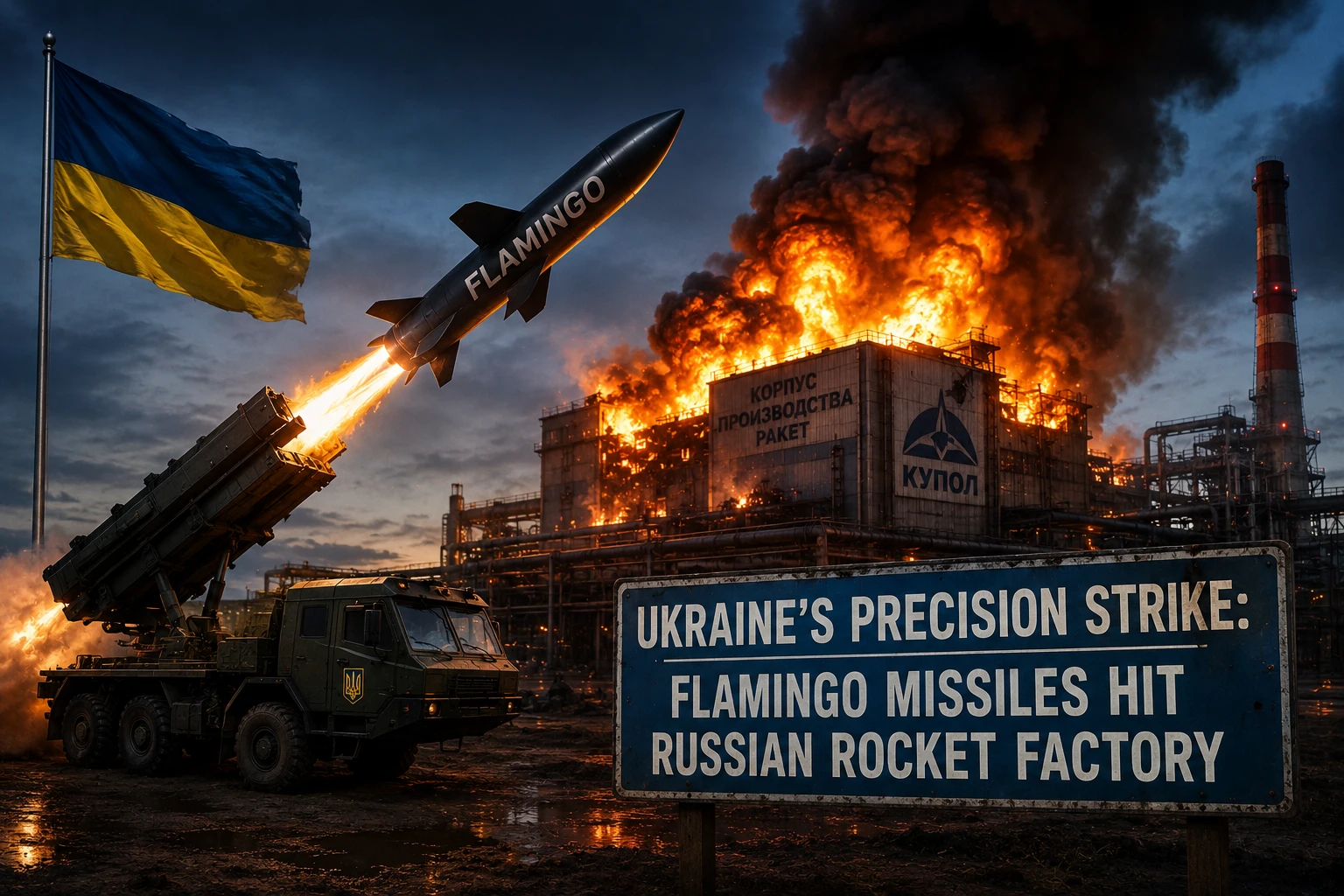
- Ukraine used Flamingo cruise missiles to strike a major Russian rocket factory
- This strike represents a significant advancement in Ukraine's military capabilities
- The attack demonstrates Ukraine's growing precision strike capabilities
- India's defense sector may draw lessons from this operation
- Global arms markets are responding to the changing dynamics
What's the News
Ukraine has successfully conducted a precision strike against a major Russian rocket factory using Flamingo cruise missiles. This operation, confirmed by military analysts, marks a significant escalation in Ukraine's counteroffensive capabilities. The strike targeted a critical facility involved in the production of long-range rockets and missiles, dealing a substantial blow to Russia's military production capabilities. This development comes as Ukraine continues to demonstrate its evolving military prowess despite ongoing challenges.
Details
The Flamingo cruise missiles, reportedly supplied by Western allies, demonstrated remarkable accuracy in hitting their targets. These advanced munitions represent a significant technological leap in Ukraine's military arsenal. The Russian rocket factory, located in the southern industrial region, was responsible for manufacturing key components for Russia's missile arsenal. Military experts suggest that this strike could significantly impact Russia's ability to sustain its current military operations in Ukraine. The precision of the strike indicates advanced targeting systems and intelligence capabilities that Ukraine has been developing over the past two years of conflict.
Analysts note that the strike was particularly effective because it targeted not just the primary production facilities but also the research and development laboratories where new missile technologies were being developed. This dual-impact approach means that Russia faces both immediate production setbacks and longer-term technological delays. The strike was reportedly carried out using multiple launch platforms, demonstrating Ukraine's ability to coordinate complex military operations across different branches of its armed forces.
India Impact
For India's defense sector, this development offers valuable insights into the effectiveness of precision strike capabilities. The Indian defense establishment has been investing heavily in indigenous missile technology and precision-guided munitions through programs like the Agni series and the Prithvi missile systems. Lessons from Ukraine's operations could inform India's own defense procurement and development strategies.
The Indian military's ongoing modernization efforts, particularly under the Make in India initiative, could benefit from studying these advanced strike capabilities. Indian defense manufacturers might accelerate development of similar systems, potentially reducing reliance on foreign imports. The Indian Air Force, in particular, has been looking to enhance its strike capabilities with platforms like the Rafale and indigenous Tejas fighters.
Additionally, this strike highlights the importance of diversifying defense suppliers to reduce dependency on any single source. For India, which has traditionally relied heavily on Russian military hardware, this development underscores the need to balance relationships with both Russia and Western nations. The Indian defense procurement landscape is already seeing increased participation from domestic manufacturers, and this strike could further accelerate that trend.
Use Cases
Cruise missiles like the Flamingo represent a new frontier in military technology, offering several advantages over traditional munitions. They can be launched from various platforms, including aircraft, ships, and ground-based systems. The ability to strike high-value targets with precision makes them particularly valuable in modern warfare scenarios.
For countries like India, developing or acquiring such capabilities could significantly enhance strategic deterrence. The technology has applications in both offensive and defensive scenarios, including border security and counter-terrorism operations. The Indian Navy, with its focus on blue-water capabilities, could particularly benefit from ship-launched cruise missiles for maritime strike operations.
The use of cruise missiles also reduces risk to pilots and ground personnel compared to manned aircraft missions. This is particularly relevant for India, which has been working to minimize casualties in border areas while maintaining a strong defensive posture. The technology also offers greater flexibility in mission planning, with the ability to adjust targets in real-time based on updated intelligence.
Honest Take
While Ukraine's strike demonstrates military effectiveness, it also raises concerns about potential escalation. The use of Western-supplied missiles against Russian territory marks a significant shift in the conflict's dynamics. For India, balancing relationships with both Russia and Western nations becomes increasingly complex, especially given its longstanding defense ties with Moscow.
The long-term implications include potential technology transfer to India's defense sector and shifts in global arms markets. India's defense manufacturers might gain valuable experience in developing similar systems, potentially leading to increased exports. However, this also raises questions about the proliferation of advanced military technologies and the potential for regional arms races.
The strike also highlights the evolving nature of modern warfare, where precision and intelligence play crucial roles in military success. For India, this underscores the importance of investing in intelligence capabilities, surveillance systems, and data analytics to support precision operations. The Indian military's digital transformation initiatives, including the implementation of the Integrated Defence Staff's network-centric warfare approach, could be further accelerated based on lessons from Ukraine.
Frequently Asked Questions
Q: What are Flamingo missiles?
A: Flamingo missiles are advanced cruise missiles supplied by Western allies to Ukraine, known for their precision strike capabilities and ability to evade enemy air defenses.
Q: Why is the Russian rocket factory important?
A: The factory was crucial for Russia's missile production, manufacturing components for long-range rockets and missiles used in the conflict. It also served as a research hub for developing new missile technologies.
Q: How does this affect India's defense strategy?
A: India's defense sector may draw lessons from this operation, potentially influencing procurement decisions and indigenous development priorities. It highlights the importance of precision strike capabilities in modern warfare.
Q: What are the chances of escalation?
A: Military analysts suggest the strike increases tensions, though direct escalation between major powers remains limited. However, it does raise concerns about the potential for broader conflict involving NATO and Russian forces.
Q: How might this impact global arms markets?
A: The conflict has already reshaped global arms markets, with increased demand for precision-guided munitions and defense systems. India's defense procurement could be particularly affected as it seeks to balance relationships with different global powers.





Comments (0)
Be the first to comment!