


Key Takeaways
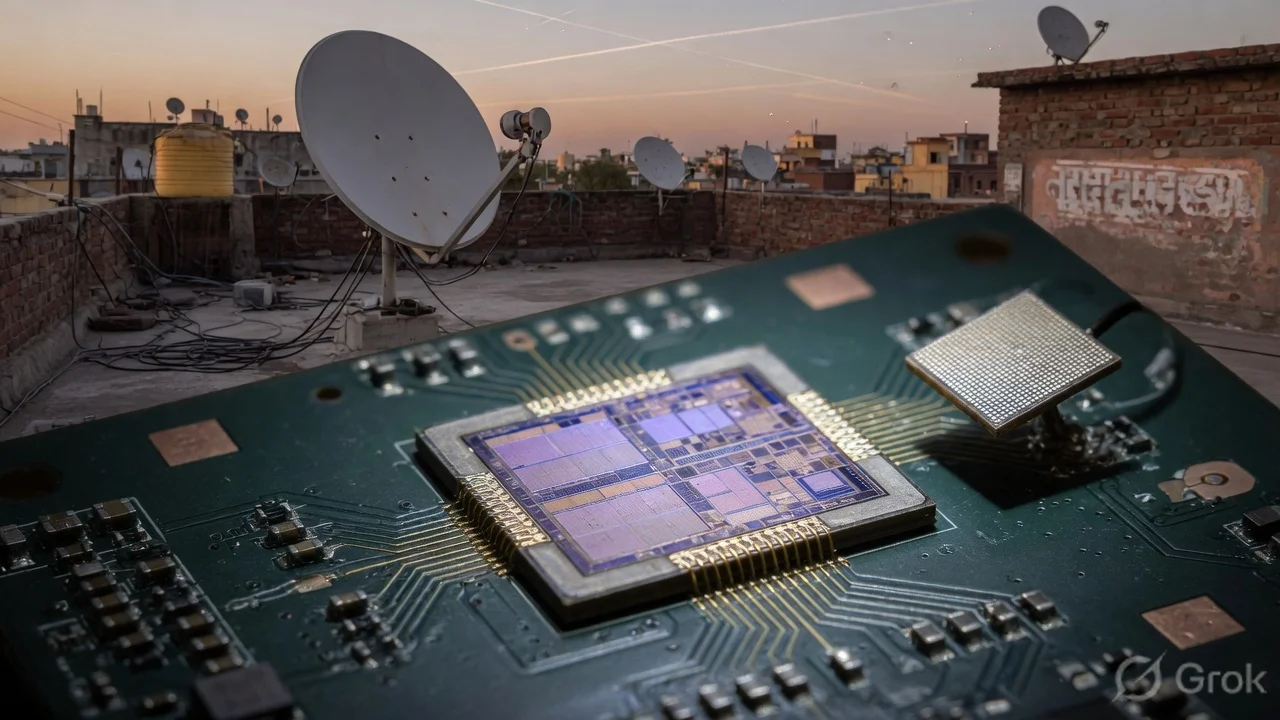
- MumbaiSemi has developed India's first indigenous receiver chip compatible with NavIC satellites, reducing dependency on foreign GPS technology
- The NavIC-Rx1 chip could reduce costs for smartphones and IoT devices by 30-40% when mass-produced
- This breakthrough supports India's 'Make in India' initiative and strengthens strategic autonomy in critical semiconductor components
- The chip offers 5-meter positioning accuracy and consumes only 150mW power, making it suitable for mobile devices
- Expected deployment in smartphones, drones, and automotive systems by late 2026
What's the news
MumbaiSemi, a Bengaluru-based semiconductor startup, has successfully developed India's first indigenous receiver chip for the NavIC (Navigation with Indian Constellation) satellite system. The NavIC-Rx1 chip marks a significant milestone in India's journey toward technological self-reliance in satellite navigation.
Details
The NavIC-Rx1 chip is built on advanced 28nm process technology and features impressive power efficiency at just 150mW consumption. It supports both L1 and L5 frequency bands used by NavIC satellites, which currently include seven operational satellites providing coverage over India and surrounding regions. The development, completed over 18 months by a team of 12 engineers, cost approximately ₹45 crore.
India impact
This development aligns perfectly with India's strategic goal of reducing dependency on foreign technology in critical sectors. For Indian smartphone manufacturers who currently import GPS chips, this breakthrough could significantly reduce costs. The chip also creates domestic demand for NavIC services, potentially boosting revenue for the Indian Space Research Organisation (ISRO) and strengthening India's position in the global semiconductor market.
Use cases
The NavIC-Rx1 chip opens numerous applications across sectors. In smartphones and tablets, it will enable location services without relying on foreign chips. The automotive sector can leverage it for navigation systems in Indian conditions. Agricultural applications include precision farming with accurate positioning. Drone manufacturers can use it for reliable navigation and delivery systems. Additionally, disaster management agencies could benefit from accurate location tracking during emergencies.
Honest take
While this achievement is significant, widespread adoption faces challenges. Global manufacturers currently prefer established GPS systems with larger satellite constellations. The chip's real-world performance in urban canyons and challenging environments needs thorough testing. However, this development paves the way for India's future in space technology and semiconductor manufacturing. As India continues to develop its space capabilities, innovations like MumbaiSemi's chip demonstrate the country's growing technological prowess.





Comments (0)
Be the first to comment!