


Key Takeaways
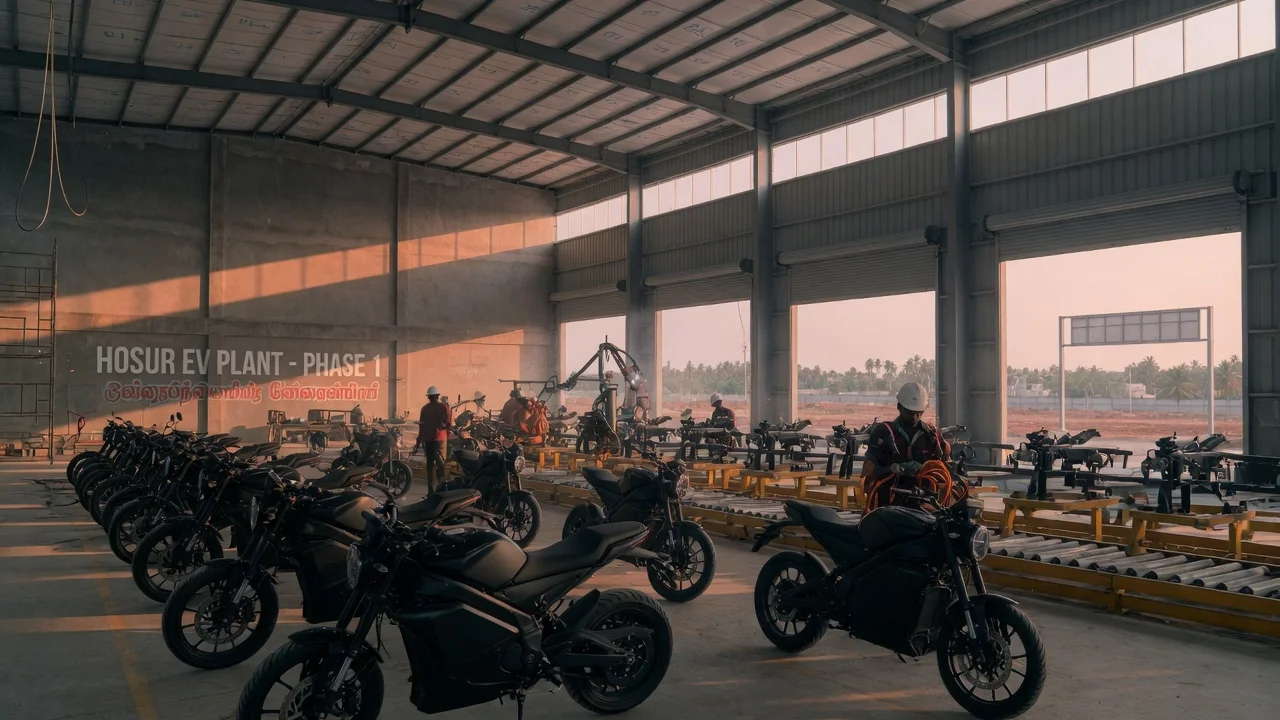
- Ultraviolette’s new Hosur plant will have the capacity to produce 2.5 lakh electric two‑wheelers every year.
- The facility is expected to create roughly 2,000 direct jobs for the local workforce.
- Hosur’s existing automotive ecosystem will help source components from Tamil Nadu suppliers, cutting logistics costs.
- Production is slated to begin by late 2027, supporting India’s FAME‑II incentives for electric two‑wheelers.
- This marks Ultraviolette’s second manufacturing site, following their first plant in Bengaluru.
What's the news
Ultraviolette has announced plans to set up a second manufacturing facility in Hosur, Tamil Nadu. The announcement came through an official statement that highlighted the plant’s targeted annual output of 2.5 lakh electric two‑wheelers. The company said the Hosur site will complement its existing Bengaluru unit and help meet rising domestic demand for EVs. Local officials welcomed the move, noting that it aligns with Tamil Nadu’s push to attract high‑tech manufacturing investments.
Details
The Hosur campus will be built on a parcel of land near the SIPCOT industrial complex, an area already host to several automotive ancillary units. Ultraviolette plans to install a modern assembly line equipped with robotic welding and battery‑pack integration stations. According to the company, the plant will also house a dedicated R&D wing focused on motor efficiency and thermal management. The workforce target of 2,000 includes engineers, technicians, and support staff, with an emphasis on hiring from nearby polytechnic colleges. The layout is designed to allow phased expansion, enabling the company to scale output in line with market demand.
Technology and Infrastructure
The new facility will incorporate advanced manufacturing technologies such as automated guided vehicles for internal logistics and computer‑vision based quality inspection systems. Ultraviolette intends to use a modular battery‑pack design that can be adapted across its product range, reducing part variety and simplifying after‑sales service. Energy efficiency measures include solar panels on the roof to offset a portion of the plant’s electricity consumption and a water‑recycling system for the paint shop. The plant will also feature a test track for dynamic validation of vehicles before they leave the factory.
Supply chain and Local impact
By locating the plant in Hosur, Ultraviolette aims to tap into the established network of Tier‑1 and Tier‑2 suppliers that serve the automotive cluster in the region. Components such as steel frames, aluminium castings, and wiring harnesses are expected to be sourced from units within a 50‑kilometre radius, which should reduce inbound freight costs and lead times. The company has indicated that it will work with local MSMEs to develop EV‑specific parts like silicon‑carbide inverters and lightweight composite housings. This collaboration could spur skill development and create ancillary employment opportunities beyond the direct 2,000 jobs.
India impact
India’s two‑wheeler market remains the largest in the world, and electric variants are gaining traction thanks to subsidies and rising fuel prices. Ultraviolette’s expanded capacity will add a significant volume of locally made EVs, reducing reliance on imported kits. The Hosur plant’s output could help the state meet its own EV adoption goals under the Tamil Nadu Electric Vehicle Policy 2023. In addition, the project may stimulate a network of component suppliers, encouraging MSMEs to upgrade to EV‑specific parts such as aluminum housings and silicon‑carbide inverters. The increased local production also contributes to the government’s vision of achieving a higher share of electric mobility in the national fleet.
Use cases
The electric two‑wheelers rolling out of Hosur are expected to serve multiple segments. Urban commuters looking for a low‑cost, zero‑emission alternative to petrol scooters will find the Ultraviolette F77 suitable for daily rides. Delivery fleets operating in metros like Chennai and Bangalore could adopt the vehicle for last‑mile logistics, benefiting from lower operating costs and quieter operation. Additionally, the performance‑oriented variant may attract enthusiasts who want a sporty ride without the noise and vibration of internal‑combustion engines. The company also sees potential in institutional buyers such as university campuses and corporate parks that require fleets for internal transport.
Challenges and Considerations
While the project is promising, several factors will influence its success. Securing a steady supply of lithium‑ion cells at competitive prices remains a critical concern given global market volatility. The company will need to establish long‑term agreements with cell manufacturers or explore domestic cell production options. Training a skilled workforce capable of operating advanced automation equipment will require investment in vocational programmes and partnerships with technical institutes. Finally, the timeline to start production by late 2027 leaves a window where competitors could consolidate their market share, making timely execution essential.
Honest take
On the surface, the Hosur announcement looks like a solid step forward for Ultraviolette and for Tamil Nadu’s EV ambitions. The capacity figure is ambitious but realistic given the company’s current order book and the growing appetite for premium electric two‑wheelers. However, the timeline to start production by late 2027 leaves a gap of over a year, during which competitors could consolidate their market share. Success will hinge on the company’s ability to secure a steady supply of lithium‑ion cells at competitive prices and to train a skilled workforce quickly. If those pieces fall into place, Hosur could become a noteworthy EV manufacturing hub in South India.
Future outlook
Looking ahead, Ultraviolette plans to use the Hosur facility as a platform for launching new models that cater to both urban commuters and performance enthusiasts. The company hinted at exploring export opportunities to neighbouring markets once domestic demand stabilises. Continuous investment in R&D is expected to yield improvements in battery energy density and charging speed, which could further enhance the appeal of its products. Should the Hosur plant achieve its targeted ramp‑up, it may encourage other EV manufacturers to consider similar expansions in Tamil Nadu, reinforcing the state’s position as a key player in India’s electric mobility narrative.



Comments (0)
Be the first to comment!