


Key takeaways
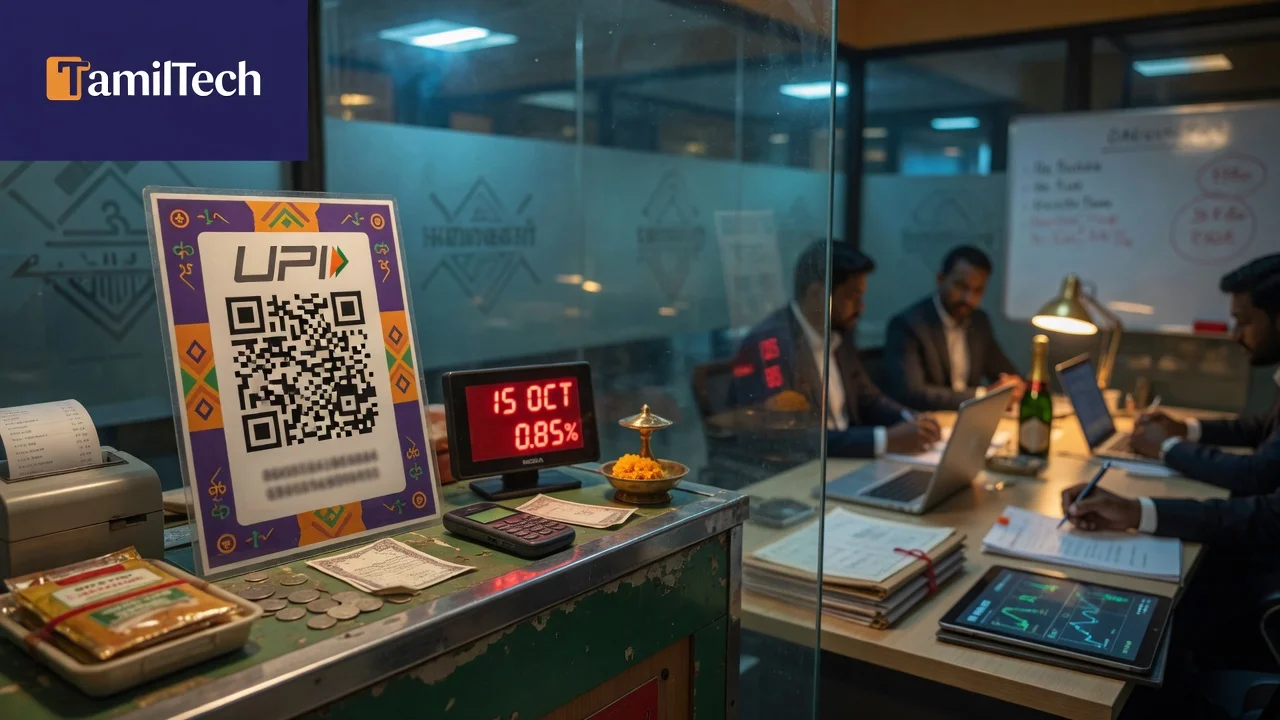
- NPCI starts charging select UPI merchant payments from October 15, 2026 — you as a user still pay zero.
- Large-volume and specific merchant categories are in focus; everyday kirana and small shops stay largely untouched.
- Goal is simple: keep India's UPI rails financially sustainable after years of zero-MDR growth.
- Activate has launched its maiden fund in the same news cycle — fresh capital chatter around Indian tech and fintech.
- PhonePe, Google Pay, Paytm and big e-commerce checkouts will feel the operational hit first.
What just happened?
Happy Wednesday. NPCI made it official: select UPI merchant payments will carry charges from October 15.
For years India treated UPI like free public infrastructure. That model built the world's most-used real-time payments system. The free party for every merchant category was never going to last forever.
Same morning dispatch also flagged Activate's maiden fund. Two different stories. One clear signal — India's digital money stack is growing up.
Free forever worked for adoption. Sustainability now needs some merchants to chip in.
If you run a Flipkart-style checkout, a large online marketplace, or high-volume UPI acceptance, mark the calendar. If you are a neighbourhood store taking Rs 200 QR payments, breathe easy for now. The charge net is selective by design.
How does this actually work?
NPCI runs the UPI switch. Banks and payment apps sit on top.
Until now the government and NPCI kept merchant discount rates at zero for most UPI person-to-merchant flows. That decision turbocharged PhonePe, Google Pay, Paytm, Amazon Pay and every bank UPI app. Volumes exploded into the billions every month. India became the global case study for free instant payments.
The new line is simple: select merchant payments attract charges from October 15. "Select" usually means larger ticket sizes, certain online or platform merchants, and categories where free rails were getting hard to justify. Exact slabs and rates sit with NPCI circulars that banks and PSPs will implement.
Customers scanning a QR or paying via UPI ID still pay zero. The fee, where it applies, lands on the merchant side — or gets absorbed in the deal with the acquiring bank or PSP.
This is not a sudden tax on every chaiwala. It is a course correction after years of banks and NPCI absorbing switch, settlement and fraud-monitoring costs while volumes kept climbing.
Cards always had MDR. Wallets had their own economics. UPI was the outlier that won on convenience and price. Now that outlier is being tuned.
Activate's maiden fund landed in the same news cycle. Fresh fund announcements matter because capital is still hunting Indian tech and fintech themes even as payment rails get more commercial. No need to over-read the coincidence — both stories point to a maturing market, not a slowdown.
What changes for people in India?
UPI is national infrastructure at this point. JioMart, Flipkart, Meesho, Swiggy, Zomato, large hospital chains, education platforms and travel aggregators all lean on it heavily.
Any charge on select merchant flows changes unit economics for those platforms. Some will eat the cost to keep conversion high. Others will quietly push customers toward instruments that still make sense for them, or renegotiate with their payment partners.
Small merchants remain the political and social priority. India has crores of kiranas and street vendors who adopted UPI QR codes precisely because it was free and simple. Hitting them would reverse years of formalisation. The selective framing protects that base while asking bigger players who benefited most from free rails to contribute.
Banks get breathing room. Running UPI at scale is not free — settlement, liquidity, dispute handling and compliance all cost money. Zero MDR for everyone forever meant those costs sat on bank or PSP P&Ls. A narrow charge window lets the system stay cheap for the mass market while improving the commercial case for uptime and security investment.
Competition among apps stays fierce. PhonePe, Google Pay and the rest still fight on rewards, credit distribution and merchant tools. A merchant fee on select flows does not kill that fight; it just adds another line item in the merchant agreement. Expect more "UPI + credit" and "UPI + offers" packaging as apps try to keep merchants sticky.
For the broader digital public infrastructure story, this is a stress test. India showed the world that free, interoperable payments can scale. Now it has to show that the same rails can stay healthy when the free ride ends for a few big categories.
What should you do now?
If you only pay with UPI — QR at the kirana, rent, school fees, GPay to a friend — do nothing. Your side stays free.
If you run a small shop with a static QR, you are still in the protected zone for now. Keep accepting UPI as usual.
If you operate a high-volume marketplace, large online checkout, or platform-style merchant flow, talk to your bank and PSP before October 15. Get the exact slab, who absorbs what, and whether your acquiring deal needs a refresh.
Watch how PhonePe, Google Pay, Paytm and the big e-commerce apps package merchant pricing after the circulars land. That is where the real operational change will show up first.
And keep an eye on Activate's maiden fund and similar capital moves — they tell you investors still believe the Indian digital money stack has room to grow even as the free-for-all merchant era tightens.

Comments (0)
Be the first to comment!