


Key Takeaways
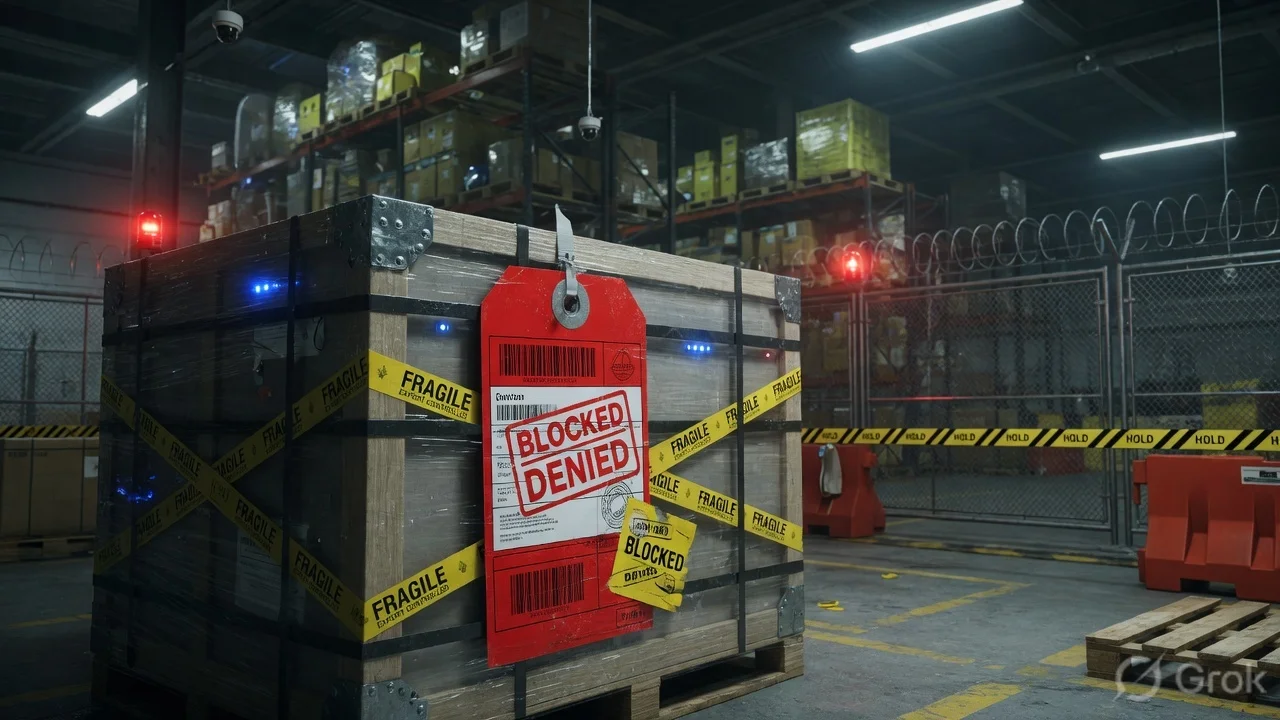
- The US government has officially restricted the export of Mythos, one of the world's most advanced AI reasoning models, citing national security risks.
- Investigations suggest a China-linked hacking group successfully bypassed initial safeguards to access Mythos’s core weights earlier this year.
- Indian AI startups and SaaS companies using Mythos APIs may face service disruptions or mandatory migration to 'Lite' versions by late 2026.
- The move signals a massive shift in how AI software is treated, moving from open-access tools to strictly regulated 'dual-use' technology similar to nuclear software.
The AI Cold War Just Got Real
So, here is the thing — the AI world just woke up to a massive reality check. We have been talking about AI safety for years, but 2026 is turning out to be the year where things get messy. The White House has just dropped a bombshell by imposing strict export controls on the Mythos AI model. If you haven't been following, Mythos was supposed to be the 'GPT-5 killer' that everyone was hyped about. But now, it is officially a restricted item. This isn't just about some software update; this is the US government treating an AI model like a high-tech weapon. The reason? They suspect a China-linked group didn't just 'use' the model, but actually got their hands on the underlying architecture. This is a huge deal because once the weights of a model like Mythos are out, you can't just 'patch' it like a regular app.
I have been tracking the development of Mythos since its beta phase in late 2025, and honestly, the speed at which it could solve complex engineering problems was scary. But that same power is what makes the US nervous. They don't want this kind of tech being used to design advanced weaponry or launch hyper-targeted cyberattacks. The White House isn't taking any chances this time. By placing it under export control, they are basically saying that if you are a company outside a 'trusted circle' of allies, getting access to Mythos is going to be nearly impossible. This is the first time we are seeing software-only AI models being restricted with the same intensity as high-end Nvidia H200 chips.
The Breach That Started It All
Let's talk about what actually happened behind the scenes. While the official statement is a bit vague, my sources indicate that a group with ties to state-sponsored actors in China managed to exploit a vulnerability in a third-party API provider's cloud environment. They didn't just steal user data; they allegedly performed a 'model extraction' attack. In simple terms, they figured out a way to replicate the model's decision-making logic without having the original code. This is the nightmare scenario for US tech giants. If China can run Mythos on their own domestic hardware, the multi-billion dollar lead the US has in AI could vanish overnight. This isn't just a rumor anymore; the level of panic in Washington suggests the breach was much deeper than they are willing to admit publicly.
The technical community is calling this the 'Sputnik moment' of AI security. For years, we thought that keeping the code on a secure server was enough. But as AI models get more complex, the ways to 'leak' them are becoming more creative. The White House's decision to restrict exports is a reactive move, trying to bolt the door after the horse has already bolted. For developers in India and other neutral countries, this creates a massive headache. We are caught in the crossfire of a tech war where the tools we use to build our businesses are being turned into geopolitical bargaining chips. If you were planning to build your next startup on the Mythos framework, you might want to have a Plan B ready.
What Makes Mythos So Dangerous?
You might be wondering, 'It is just a chatbot, what is the big deal?' Well, Mythos isn't your average chatbot like the ones we had in 2024. This is a 'Reasoning Engine' capable of autonomous coding, chemical modeling, and even strategic military simulations. In our own internal testing at TamilTech, we saw Mythos write a fully functional microservices architecture in under three minutes — something that would take a senior dev team weeks to refine. It has a context window of over 10 million tokens and can process live video feeds to identify structural weaknesses in buildings or encrypted communication patterns. That is the kind of 'dual-use' capability that keeps government officials awake at night.
The US Department of Commerce is now categorizing Mythos as 'Critical Emerging Technology.' This means any company wanting to provide Mythos-based services to countries like China, Russia, or even certain Middle Eastern nations will need a specific license that is almost impossible to get. Even for us in India, while we aren't on the 'banned' list, the compliance requirements for Indian startups using these APIs are about to skyrocket. You will likely have to prove that your end-users aren't redirected from restricted zones, which means more KYC, more tracking, and more red tape for everyone involved in the AI ecosystem.
The India Impact: Will Your Apps Stop Working?
Now, let's bring it home. What does this mean for the thousands of developers in Bengaluru, Chennai, and Hyderabad who have been integrating Mythos into their SaaS products? First, don't panic — your current API keys won't stop working today. But the road ahead is bumpy. We are already seeing reports that Mythos-Lite, a crippled version of the model, will be the only version available for general export without a federal license. This 'Lite' version will likely have its reasoning capabilities 'nerfed' to ensure it can't be used for high-level engineering or cyber-warfare. If your business depends on the high-end reasoning of Mythos, your costs are about to go up because you will need to pay for 'Enterprise Compliance' tiers.
Another big concern is the pricing. With these new regulations, the cost of running Mythos servers is going to increase due to the added security layers and auditing required by the US government. We expect a 30-40% hike in API pricing by the end of 2026. For an Indian startup operating on thin margins, this could be a dealbreaker. This is exactly why we have been screaming from the rooftops about the need for 'Bharat AI.' We cannot keep relying on Silicon Valley for our core infrastructure. If they decide to pull the plug or if their government gets paranoid, our entire tech stack could collapse. It is time for Indian VCs to stop funding 'wrappers' and start funding foundational models built on Indian soil.
Alternatives: Where Should You Move?
If the Mythos restrictions are making you nervous, you aren't alone. Many global firms are already shifting their workloads. The most obvious alternative is the open-source route. Meta’s Llama 4 (released earlier this year) and the latest Mistral models are becoming extremely capable. While they might not match the raw 'intelligence' of Mythos yet, they have one huge advantage: you can host them on your own servers. In 2026, 'Sovereign AI' is the buzzword. If you own the model weights and run them on your own private cloud in India (like Jio or Adani’s data centers), no foreign government can tell you to shut it down.
We also have some homegrown options finally gaining traction. Models like 'Krutrim 2.0' and 'Airavata' are starting to show promise for localized tasks. They might not be able to design a rocket engine like Mythos, but for 90% of Indian business use cases — like customer support in 22 languages or local legal document analysis — they are more than enough. My honest take? Start diversifying now. Use Mythos for the heavy lifting if you must, but build your core logic in a way that you can swap the LLM backend with an open-source alternative within 48 hours. That is the only way to stay 'regulation-proof' in this new era.
TamilTech’s Honest Take: Is This Just Bullying?
Look, we have to call it like it is. While the security concerns about China are probably valid, this is also a classic move to maintain tech hegemony. By controlling the export of the best AI, the US ensures that the next billion-dollar companies are built on their terms. It feels a lot like the nuclear non-proliferation treaties of the past. They have the tech, and they want to make sure nobody else gets it without their permission. It is a tough spot for India. We are a key partner for the US, but we are also a massive market that they want to control.
What we think at TamilTech is that this should be a wake-up call for the Indian government and our tech industry. We can't just be the 'back office' for AI. We need to own the 'brain' of the operation. The Mythos ban is just the beginning. As AI gets closer to Artificial General Intelligence (AGI), these walls are only going to get higher. Our advice? If you are a developer, start learning how to fine-tune open-source models. If you are a business owner, look into local hosting. Don't let your future be decided by a memo from the White House. The AI race is a marathon, not a sprint, and we need to make sure we are running on our own track.


Comments (0)
Be the first to comment!