


Key Takeaways
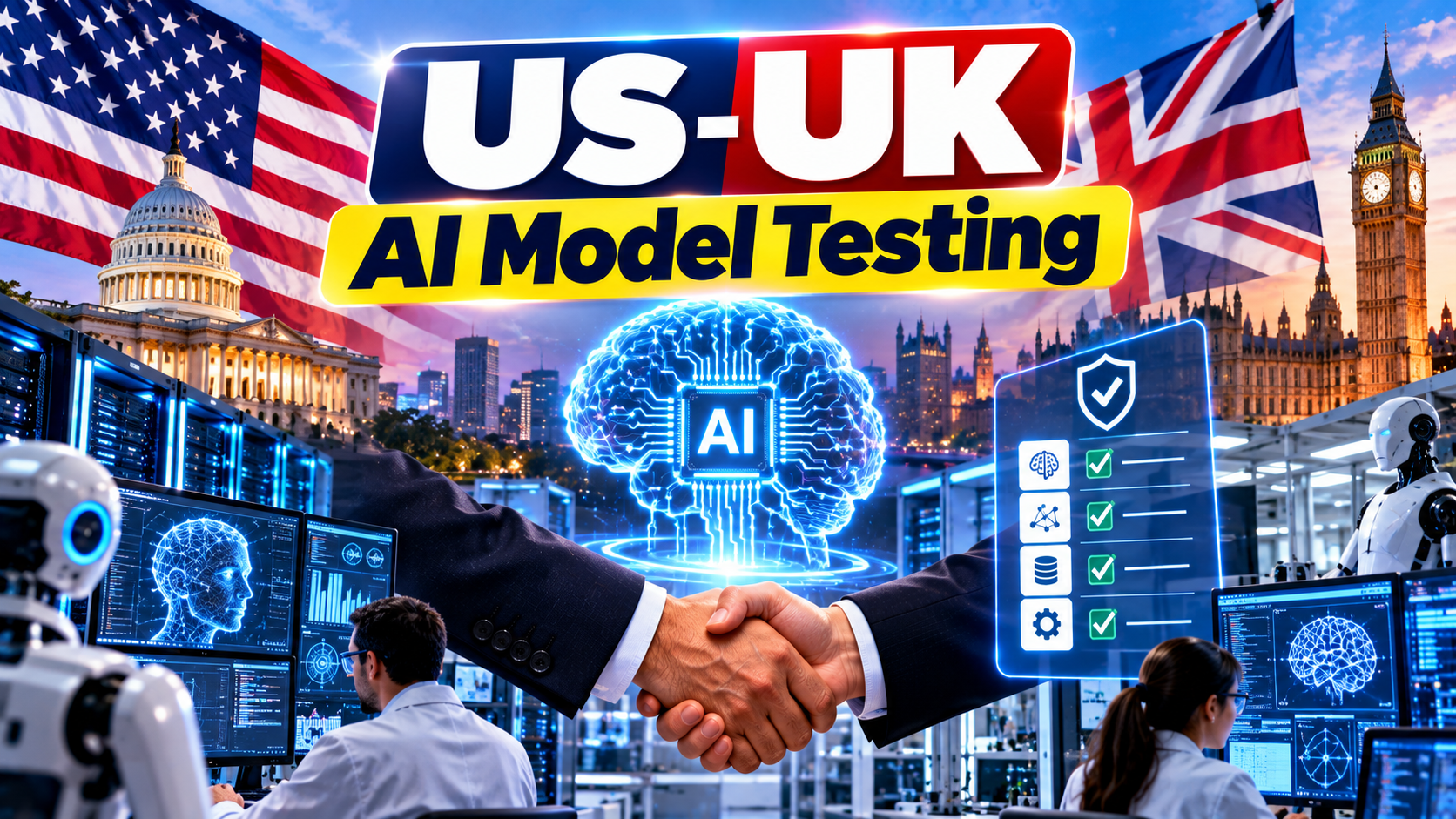
- The US has clarified that American AI companies can share frontier AI models with the UK government for early safety testing.
- This reverses an earlier grey zone where US firms feared this cooperation might clash with the Trump administration's AI stance.
- Britain's AI Safety Institute (AISI) tests models like ChatGPT, Gemini, and Claude before they go fully public.
- The back-and-forth shows how US AI policy has shifted from Biden-era caution to a more deregulation-first approach under Trump.
- For India, this is a preview of the exact tug-of-war our own AI Safety Institute plans will face tomorrow.
What just happened?
Here's the short version. The UK set up something called the AI Safety Institute (AISI) back in 2023, right after that big AI Safety Summit at Bletchley Park. The whole idea was simple — before a company like OpenAI or Google DeepMind releases a massive new AI model to the public, Britain gets early access to poke holes in it. Check for bias, check for misuse, check if it can be tricked into doing dangerous stuff.
Big US AI labs agreed to this. Made sense at the time — nobody wants their AI Model making headlines for the wrong reasons on launch day.
But then Donald Trump came back into the White House, and the mood in Washington changed fast. The new administration is far less interested in "AI safety paperwork" and far more focused on what they call AI dominance — basically, don't let regulation slow down American AI companies while China is racing ahead too.
That shift created an awkward situation. US AI companies got nervous. If they kept sharing unreleased models with a foreign government for testing, could that be seen as going against the Trump administration's own AI priorities? Nobody wanted to be the company that got caught in the middle of a policy fight.
So, for a while, this cooperation basically stalled in confusion. Now, the US side has cleared the air — American AI firms can go ahead and give Britain early access for safety testing, and it will not be treated as a problem under current US policy. Status quo restored, more or less.
How does this actually work?
Simple analogy — think of it like a pre-release beta test, except the tester is an entire government department instead of a random App user.
Before a company ships its biggest, most powerful AI Model to millions of users, it quietly sends an early version to AISI's technical team in London. They run it through a long list of checks — can it help someone build a weapon, can it be jailbroken to leak private data, does it have dangerous blind spots around things like cybersecurity.
If AISI finds something risky, the company gets a heads-up before launch day, not after some journalist finds the flaw and makes it a front-page story.
The catch is that this entire system runs on trust and voluntary cooperation. There's no global law forcing OpenAI or Anthropic to share their models with the UK. They do it because it builds credibility, and because governments like having some say before these tools go live.
That voluntary nature is exactly why a change in US political mood could mess with the whole arrangement. One administration encourages this kind of safety-first cooperation. Another leans toward "let the market and competition sort it out." US AI firms, caught between the two, were simply waiting for clarity on which rulebook applies.
What changes for people in India?
Directly? Nothing changes in your Phone or your ChatGPT App tonight. This is a Washington-London policy story, not a product update.
But here's the bit worth paying attention to if you follow India's own AI ambitions. The IndiaAI Mission has talked about building an Indian equivalent of this kind of safety-testing setup — a body that could eventually ask the same big AI labs for early access before models land in India with over 120 crore potential users.
If India ever gets to that stage, we'll face the exact same question Britain just went through. Will a US AI company share its unreleased model with Indian regulators, and will that decision depend on who's sitting in the White House that year? This episode is basically a preview trailer for a movie India might be in soon.
There's also a quieter angle here for Indian developers and startups building on top of US AI Models — through Jio's cloud tie-ups, Flipkart's AI shopping tools, or any App using GPT or Gemini APIs. Policy stability around these models, even testing-stage policy, indirectly affects how fast new capabilities reach Indian apps. A confused regulatory environment in the US slows everyone downstream, including us.
What should you do now?
Honestly, as a regular user, there isn't an action item here — no setting to change, no App to update. This one's for watchers of AI policy, startup founders, and anyone curious about where India's own AI rules might be headed.
If you're building a product on top of a major AI Model, this is a good moment to remember that the ground under these models shifts with politics, not just technology. Safety testing deals, data rules, export restrictions — they can flip within months depending on who's in charge.
And if you're just an AI-curious reader, file this away as one more example of how the AI race isn't only about who builds the smartest Model. It's equally about who gets to check that Model before the rest of us start trusting it with our data, our questions, and increasingly, our decisions.
What are the limits of this arrangement, and what's still shaky?
Let's be honest about what this fix actually covers. The US clearing the air on safety-testing cooperation does not mean every AI Model gets the same treatment, and it does not mean this arrangement is locked in by law. It's still a voluntary handshake between companies and a foreign safety body, sitting entirely at the mercy of whichever administration is in power in Washington that particular year. A memo or a policy statement today can be quietly walked back tomorrow, and nobody signed any treaty that says otherwise.
There's also the question of which models actually get sent over for testing. Frontier labs like OpenAI, Google DeepMind, and Anthropic have mostly played along so far, but smaller AI companies, open-source projects, and Chinese labs racing in the same space aren't bound by any of this. So Britain's AI Safety Institute gets a decent look at the biggest Western models, but a huge chunk of the global AI ecosystem simply isn't on its radar. That's a real gap, not a small one.
And then there's timing. Pre-release testing only works if the company actually waits for feedback before shipping. In a market where speed decides who wins the next AI headline — think how fast ChatGPT, Gemini, and Grok updates have been dropping lately — there's constant pressure to launch first and patch later. Watch what happens the next time a US lab wants to beat a rival to market by a week. That's the real stress test for whether this safety-testing relationship holds, or quietly gets skipped when it's inconvenient.



Comments (0)
Be the first to comment!