


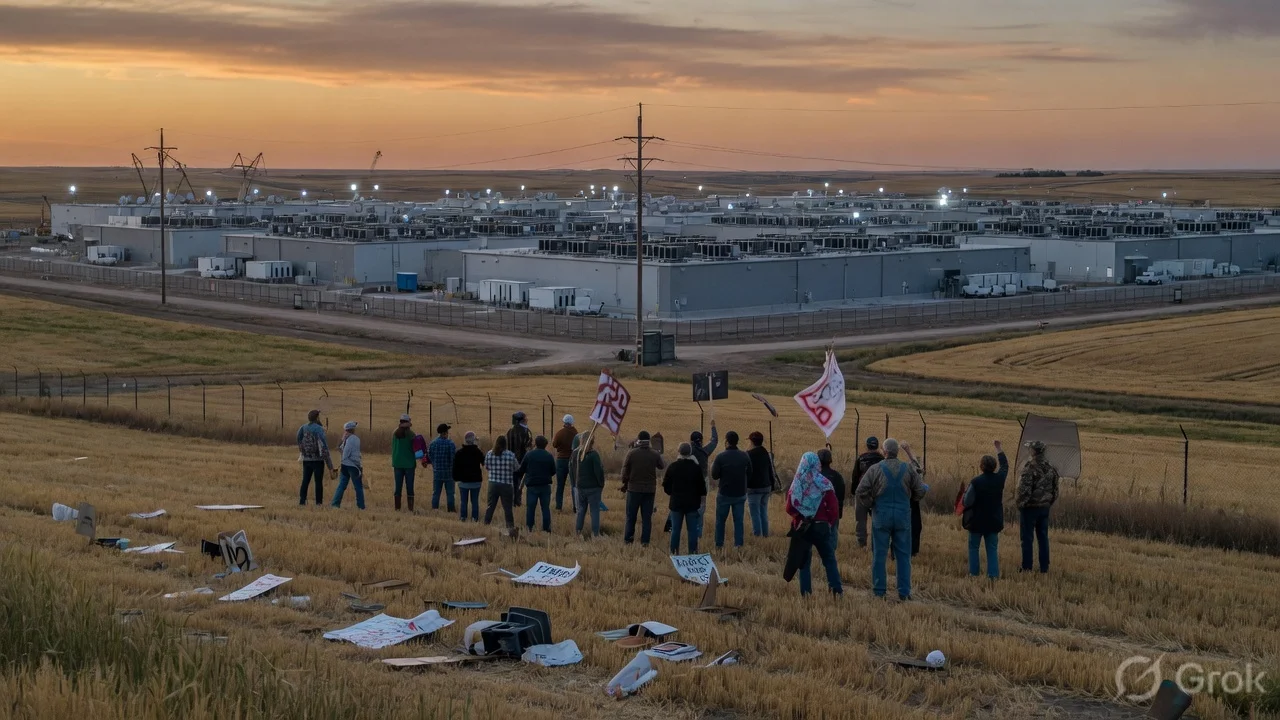
What’s happening?
Across the United States, a surprising trend is emerging: more than two‑thirds of the AI‑powered data centers that companies plan to build are slated for rural counties. At the same time, 87% of the data centers that already exist are packed into urban hubs. Rural residents are pushing back hard, fearing land loss, higher electricity bills, and a loss of community character.
Numbers that tell the story
Recent research shows that 67% of the planned AI data centers will sit in rural zones – places that traditionally rely on agriculture, small‑scale manufacturing, or tourism. In contrast, only about 13% of the existing facilities are in those same areas; the rest are concentrated in places like Silicon Valley, New York, and Chicago.
Why the shift? AI workloads need massive GPU farms, and developers say land is cheaper and power is more abundant away from city grids. But the flip side is a growing backlash. Town hall meetings in Iowa, Nebraska, and West Virginia have seen petitions, protests, and even legal challenges.
What the locals are worried about
- Electricity spikes: Data centers devour megawatts. Rural grids, already stretched thin, could see rates jump for farmers and homeowners.
- Water usage: Cooling massive server farms often requires millions of gallons of water – a red flag for drought‑prone counties.
- Land value & aesthetics: A sea of white‑washed warehouses can change the visual and economic fabric of a small town.
How this ties back to India
India is on the brink of a similar AI‑data‑center boom. While most of our existing centers sit in Tier‑1 cities like Bengaluru and Hyderabad, many new projects are eyeing Tier‑2 and Tier‑3 towns for cheaper land and power. The US push‑back serves as a cautionary tale.
For Indian entrepreneurs, the lesson is clear: any plan to set up a large‑scale AI farm must factor in local sentiment, grid capacity, and water sustainability. Ignoring these could mean community opposition, delayed permits, and costly retrofits.
TamilTech’s take
We think the rural opposition is a wake‑up call. Data center operators often tout "cheaper land" as the main advantage, but they forget that the real cost is community goodwill. If a company burns through the local power budget, they might end up paying higher tariffs or investing in private micro‑grids – both of which eat into profit margins.
From an Indian perspective, the government’s upcoming "Data Centre Policy" should include a clause for community impact assessments, similar to environmental clearances. That way, projects can be steered toward locations that truly have spare capacity, like industrial parks with already‑planned renewable energy sources.
What to watch next
Watch for three developments:
- Policy responses: US states like Texas and Ohio are already drafting rules that require data‑center developers to contribute to local grid upgrades.
- Tech solutions: Companies are testing liquid‑cooling and AI‑driven power‑optimisation to lower electricity draw – a trend that could appease rural critics.
- India’s own debate: As the Ministry of Electronics & IT rolls out incentives for AI‑centric data centres, expect NGOs and farmer groups to voice concerns, especially in water‑scarce regions.
Bottom line – the AI data‑center rush is not just a tech story; it’s a socio‑economic one. Ignoring the voices from the countryside could stall the very AI breakthroughs companies are chasing.





Comments (0)
Be the first to comment!