


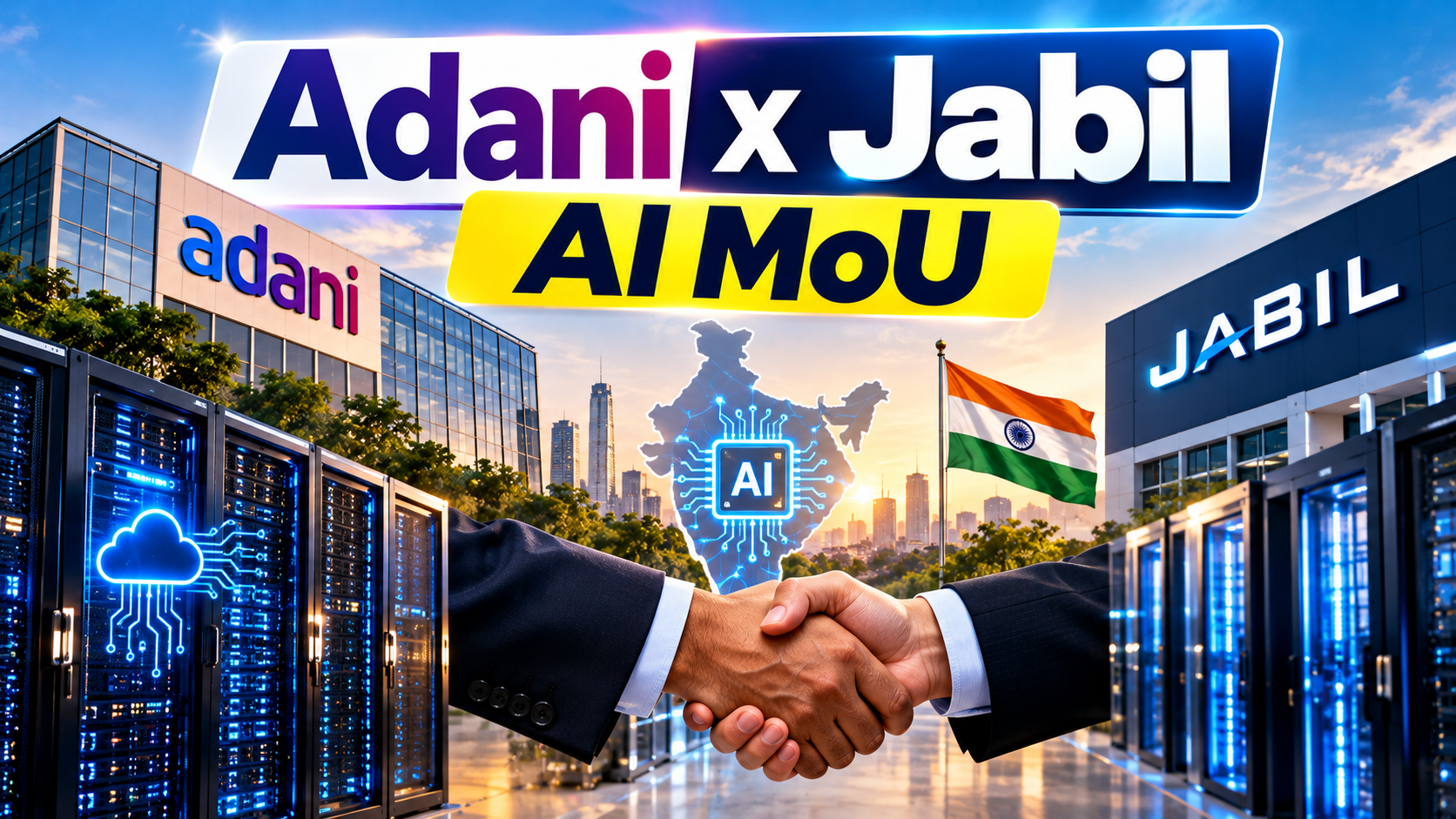
What exactly does an MoU promise — and what doesn't it?
Let's be clear about what a Memorandum of Understanding actually is, because headlines tend to make it sound bigger than it is. An MoU is basically a handshake on paper — both sides agreeing to explore a joint venture, not a signed-and-sealed business with a factory address, a CEO, or a cheque already cut. Adani Enterprises and Jabil have said they intend to build an AI-focused JV around data infrastructure, but the stake split, total investment, and even which entity leads on manufacturing versus which leads on land and power are still open questions.
This matters because the stock market and news cycle often react to MoUs as if they're finished deals. We've seen this pattern before in Indian infra and energy announcements — a flashy signing event, a spike in chatter, and then months of silence while lawyers and boards work out the actual commercial terms. Nothing wrong with that process, it's how big industrial JVs usually go, but readers should know the difference between "we shook hands" and "we built the plant."
Why does the India pricing and import math matter here?
Right now, most of the guts of an AI data center — GPUs, server chassis, high-speed networking gear, cooling racks — are either fully imported or assembled in India using imported components. That import dependency adds cost at every stage: customs duty, currency conversion, shipping delays, and the margin that foreign EMS players build in before an Indian data center operator even sees the invoice. Every rupee spent on an imported rack is a rupee that could, in theory, have stayed in the domestic supply chain.
If Jabil starts manufacturing a meaningful chunk of this hardware on Indian soil with Adani's backing, the long-term pitch is lower landed cost for Indian cloud and AI compute providers. That's not an overnight price cut for anyone building an AI startup tomorrow, but over a two-to-three year horizon it's exactly the kind of local-manufacturing push that can make GPU-as-a-service pricing in India more competitive against renting compute from US or Southeast Asian data centers. Think of it as the same logic behind Make in India pushes in mobile assembly, just applied to server racks instead of smartphones.
Where would a JV like this actually show up first?
The most realistic first use case isn't a shiny new AI model — it's boring, essential plumbing. Expect any early output from this JV to land as server racks, networking hardware, and power-management units destined for data centers that AdaniConneX or similar Adani-backed facilities are already running or planning to expand. That's the low-risk, high-utility starting point for any hardware JV: build what you already have a buyer for.
Further down the line, if the partnership scales, you could see Adani-Jabil hardware feeding into data centers serving Indian cloud providers, enterprise AI deployments, and possibly government or PSU digital infrastructure projects that prefer domestically assembled equipment for data-residency reasons. None of this is confirmed yet, but it's the logical sequence industrial JVs like this tend to follow — infrastructure first, specialised AI hardware later.
What are the honest limitations here, and what should we watch for next?
Let's not oversell this. India still lacks the deep semiconductor and precision-component ecosystem that countries like Taiwan or South Korea have spent decades building. Even with Jabil's manufacturing expertise and Adani's capital and land bank, a huge chunk of the actual silicon — the GPUs and AI chips themselves — will keep coming from Nvidia, AMD, or similar global chipmakers for the foreseeable future. This JV, if it goes ahead, is more about assembly, racks, cooling, and power infrastructure than about India suddenly making its own AI chips.
There's also the usual execution risk with big-ticket Indian industrial announcements: regulatory approvals, land acquisition timelines, and whether the energy supply (a lot of which Adani itself controls) can keep pace with how power-hungry AI data centers actually are. The next real signals to track are whether this MoU converts into a binding joint venture agreement, whether specific investment figures and locations get announced, and whether either company starts hiring for roles tied to this specifically. Until those show up, treat this as a serious statement of intent rather than a built business.
Who is Jabil anyway, and why would Adani pick them?
Jabil isn't a household name in India the way Adani is, but in the global electronics manufacturing world it's a serious player. It's one of the largest contract manufacturers on the planet, the kind of company that builds hardware for brands you do recognise without ever putting its own logo on the box. Think of it as the back-end factory partner that handles the unglamorous job of actually assembling servers, networking gear, and electronics at scale.
That expertise is exactly what Adani doesn't have in-house. Adani knows ports, power, mining, and increasingly data centers through AdaniConneX, but it has never run a precision electronics assembly line. Pairing with Jabil is less about Adani learning a brand-new skill overnight and more about renting that skill through a joint venture, while Adani brings the land, the energy supply, and the capital muscle to scale fast. It's a classic Indian industrial playbook — pick a partner who already knows how to do the hard part, and focus your own effort on the things you're already good at.
Does this change India's AI story, or is it just one company's bet?
It's tempting to read every Adani announcement as a signal about India's entire AI future, but that's probably overreaching here. One MoU between two companies doesn't rewrite India's position in the global AI hardware race. What it does signal is that big Indian conglomerates now see AI infrastructure — not just AI apps or AI models — as a business worth building factories for, which is a meaningfully different bet than what most Indian companies were making even two years ago.
If this JV actually materialises and others follow with similar announcements, India slowly starts looking less like a pure consumer of AI compute and more like a place where some of that compute gets assembled, even if the core chips still come from abroad. That's a slow, unglamorous shift — nobody's going to post excitedly about server rack assembly lines the way they do about a new chatbot launch. But infrastructure stories like this one tend to matter more in hindsight than they seem to in the moment, because they quietly decide how expensive or cheap AI compute will be for every Indian startup trying to build on top of it a few years from now.




Comments (0)
Be the first to comment!