


Key Takeaways
- Agnikul Cosmos is moving away from the traditional 'expendable' rocket model to ensure long-term business profitability.
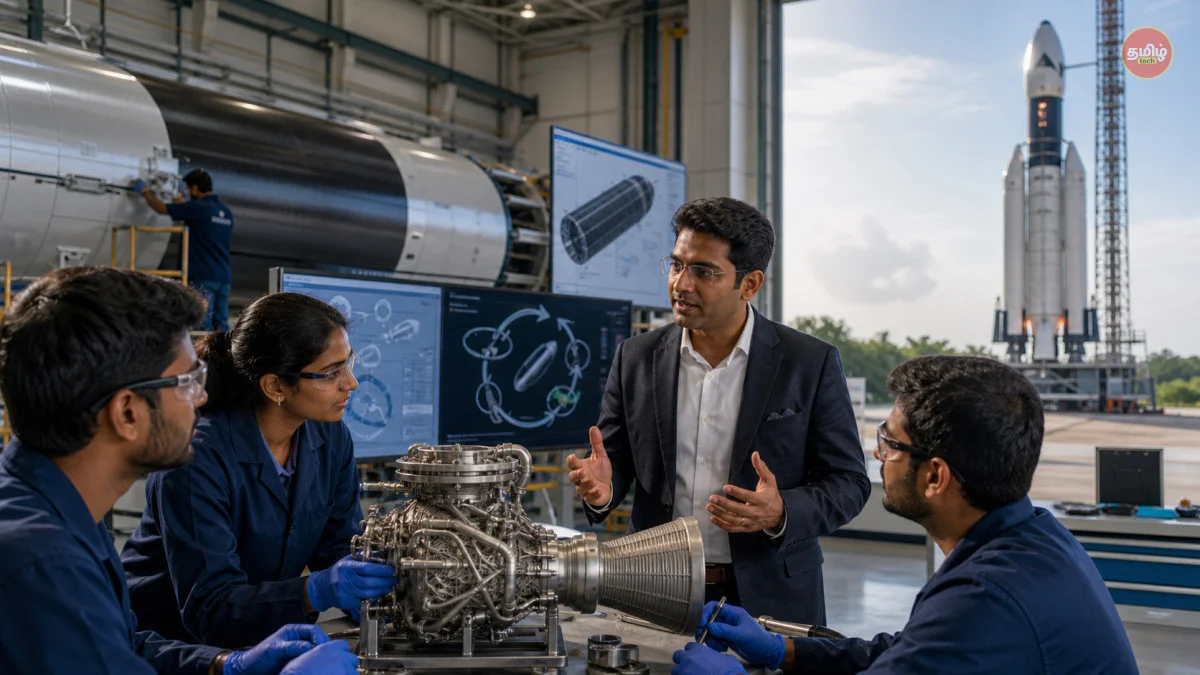
- The company uses 3D printing to manufacture a full rocket engine in just 72 hours, drastically cutting down production time and costs.
- By July 2026, the cost of launching small satellites from India has dropped by nearly 30% thanks to private players like Agnikul.
- The focus is shifting from 'one-off' science missions to a repeatable 'Space-as-a-Service' model for global clients.
The End of the 'Use-and-Throw' Era in Space
Imagine buying a luxury car, driving it once from Chennai to Bangalore, and then pushing it off a cliff. Sounds insane, right? But for decades, that is exactly how the space industry has operated. We build incredibly complex, multi-million dollar machines, fire them into the sky, and let them burn up in the atmosphere or sink into the ocean after just one use. In a recent discussion that has sent ripples through the Indian aerospace sector this July 2026, Agnikul Cosmos CEO Srinath Ravichandran made it clear: if space-tech wants to be a real, sustainable business and not just a government-funded hobby, we have to stop building use-and-throw systems.
This isn't just about being eco-friendly; it's about the cold, hard math of business. As we stand in 2026, the demand for small satellite launches is at an all-time high. From internet-beaming constellations to climate-monitoring sensors, everyone wants a piece of the orbit. But if every launch requires building a brand-new rocket from scratch using traditional manufacturing, the costs will remain sky-high, and the wait times will be years. Agnikul is trying to flip the script by treating rocket manufacturing more like a high-tech factory line and less like a boutique artisan workshop.
How Agnikul is Rewriting the Rules in 2026
So, how do you actually move away from a use-and-throw mindset without the massive budget of a SpaceX? The answer lies in Agnikul's obsession with 3D printing. While others are still welding hundreds of parts together, Agnikul’s Agnilet engine is a single piece of hardware. In 2026, they have perfected the process where they can literally 'print' an engine in three days. This isn't just a gimmick; it removes the 'points of failure' that usually happen at joints and welds. When you have fewer parts, you have fewer things that can go wrong, making the system more reliable for repeat production.
The CEO’s vision is simple: predictability. In the business world, predictability is king. If a customer comes to Agnikul in 2026 and says they need a launch next month, the company shouldn't have to start a two-year manufacturing cycle. By having a system that isn't reliant on complex, disposable sub-systems, they can scale up launch frequency. We are talking about a shift from 'launching once a year' to 'launching every two weeks.' That is the only way the numbers start to make sense for investors and the Indian space ecosystem at large.
The India Impact: Why This Matters for Us
For a long time, India was known for ISRO’s incredible ability to do 'frugal' space missions—like sending a probe to Mars for less than the budget of a Hollywood movie. But in 2026, the private sector is taking that 'frugal' DNA and adding 'scalability' to it. Agnikul’s approach means that Indian startups and even universities can now dream of putting their own hardware in space for a fraction of the previous cost. We are looking at launch prices in India being significantly lower than international competitors, making Sriharikota and private launchpads the preferred 'Uber' pickup points for global satellites.
Currently, the Indian space economy is projected to cross $13 billion, and a huge chunk of that is coming from the small satellite launch vehicle (SSLV) market. Agnikul is positioning itself right in the center of this. By cutting out the waste of 'use-and-throw' components, they aren't just saving money; they are creating a reliable supply chain. For an Indian tech enthusiast, this means more home-grown GPS alternatives, better rural internet, and a massive surge in high-tech manufacturing jobs right here in Tamil Nadu and across India.
TamilTech’s Take: Is This the Future?
Honestly, we think Agnikul is hitting the nail on the head. For years, space was seen as a 'prestige' thing—something countries did to show off. But in 2026, space is an infrastructure. It’s like the sea or the air; it’s a place where business happens. Srinath Ravichandran’s refusal to stick to the old 'disposable' way of thinking is exactly what the Indian private sector needs. We don't just need rockets; we need a 'logistics' company for space.
The road ahead isn't easy. While 3D printing solves the manufacturing speed problem, the 'reusability' aspect (landing the rocket back) is the next big hurdle. But even without full landing capabilities, Agnikul’s model of 'low-cost, high-frequency' manufacturing is a massive step away from the wasteful past. What we expect next is more frequent launches from their private launchpad, 'Dhanush,' and a move towards even larger payloads. If they can maintain this business-first mindset, Agnikul won't just be a rocket company; they’ll be the backbone of India’s presence in the stars.


Comments (0)
Be the first to comment!