


Key Takeaways
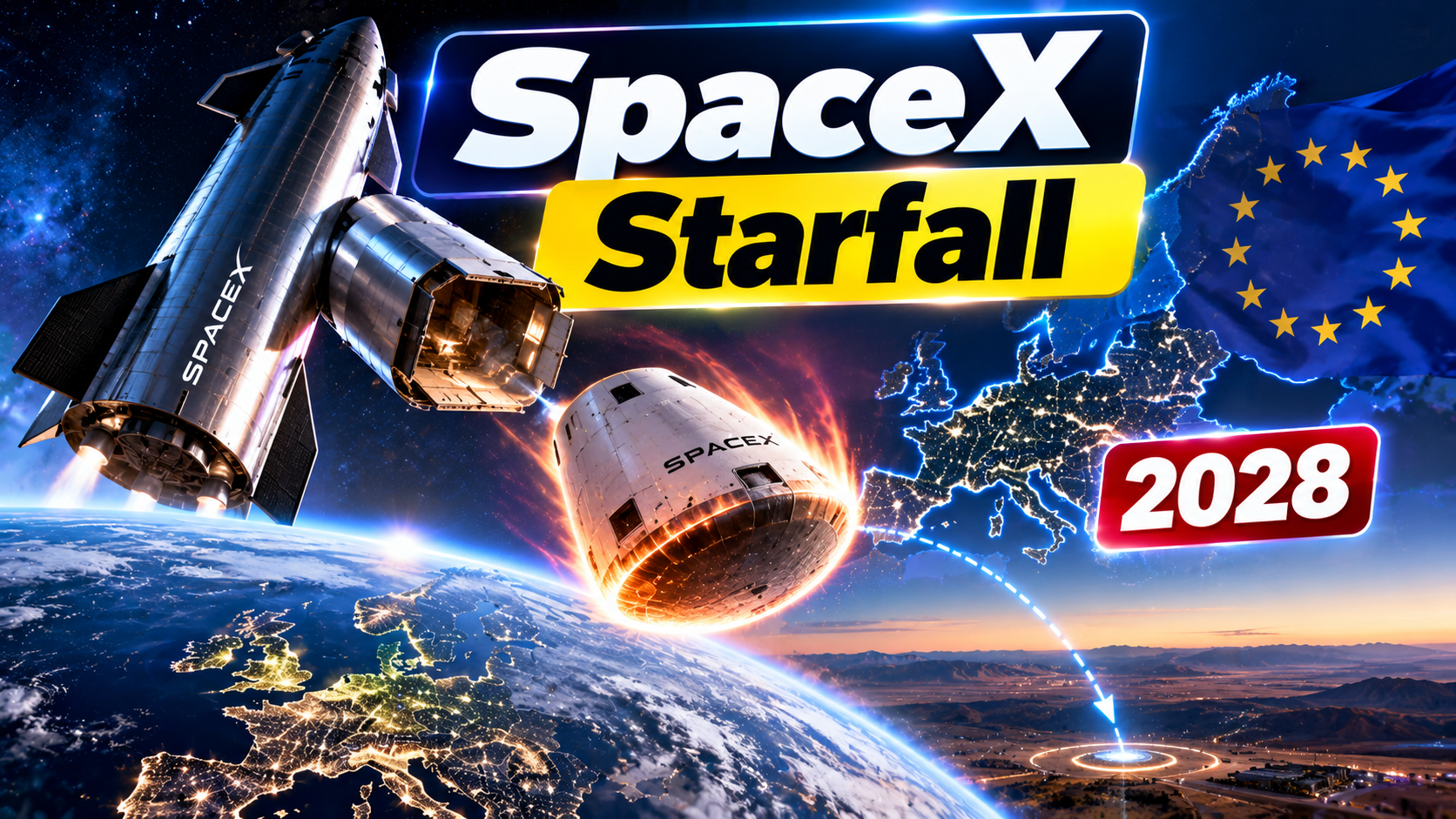
- SpaceX named European mission integrator Space Cargo as the first paying customer for its Starfall reentry capsule.
- Space Cargo targets a 2028 orbital reentry flight on Starship's first commercial mission to deploy the disk-shaped Starfall.
- Starfall is built for short trips through orbit and safe return of materials to Earth rather than long-duration stays.
- Indian labs and startups in materials science or biotech could eventually book similar rides once commercial slots open wider.
- The move adds pressure on India's own reusable and return-tech efforts as private players chase the same microgravity market.
What's the news
SpaceX has its first customer lined up for Starfall and the name is Space Cargo, a European mission integrator. The plan is straightforward on paper: Space Cargo wants to fly an orbital reentry mission in 2028 aboard the first commercial flight of Starship. That mission will deploy Starfall, SpaceX's disk-shaped capsule made to haul materials up for a short spin through orbit and then bring them safely back to Earth.
This is not another satellite deployment story. It is about closing the loop - get stuff into space, expose it to microgravity, and return the goods without waiting for a crewed capsule or a decades-old cargo ship. For anyone following the commercial space race from India, the timing feels pointed. Starship flights keep stacking up test milestones and now a paying European customer is already pencilling in 2028 for actual payload return work.
Space Cargo is positioning itself as the middleman that packages the mission, handles the interfaces, and sells the ride to whoever needs materials processed or tested in orbit. SpaceX supplies the big rocket and the new capsule. That split of labour is classic for the new space economy and it is exactly the model Indian private players are trying to copy with their own small launchers and payloads.
Details
Starfall itself is described as a disk-shaped capsule. Think flat and sturdy rather than the classic gumdrop shape of older return vehicles. The design goal is short orbital trips - not months-long stays - so materials can experience microgravity, radiation, or vacuum conditions and then come home for analysis on the ground. That makes it useful for quick-turnaround experiments instead of multi-year science campaigns.
Space Cargo's target is the first commercial Starship mission. Starship is still working through its test campaign, but SpaceX has been clear it wants commercial cargo and eventually crew flights once the vehicle is proven. Parking a reentry capsule on that debut commercial flight is a bold bet. If the timeline holds, 2028 becomes the year Europe gets an early look at routine materials return via Starship.
Mission integrators like Space Cargo do the unglamorous but critical work: matching customer payloads to the capsule's volume and mass limits, sorting out thermal and vibration requirements, and coordinating with the launch provider. In Europe that role has grown as ESA and national agencies push more commercial services. Space Cargo stepping up as Starfall's first customer signals that at least one European player believes the Starship cadence will be real enough by 2028 to sell return slots.
No public price tag has been attached to the deal and nobody is quoting exact payload masses yet. What matters is the architecture: a reusable heavy-lift vehicle plus a purpose-built return capsule aimed at materials rather than people. That combination is meant to drive the cost of short-duration orbital exposure down far enough that private labs and smaller companies can play.
India impact
Indian space watchers should pay attention for three reasons. First, ISRO and the growing private ecosystem already chase microgravity research - think crystal growth, protein studies, and advanced alloys. Right now most of those experiments either stay up for long periods or rely on limited return opportunities. A commercial Starfall-style service could give Indian researchers a faster loop if they can book through an integrator or eventually a local partner.
Second, Indian startups in the launch and payload game - Skyroot, Agnikul, Pixxel and others - are building toward reusable stages and more frequent flights. Seeing SpaceX sell a dedicated return capsule on Starship raises the bar. If Europe can buy a turnkey materials-return mission in 2028, Indian firms will face questions about when they can offer something similar, even at smaller scale. The Department of Space and IN-SPACe have been pushing commercialisation; this news gives them a concrete foreign benchmark.
Third, the money angle. Launch and return services still cost serious money, often running into crores of INR for traditional rides. Starship's promised lower cost per kilogram is the whole point of the vehicle. If Starfall rides that wave, Indian biotech and materials companies that currently find space experiments too expensive might suddenly see a path. Payment rails are already easy - UPI and bank transfers work fine for international contracts - so the blocker is access and price, not settlement.
India's own Gaganyaan programme and the push for reusable launch vehicles show the country wants sovereignty in human spaceflight and return tech. Commercial materials return sits in a parallel lane. Watching Space Cargo and SpaceX could help Indian teams decide whether to build their own small return capsules or simply buy seats on foreign ones while focusing on unique payloads.
Use cases
The obvious use case is materials science. Grow better semiconductor crystals, test new metal alloys, or run pharmaceutical formulations in microgravity and bring the samples home for lab analysis within weeks instead of years. Short orbital trips mean you can iterate faster - fly, analyse, tweak the formula, fly again.
Biotech and life-science outfits love the same loop. Protein crystals that form more cleanly in zero-g can lead to better drug designs. Tissue samples or cell cultures exposed to space conditions and returned quickly give researchers fresh data without the logistics nightmare of long-duration stations.
Industrial R&D teams could use Starfall for process validation. Want to know how a new coating or composite behaves after a few days in orbit? Pack it, fly it, recover it. The disk shape suggests volume optimised for flat or stacked trays rather than tall towers, which suits many lab-style payloads.
For India specifically, think of the semiconductor push and the pharma export machine. Both sectors already spend heavily on R&D. A commercial return capsule that does not require owning a full spacecraft could let mid-sized Indian firms run space experiments without waiting for a government slot. Educational institutions could also book student payloads if prices drop enough - the same way CubeSat rideshares opened the door a decade ago.
Honest take
This is exciting on the surface and still fragile underneath. SpaceX has a habit of announcing ambitious dates and then sliding them. Pinning the first commercial Starship mission and a brand-new capsule return to 2028 is optimistic even by SpaceX standards. Space Cargo is taking a real schedule risk by becoming the first named customer.
That said, the architecture makes sense. Starship is designed for high cadence and high mass. Adding a simple disk capsule for materials return is a smart way to fill early flights with paying cargo while the vehicle proves itself. Europe getting in early via an integrator rather than waiting for a national programme is also smart - it keeps the commercial muscle warm.
For India the lesson is clear. The return-from-orbit market is opening and the first movers are not waiting for perfect vehicles. Indian teams should either start designing small recoverable capsules that can ride Indian or foreign launchers, or build strong relationships with integrators so Indian payloads can hitch rides when Starfall and its cousins start flying regularly. Sitting on the sidelines while Europe books the first slots would be a missed opportunity.
Bottom line: Starfall's first customer announcement is a signal that commercial materials return is moving from PowerPoint to purchase order. Whether 2028 holds or slips, the direction of travel is set. Indian space and tech circles should treat it as a wake-up call rather than just another SpaceX headline.


Comments (0)
Be the first to comment!