


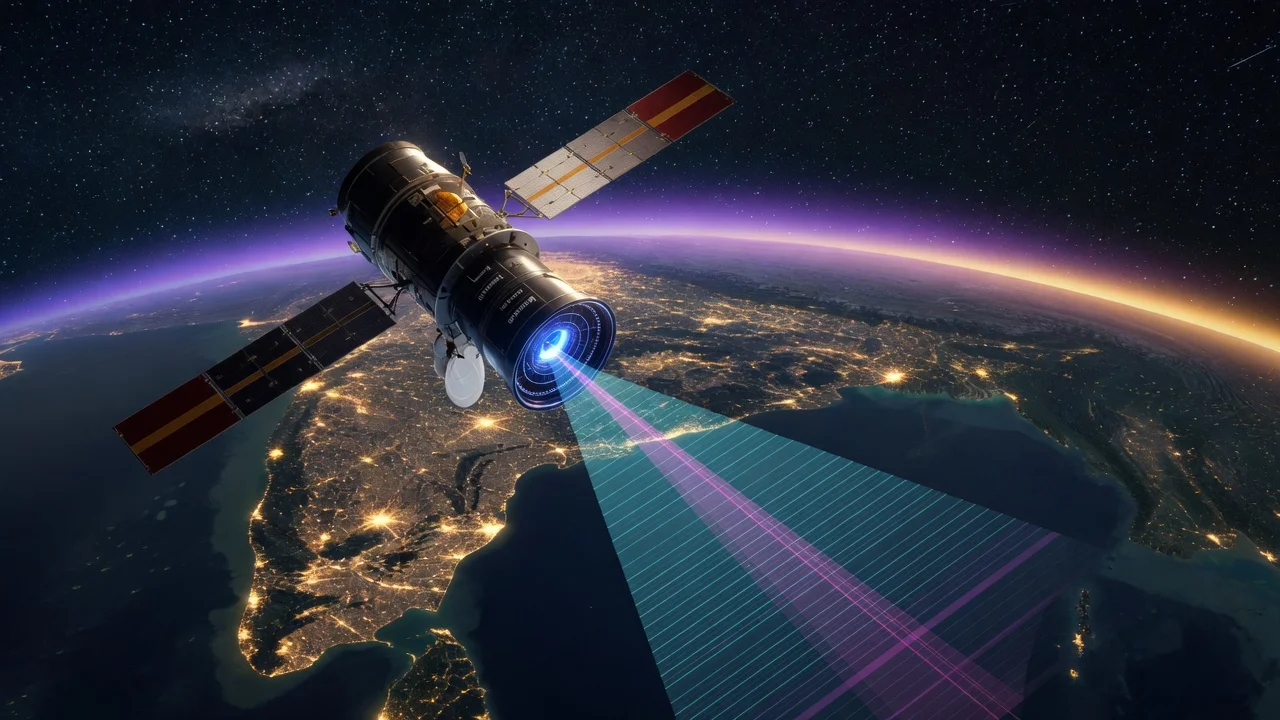
After morning coffee comes an astounding update from Bangalore. GalaxEye, an Indian spacetech startup, has secured a full patent from the US regulatory body for its satellite imaging technology. This stands as a watershed moment for the Indian space startup ecosystem and marks the first-ever such milestone for an Indian private space company.
Until now, Indian private space players had mainly entered the industry through launch services, payload integration and satellite-as-a-service offerings. The global imagery market remained dominated by large foreign players such as Planet Labs, Maxar and Urthecast. The barrier that a private Indian company could not obtain a US patent for end-to-end satellite imaging technology has now been broken.
What Exactly Happened
GalaxEye's core imaging technology stack is now legally protected. The US Patent Office approval means competitors cannot simply copy the protected claims. This green light gives the company a stronger position when negotiating pricing and terms with global players like Planet Labs and Maxar. At the same time, the patent remains a small milestone. The real test lies in end-to-end execution.
India's private space ecosystem is moving beyond launch services toward proprietary IP-led products. This patent serves as clear evidence of that maturation. Localized data feeds can now reach Indian agritech, disaster management, infrastructure and urban planning sectors, reducing dependence on foreign data sources.
How the Technology Works
In simple terms, GalaxEye's core technology stack is now legally guarded. The specific claims centre on a novel sensor-fusion methodology or optical-SAR integration. A single satellite carries both an optical camera and a SAR radar. The two different sensor streams are merged into one coherent map.
Consider an area hit by heavy rain. A normal optical satellite photo cannot see through cloud cover, so water depth, flood damage extent and crop health remain unclear. With the sensor-fusion method, the optical image is combined with SAR data. Details become clear and the result stays accurate against ground truth.
This patent creates a defensible moat. Competitors cannot easily copy the technology barrier. In the global satellite marketplace GalaxEye gains pricing freedom and sharper teeth when competing with foreign players. Think of a car company that patents a new engine technology. The patent alone does not put cars on the road. Service stations, fuel and maintenance are still required. In the same way, the patent does not sell itself. An end-to-end data pipeline, analytics layer and customer push remain essential.
What This Means for India
Observers have long spoken of a bright future for India's space sector, yet the earlier model mostly relied on foreign launch providers and sold services to foreign end-users. That model is beginning to shift. Moving past launch services toward proprietary IP-based products sends a strong signal that India is advancing.
In agriculture, crop health monitoring can be performed with high precision. Village-level accurate data can support government schemes. Insurance companies can make loan disbursement decisions more easily and microclimates become visible. In flood monitoring, evacuation teams can receive path information ahead of time. Even in rural areas the same data can detect power-line faults and locate weak mobile-tower signals.
Foreign data imports have cost large players crores of rupees. Localized terms now allow faster and more cost-effective data. Domestic startups, NGOs and government departments can share the same platform. Ticket prices fall while revenue tickets expand across India's growth sectors.
Investor confidence also rises. Companies that have already raised seed or pre-series A rounds receive validation. Their portfolios strengthen and the funding pipeline improves. When international venture capital firms look for new ideas in space, they will see that India already possesses an IP-protection presence.
What Readers Need to Understand
Securing a patent does not create an overnight monopoly. The space sector runs on funding-heavy business models with high burn rates. Engaging the global market means facing execution gaps, tight timelines and the hard work of client acquisition. Even with a dossier filed at the US Patent Office, the technology remains useless if the end-to-end data pipeline cannot deliver to end-users.
GalaxEye now holds a green light. Protecting that light requires continuous productive work. Competing on the same road as global players demands continuous innovation, improved service-level agreements and reliable data. To build trust in foreign markets, Indian space startups must also prove that the technology works at domestic large-scale manufacturing levels.
Clusters of space startups have already grown in Tamil Nadu, Karnataka and Telangana. This patent moves beyond a pilot project and signals a larger flight. India's space sector thereby supplies real-world feedback to the government's self-reliant vision. Innovations of this kind are exactly what will bring space capabilities into the budget segment for Indian users.
Frequently Asked Questions
- Is GalaxEye an Indian company? Yes. It is a Bangalore-based spacetech startup focused on imaging and data analytics.
- Does a US patent automatically make the company wealthy? The patent improves market valuation and sends a clear signal to investors. Long-term success, however, is decided by commercial traction, revenue and client base.
- Have Indian space startups tried for IP protection before? Earlier, obtaining a US patent presented a steady challenge because of legal expenses, documentation and translation barriers. GalaxEye's success is therefore a positive sign.
- What role does the government play with this satellite data? The National Space Policy and growing private-participation trends create expectations. A framework covering data security, privacy rules and domestic commitments will continue to take shape.
- How does this help agriculture? Crop-health monitoring becomes far more precise. Village-level data supports government schemes, insurance decisions and loan disbursements while revealing microclimates. The same fused imagery also aids flood monitoring and rural infrastructure checks, all at lower cost than imported foreign data.
The patent itself is only the starting gun. Commercial traction, a complete data pipeline and steady client acquisition remain the real battles inside a funding-heavy space sector. GalaxEye has secured legal protection for its core stack and thereby gained negotiating strength. India's private space ecosystem has taken a visible step from services toward proprietary products. Localized, cost-effective imagery can now serve agritech, disaster response, infrastructure and urban planning while reducing foreign dependence. Continuous innovation and reliable delivery will decide whether this first-ever US patent for an Indian private company becomes lasting global success.
For the wider Indian ecosystem the message is clear. Clusters already forming in southern states now have a concrete example of IP that travels beyond national borders. When domestic manufacturing proves the technology at scale, trust in foreign markets follows. When government frameworks for data security and privacy mature alongside private participation, the entire value chain benefits. When startups share platforms with NGOs and departments, ticket prices drop and more Indian growth sectors gain access. The patent is therefore both a legal shield and a public signal that India can generate, protect and commercialize advanced space imaging IP. Execution will turn that signal into sustained capability.




Comments (0)
Be the first to comment!