


Key Takeaways
- ISRO planning to step back from manufacturing to focus on core research and development
- Private sector getting bigger role in India's space journey with government support
- Government's big push to open up space sector to startups and established companies
- Manufacturing responsibilities shifting to private companies over next few years
- This could speed up India's space ambitions significantly and create new ecosystem
What's the news
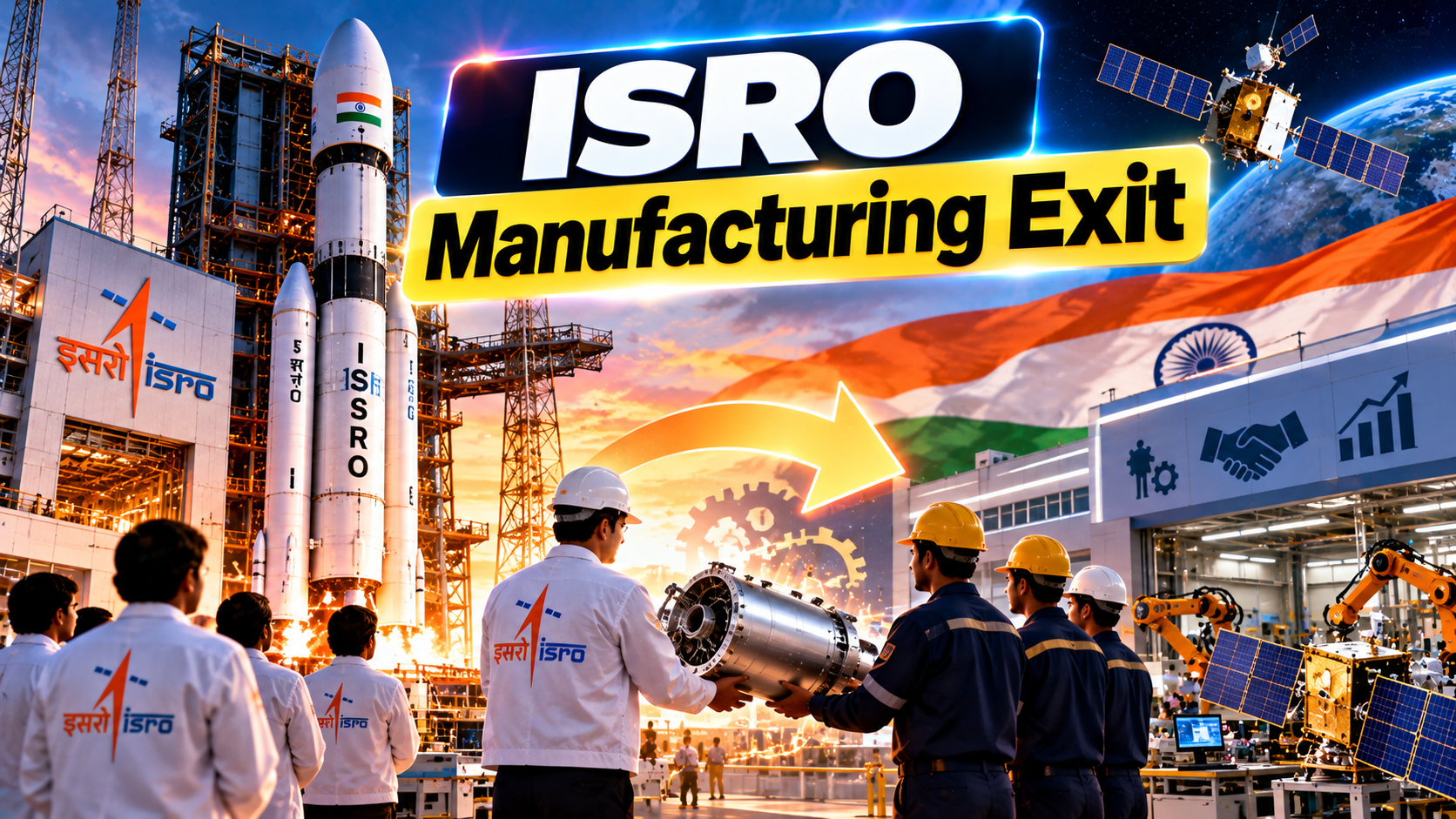
The Indian Space Research Organisation (ISRO) is reportedly mulling over exiting manufacturing operations, marking a significant shift in India's space strategy. This move comes as part of the central government's broader vision to open up the space sector to private players and promote privatization across the industry. For decades, ISRO has been the backbone of India's space program, handling everything from satellite manufacturing to launch vehicle production. However, with the emergence of private space startups and established companies in India, there's a growing realization that manufacturing should be handed over to the private sector.
Details
This strategic shift isn't happening in isolation. It's part of a broader vision to democratize space technology in India and create a more competitive and innovative space ecosystem. ISRO has been handling everything from building satellites like the Cartosat series to manufacturing launch vehicles like the PSLV and GSLV. But with the emergence of private space startups in India, there's a growing realization that manufacturing should be handed over to the private sector. The idea is to let ISRO focus on what it does best - pushing the boundaries of space research and development - while private companies handle the production side.
The transition is expected to be gradual, ensuring that India's space capabilities don't take a hit during the handover period. ISRO will likely provide support during the transition phase to maintain project timelines and ensure continuity of ongoing missions. This approach will allow private companies to build up their manufacturing capabilities while leveraging ISRO's expertise and experience.
India impact
This transition could be a game-changer for India's space industry. It would create a whole new ecosystem of private space manufacturers, potentially leading to innovation and cost reduction. The move could also help India tap into the global space market, which is growing at an incredible pace. With private players entering the manufacturing space, we might see specialized capabilities emerging in different parts of India, creating jobs and driving technological advancement.
The impact on India's economy could be substantial. The space manufacturing sector is expected to create thousands of jobs across various skill levels, from engineers to technicians. It could also attract significant foreign investment as international companies look to partner with Indian manufacturers for their space hardware needs. The distributed manufacturing approach could leverage India's diverse talent pool and create a robust space manufacturing ecosystem that spans multiple cities and regions.
Use cases
Private companies could take over manufacturing of various space components, including small satellites, launch vehicle parts, and ground support equipment. This could lead to the development of specialized manufacturing hubs across India. Imagine satellite manufacturing facilities in Bengaluru, launch vehicle component production in Hyderabad, and ground equipment manufacturing in Pune. This distributed approach could leverage India's diverse talent pool and create a robust space manufacturing ecosystem.
The manufacturing responsibilities could include everything from small satellite production for startups to larger components for ISRO's missions. Private companies could also take on the manufacturing of specialized components like reaction wheels, propulsion systems, and communication payloads. The development of indigenous manufacturing capabilities would reduce India's dependence on foreign suppliers and help keep costs down for space missions.
Honest take
While this move seems like the right direction, it's not without its challenges. The transition needs to be managed carefully to ensure that India's space capabilities don't take a hit. There's also a need to build the necessary ecosystem and regulatory framework to support private sector participation in space manufacturing. But if done right, this could be the catalyst that propels India into the big leagues of space exploration.
The success of this transition will depend on several factors, including the availability of skilled manpower, access to capital, and the development of robust supply chains. The government will need to create policies that encourage private investment in space manufacturing while ensuring that national security interests are protected. The regulatory framework will need to be updated to accommodate private players while maintaining quality standards and safety protocols.
Future outlook
Looking ahead, this move could position India as a major player in the global space manufacturing market. With its strong engineering talent pool and cost advantages, India could become a preferred destination for space manufacturing. The transition could also lead to the development of new technologies and innovations that could be commercialized both domestically and internationally.
The private sector's involvement in space manufacturing could also lead to the development of new business models and services. Companies could offer satellite manufacturing as a service, or provide specialized components to other space companies. This could create a vibrant ecosystem of space startups and established companies working together to advance India's space capabilities.
Challenges ahead
Despite the potential benefits, there are several challenges that need to be addressed. The high capital requirements for space manufacturing could be a barrier for many private companies. The need for specialized equipment and clean room facilities could also limit participation to a few well-funded players. Additionally, the long development cycles and high risk associated with space manufacturing could deter some investors.
Another challenge is the need for skilled manpower. Space manufacturing requires specialized skills and expertise, which may not be readily available in the current job market. The government and industry will need to invest in training and education programs to build the required talent pool.
Conclusion
ISRO's potential exit from manufacturing marks a significant milestone in India's space journey. While the transition will be challenging, it could ultimately lead to a more vibrant and competitive space industry in India. With the right policies and support, this move could help India achieve its goal of becoming a major player in the global space market.





Comments (0)
Be the first to comment!