


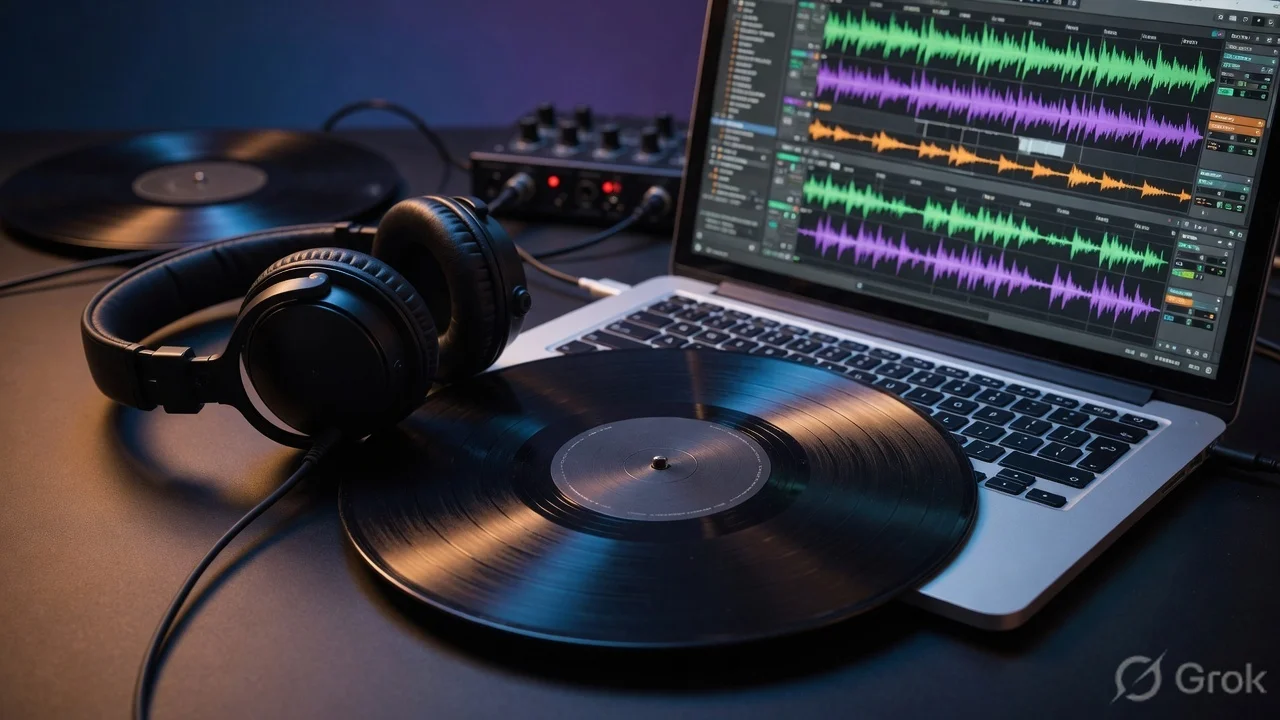
What’s happening?
In the last year AI tools such as ChatGPT‑Music, Soundraw and Google’s MusicLM have made it possible to produce a full‑length song with just a text prompt. The result? Thousands of AI‑crafted tracks are now on the same shelves as the latest Bollywood hits and indie Tamil releases.
Streaming giants are not sitting idle. They have started to label AI‑generated songs, push them down the recommendation engine (de‑ranking) and, in some cases, stop paying royalties (demonetising) until the content is verified.
How the big players are reacting
Spotify rolled out an AI‑Content Tag that appears next to the track title. The tag is powered by an in‑house detection model that analyses waveform patterns, metadata and lyrical similarity to known AI‑generated datasets. If a track is flagged, it is automatically placed in a separate “AI‑Music” playlist and removed from the algorithmic “Discover Weekly” mix.
YouTube Music took a stricter route. Using Google’s Audio‑AI Detector, it now de‑ranks any video that is 80% or more AI‑generated. The video stays on the platform, but it won’t appear in the top‑10 of the “Trending” tab, and ad‑revenue is suspended until the creator provides proof of original content.
JioSaavn, India’s home‑grown service, introduced a “Verified Artist” badge that only human‑made tracks can earn. AI tracks get a grey label saying “AI‑Generated – Verify”. Until verification, these tracks are hidden from the “Top 50” charts and receive zero royalty for the first 30 days.
The tech behind detection
All three platforms rely on a mix of machine‑learning classifiers and audio fingerprinting. The classifiers are trained on a massive corpus of AI‑generated audio (mostly from open‑source models) and learn to spot subtle artifacts – like overly smooth transitions, repetitive chord progressions, or synthetic vocal timbres that human singers rarely produce.
Audio fingerprinting works like Shazam: it creates a unique hash of the song’s spectral peaks. If the hash matches a known AI‑generated sample, the system flags it. Some services also scan the metadata (file name, creator ID, upload time) for patterns typical of bot uploads.
Why Indian users should care
1. Royalty fairness – Indian indie musicians often rely on streaming payouts. If AI tracks crowd the charts, human creators get less exposure and lower earnings.
2. Playlist integrity – Curated playlists like “Tamil Hits 2024” could get diluted with low‑effort AI songs, affecting your listening experience.
3. Legal gray area – Indian copyright law is still catching up with AI‑generated works. Until clear guidelines emerge, platforms are playing it safe by limiting monetisation.
What this means for creators
If you’re an Indian musician on Spotify or JioSaavn, make sure your profile is fully verified: upload a government‑issued ID, link your social media, and add a short video of you performing the track. This will help the AI‑detectors recognise you as a human creator and keep your songs out of the grey‑label bucket.
For YouTubers, keep the original project files (DAW sessions) handy. If YouTube Music asks for proof, you can quickly upload a short clip of the DAW timeline showing the raw stems – that’s a strong signal you didn’t just press a ‘Generate’ button.
TamilTech‑ஓட கருத்து
AI music is cool, but it feels a bit like letting a robot write your love letters – you might get a grammatically perfect note, but the soul is missing. The streaming services are right to protect local talent, yet the current approach can be a double‑edged sword. Over‑aggressive de‑ranking could also push genuine experimental artists (who sometimes use AI as a tool) into obscurity.
In India, where regional music thrives on authenticity, listeners will likely push back against a flood of synthetic tracks. We expect platforms to fine‑tune their detectors, perhaps offering a “Hybrid” badge for songs that combine human vocals with AI‑generated backing tracks.
What’s next?
1. More granular labeling – Instead of a blunt “AI” tag, we might see tags like “AI‑Generated Beat” or “AI‑Assisted Vocals”.
2. Revenue‑share models – Some platforms could introduce a small royalty pool for verified AI creators, encouraging responsible use of the tech.
3. Regulatory clarity – The Indian government’s upcoming “Digital Media Guidelines” are expected to address AI‑generated content, which will force all services to adopt a uniform standard.
Until then, keep an eye on your playlists, verify your artist profile, and enjoy the music – whether it’s made by a human hand or a clever algorithm.




Comments (0)
Be the first to comment!