


What’s the buzz?
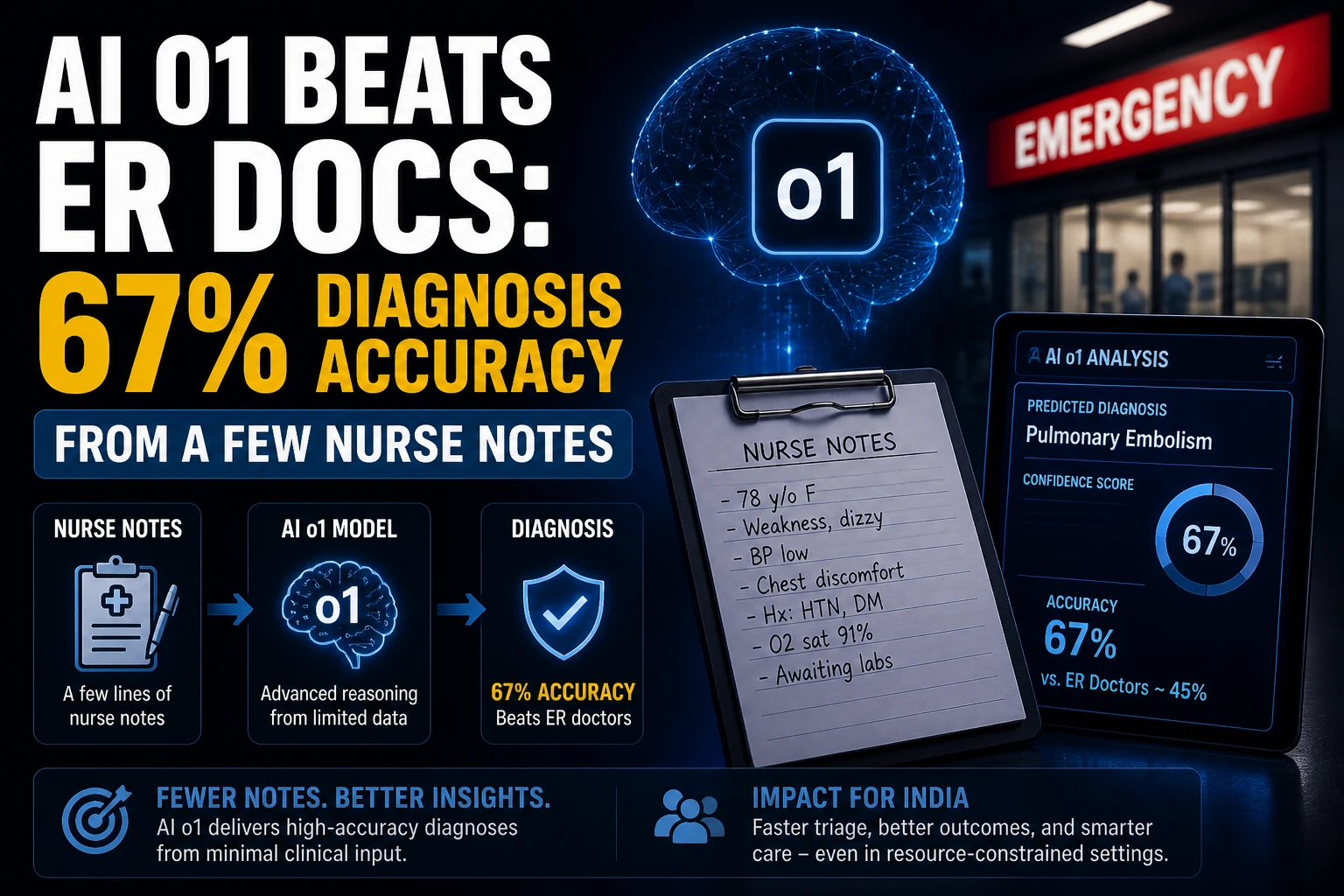
OpenAI just dropped a new model named o1. In a head‑to‑head comparison with real‑world triage doctors, o1 nailed the correct diagnosis for 67% of ER patients using only the digital chart and a few short nurse notes. The average doctor in the study hovered around 50‑55%.
How did they test it?
Researchers fed the model three things: the patient’s electronic health record (EHR), the chief complaint, and a handful of sentences that a nurse scribbled during the initial assessment. No lab results, no imaging – just the data a doctor would see in the first few minutes.
Then they let o1 suggest the most likely diagnosis. The answers were checked against the final discharge diagnosis that the hospital later confirmed.
Numbers that matter
- Overall accuracy: 67% (vs. 50‑55% for doctors)
- Top‑3 recall (the correct answer in the model’s top three picks): 85%
- Time per case: under 10 seconds on a standard GPU
Why Indian ERs should sit up
India’s public hospitals are overwhelmed – a typical ER sees 30‑40 patients per hour, and many junior doctors are still learning the ropes. If a system like o1 can give a fast, data‑driven second opinion, it could cut down on mis‑triage, free up senior physicians, and even save lives.
Imagine a government‑run hospital in Chennai that uses o1 as a decision‑support tool. The model could flag a possible myocardial infarction within seconds, prompting the nurse to push the patient straight to the cath‑lab.
TamilTech‑ஓட கருத்து
We love AI hype, but here’s the real talk. 67% is great for a model that only sees a snapshot of the patient. It’s not a replacement for a doctor, but a powerful aide. The biggest win is consistency – a junior resident might miss a rare presentation, while o1 will apply the same pattern‑recognition every time.
That said, data quality is king. Indian hospitals still wrestle with fragmented EHRs. If the input is noisy, o1’s output will be noisy too. So the real challenge is not the model, but getting clean, interoperable records into it.
What could go wrong?
- Bias: The training data is mostly US‑centric. Some diseases that are common in rural India (e.g., dengue, leptospirosis) might be under‑represented.
- Liability: Who’s responsible if the AI suggests a wrong diagnosis?
- Workflow friction: Doctors need a seamless UI; otherwise they’ll ignore the suggestion.
What’s next?
OpenAI says they’ll roll out a specialized “o1‑Health” API later this year. Expect pilot programs in a few flagship hospitals – maybe AIIMS Delhi or Apollo in Hyderabad. If the pilots show a drop in adverse events, we could see the Indian Ministry of Health fast‑tracking approvals.
For now, keep an eye on the news. The next time you’re stuck in an ER waiting room, a quiet AI might already be crunching your vitals in the background.




Comments (0)
Be the first to comment!