


Key Takeaways
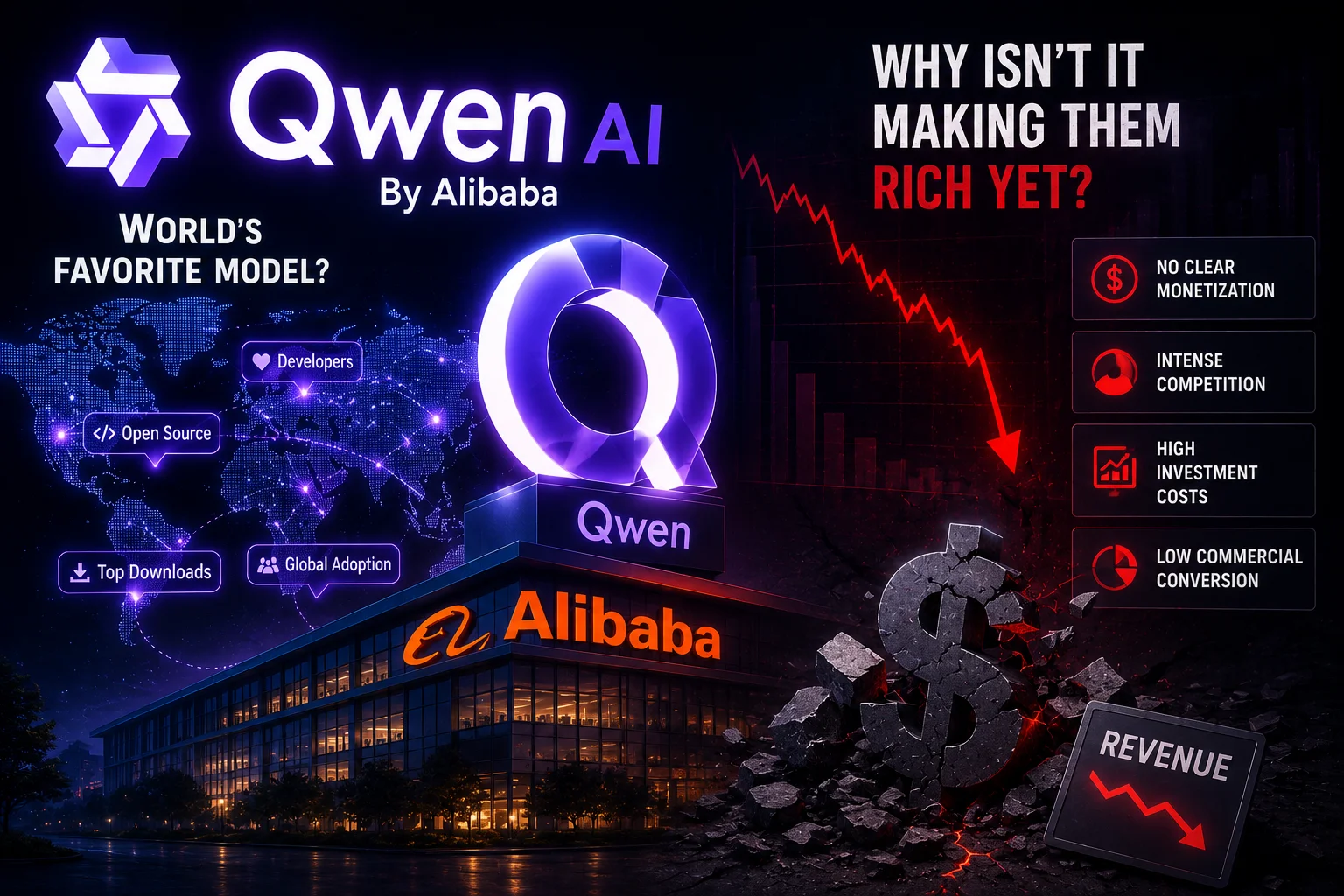
- Qwen 2.5 and 3.0 models are currently dominating the Hugging Face open-source leaderboards, outperforming Meta's Llama 3.2 in multilingual benchmarks.
- Despite a 300% increase in API usage globally, Alibaba's Cloud Intelligence Group reported a stagnant profit margin of just 4.2% in the last quarter of 2026.
- In India, Qwen has become the go-to model for startups building local language apps due to its superior performance in Hindi, Tamil, and Bengali compared to GPT-4o.
- The bottom line: Alibaba is winning the tech war but losing the pricing war as competitors like DeepSeek and Baidu drive API costs down to near-zero levels.
The Uncrowned King of the AI World
If you have been following the AI space this year, you know that the name on everyone's lips isn't just OpenAI or Google anymore. It is Alibaba's Qwen. As of July 2026, Qwen has established itself as the absolute powerhouse of the open-source community. Whether it is coding, mathematics, or understanding complex Asian languages, Qwen’s 72B and 110B models are consistently beating the best from Silicon Valley. It’s a massive achievement for a company that many thought would be sidelined by US chip export bans. However, behind the scenes at Alibaba’s headquarters, the mood is likely more stressed than celebratory. Why? Because being the most popular doesn't always mean being the most profitable.
The reality is that Alibaba has successfully built a world-class product that millions of developers are using for free. By open-sourcing their most powerful models, they have democratized high-end AI, but they have also made it very difficult to convince companies to pay for the premium versions. We are seeing a classic tech dilemma: everyone loves the product, but nobody wants to sign the check. In the high-stakes world of 2026 AI development, where a single training run can cost hundreds of millions of dollars, being a 'popular free option' is a dangerous place to be for a publicly-traded giant like Alibaba.
How Qwen Became the Developer's Darling
To understand why Qwen is so popular, you have to look at the technical shift that happened over the last twelve months. While Meta was focusing on making Llama more 'American-centric,' Alibaba took a global approach. Qwen was trained on a massive dataset that included a heavy emphasis on logic and multilingual capabilities. This made it incredibly efficient for tasks that require more than just 'chatting.' For example, if you are a developer building a complex automated accounting tool, Qwen’s reasoning capabilities are often more reliable than GPT-4o mini, and since it’s open-source, you can run it on your own servers without worrying about data privacy or recurring subscription fees.
Furthermore, the efficiency of these models is staggering. Alibaba’s engineers managed to optimize the 2026 versions of Qwen to run on mid-range hardware that would have struggled with much smaller models just two years ago. This 'efficiency first' mindset has made Qwen the default choice for the 'Local LLM' movement. People are running Qwen on their MacBooks and private servers, bypassing Alibaba’s cloud services entirely. This is great for the world, but it creates a massive hole in Alibaba's revenue strategy. They are providing the brains of the operation, but other companies are providing the 'body' (the hardware) and keeping the profit.
The Profitability Problem: A Race to the Bottom
Now, let's talk about the money—or the lack of it. Alibaba’s strategy was simple: release the best models, get everyone onto Alibaba Cloud, and then charge them for compute power. But the plan hit a major roadblock: the Great Chinese AI Price War of 2025-2026. Competitors like Baidu, Tencent, and the newcomer DeepSeek started cutting their API prices so aggressively that it became a race to zero. At one point earlier this year, some providers were offering AI tokens for 90% less than what OpenAI was charging. When your competitors are basically giving away the service for free to gain market share, it is impossible to maintain a healthy profit margin.
Alibaba is also facing a 'Cloud Cannibalization' problem. Large enterprises that used to pay for expensive cloud suites are now just downloading the open-source Qwen model and running it on their own private data centers. This means Alibaba is losing the high-margin software-as-a-service (SaaS) revenue. While their cloud division is still growing in terms of total users, the actual profit per user has plummeted. They are spending billions on Nvidia H200 and B200 GPUs (and their own internal chips) to stay ahead, but the return on investment is looking increasingly long-term, perhaps too long-term for impatient investors.
The India Impact: Why Qwen is Winning in Bangalore and Chennai
In India, the story of Qwen is particularly interesting. If you go to any AI meetup in Bangalore or Chennai right now, you’ll find that developers are moving away from GPT-4 for local language applications. Why? Because Qwen understands Indian contexts significantly better. Whether it is a chatbot for a government scheme in rural Tamil Nadu or a fintech app serving Hindi speakers, Qwen’s performance in Indic languages is currently the gold standard. Since most Indian startups are extremely cost-conscious, the ability to use a top-tier model like Qwen without the heavy 'dollar-denominated' pricing of US-based AI companies is a game-changer.
We are seeing Indian health-tech and ed-tech companies deploying Qwen on local cloud providers like E2E Networks or Netweb, which are much cheaper than the big three (AWS, Azure, Google Cloud). This is a win for the Indian ecosystem, as it allows for the creation of 'Sovereign AI'—data that stays within the country and runs on models that aren't controlled by a single Western entity. However, for Alibaba, this means they aren't even getting the cloud revenue from one of the world's fastest-growing tech markets. They are providing the technology, but the infrastructure revenue is staying in India.
TamilTech’s Honest Take: What’s Next for Alibaba?
So, what do we think about this? Alibaba is in a very prestigious but very uncomfortable position. They have proven that a Chinese company can lead the world in AI research and execution. Qwen is a masterpiece of engineering. But as a business, they are currently a 'charity' for the tech world. They are subsidizing the world's AI development with their R&D budget. For the average user or developer in India, this is fantastic news—you have access to world-class AI for free or at very low costs. You should absolutely be looking at Qwen if you are building anything AI-related right now.
However, expect a shift soon. We predict that Alibaba will start 'gatekeeping' their most advanced features. We might see a future where the 'Open Source' Qwen is always one generation behind a 'Pro' version that only runs on Alibaba Cloud. They have to find a way to make the numbers work, or the massive investment in AI will start to look like a burden rather than an asset. For now, enjoy the golden age of Qwen; it is the best 'free' tech we have seen in years, but don't expect the free ride to last forever without some strings attached.





Comments (0)
Be the first to comment!