


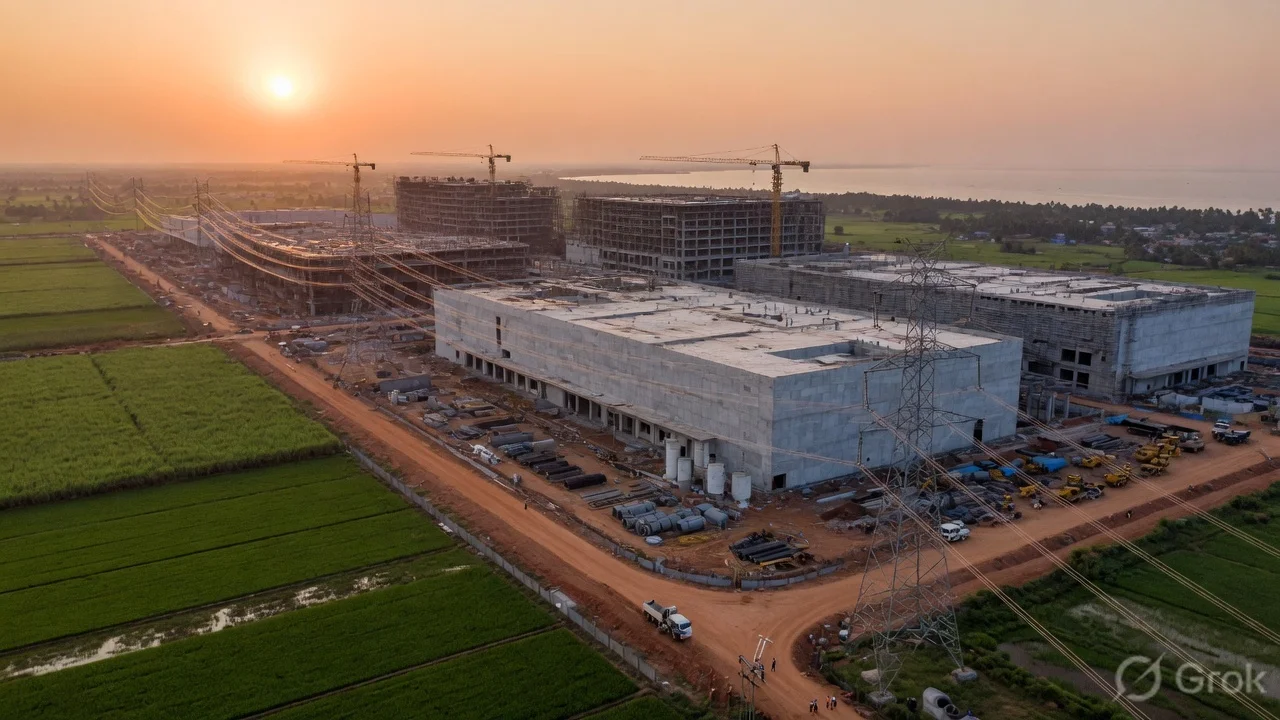
Key Takeaways
- Four data center projects approved with Rs 2.83 lakh crore investment
- Nearly 3,498 MW of power capacity dedicated to these facilities
- Andhra Pradesh positioning itself as a major data center hub
- Massive power requirements highlight the scale of digital infrastructure growth
- State-level push for digital infrastructure development
What's the news
Andhra Pradesh has given the green light to four massive data center projects that could reshape the state's digital landscape. The approved projects involve a staggering Rs 2.83 lakh crore in proposed investment and will require nearly 3,498 MW of power capacity. This move signals Andhra Pradesh's ambition to become a significant player in India's data center market, competing with established hubs like Mumbai, Chennai, and Hyderabad.
Details
The four data center projects represent one of the largest single investments in digital infrastructure in recent Indian history. Each facility is being designed to handle massive computational loads, with power requirements that dwarf typical industrial setups. The 3,498 MW power allocation is particularly noteworthy - that's enough electricity to power several mid-sized cities continuously. These facilities will likely house everything from cloud computing infrastructure to AI research centers, requiring specialized cooling systems and redundant power supplies to ensure 24/7 operation.
India impact
This development could have far-reaching implications for India's digital economy. First, it addresses the growing demand for data center capacity as Indian businesses and startups increasingly rely on cloud services. Second, it creates significant employment opportunities, both directly in the data centers and indirectly through supporting industries. Third, it strengthens India's position in the global digital services market, potentially attracting international tech companies looking to establish a presence in South Asia. The massive power requirements also highlight the need for continued investment in renewable energy sources to support this digital growth sustainably.
Use cases
The approved data centers will serve multiple critical functions. They'll host cloud infrastructure for major Indian companies, provide the backbone for AI and machine learning initiatives, support digital payment systems like UPI at scale, enable streaming services to handle growing content consumption, and potentially serve as disaster recovery sites for financial institutions. The facilities could also become hubs for research in emerging technologies like quantum computing and edge computing, positioning Andhra Pradesh as a center for technological innovation.
Honest take
While the scale of these projects is impressive, there are valid concerns to consider. The massive power requirements could strain local grids unless accompanied by significant renewable energy investments. The concentration of such critical infrastructure in one state raises questions about redundancy and disaster resilience. However, if executed well, this could be a game-changer for Andhra Pradesh's economy and for India's digital infrastructure overall. The key will be ensuring these facilities are built with sustainability in mind and that the benefits are distributed across the region, not just concentrated in urban centers.
Tamil Nadu's parallel development
Interestingly, while Andhra Pradesh makes this massive investment, neighboring Tamil Nadu continues to strengthen its position as a data center hub. The state has been focusing on renewable energy integration with its data center policies, which could serve as a model for Andhra Pradesh to consider. Tamil Nadu's experience with managing high-density data center operations while maintaining grid stability offers valuable lessons for the upcoming Andhra Pradesh projects.
The renewable energy angle
The 3,498 MW power requirement for these data centers presents both challenges and opportunities for renewable energy adoption in Andhra Pradesh. The state has been working on expanding its solar and wind capacity, and these data centers could provide the necessary demand to make renewable energy projects more economically viable. Solar-powered data centers with battery storage systems could become the norm rather than the exception, especially given Andhra Pradesh's geographical advantages for solar energy generation.
Global context
From a global perspective, India's data center capacity has been growing rapidly, but still lags behind major markets like Singapore, Hong Kong, and even some European countries. These four projects in Andhra Pradesh could help close that gap significantly. The timing is also crucial as global companies are increasingly looking to diversify their data center locations beyond traditional hubs to reduce geopolitical risks and improve latency for Asian markets.
Infrastructure challenges
Building data centers of this scale requires more than just land and power. It needs robust fiber connectivity, water management systems for cooling, and skilled workforce development. Andhra Pradesh will need to coordinate with multiple agencies to ensure all supporting infrastructure is in place. The state's existing industrial corridors and port facilities could provide strategic advantages for these projects, especially for companies looking to leverage India's manufacturing capabilities through digital infrastructure.
Economic ripple effects
The economic impact of these data centers extends beyond direct employment. They create demand for specialized construction services, security providers, maintenance companies, and support services. Local businesses in and around the data center locations will likely see increased demand for their services. The projects could also spur development in nearby areas, creating new economic zones around the data center campuses.
Comparison with other states
While Andhra Pradesh's investment is substantial, it's worth noting that other states like Gujarat and Maharashtra have also been making significant investments in data center infrastructure. Gujarat's focus on renewable energy-powered data centers and Maharashtra's proximity to financial centers give them unique advantages. Andhra Pradesh's strategy appears to be focusing on scale and comprehensive infrastructure development, which could make it competitive if executed properly.
Technology trends driving this investment
Several technology trends are driving the need for these massive data centers. The explosion of generative AI applications, the growth of 5G networks, the increasing adoption of IoT devices, and the digital transformation of traditional industries all contribute to growing data center demand. Additionally, India's push for digital public infrastructure, including initiatives like UPI and digital identity systems, requires robust backend infrastructure that these data centers can provide.
Future outlook
The success of these data center projects will depend on several factors, including regulatory clarity, power infrastructure development, and the ability to attract anchor tenants. If successful, they could position Andhra Pradesh as a preferred location for data center investments in India. The state may also need to develop specialized policies and incentives to attract the right mix of companies, from hyperscale cloud providers to specialized AI research facilities.
TamilTech perspective
From a technology perspective, these data centers represent the physical backbone of India's digital future. They're not just about storing data; they're about enabling the next wave of technological innovation in India. The scale of investment suggests confidence in India's digital economy growth story. However, the sustainability of these investments will depend on how well they integrate with renewable energy and how they contribute to India's broader digital inclusion goals.





Comments (0)
Be the first to comment!