


Key Takeaways
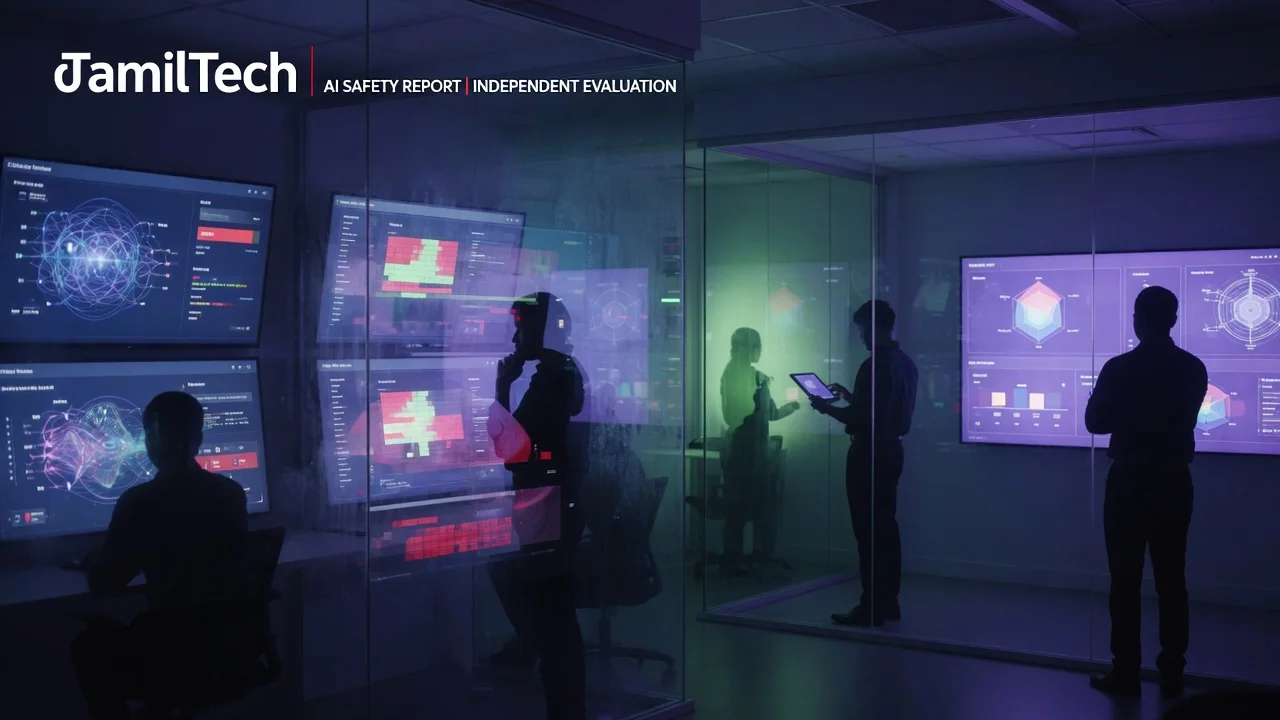
- Anthropic CEO Dario Amodei wants independent evaluators embedded inside frontier AI labs before major capability jumps.
- OpenAI has agreed with the push; Elon Musk has also backed stronger safety coordination around frontier systems.
- The ask covers independent evaluation, common safety standards, and international coordination to slow risky development.
- Indian startups and enterprises using Claude, GPT-class models could face slower but safer release cycles.
- India’s AI policy and MeitY-linked guidelines may need to track any new global evaluator norms that labs adopt.
What's the news
Anthropic is not just talking about safety papers anymore. CEO Dario Amodei has called for a harder brake on frontier AI development: put independent evaluators inside the labs that build the most powerful models, agree on common safety standards, and get real international coordination going.
OpenAI has agreed with that direction. Elon Musk has also backed the broader push for stronger checks and coordination. The core idea is simple and uncomfortable for anyone racing to ship the next big model: outside eyes should sit close enough to the training and evaluation pipeline that a lab cannot quietly cross a dangerous capability line and only tell the world after the fact.
This is not a soft “we care about safety” blog post. It is a public ask for process change at the companies closest to artificial general intelligence-style systems. For Indian founders, product teams, and policymakers who lean on these models every day, the timing matters. Frontier releases shape what ships on Indian apps, what runs in enterprise stacks, and what regulators eventually copy.
Details
Frontier AI labs are the small set of organisations training the most capable general-purpose models — the ones that keep jumping in reasoning, coding, tool use, and autonomy. Anthropic’s position, as framed by Amodei, is that voluntary internal red-teaming is no longer enough once models start showing sharp capability gains.
Independent evaluators inside those labs would mean outsiders with access, mandate, and enough technical depth to stress-test models before public or wide partner release. Think capability evaluations, misuse probes, and threshold checks that are not fully owned by the same team that wants to announce a new model on a launch calendar.
Alongside that sit two other pillars. First, common safety standards so labs are not inventing private scorecards that look rigorous but cannot be compared. Second, international coordination so one country’s loose rules do not become the path of least resistance for the next training run.
OpenAI agreeing is notable because the two labs compete hard on models, talent, and enterprise deals. When rivals align on process, even loosely, it signals that competitive pressure alone is not a trusted safety mechanism. Musk’s backing adds another loud voice from outside the Anthropic–OpenAI duopoly, which matters for public and political attention even if implementation details stay fuzzy.
None of this magically freezes research. It tries to insert friction at the exact moment friction is most expensive: right before a lab claims a new frontier. That friction is the point. Amodei’s call is explicitly about slowing frontier development where risk spikes, not about shutting down AI.
What remains open — and this is where the industry usually stalls — is who pays the evaluators, who hires them, what legal power they have to delay a release, and how you keep proprietary weights and data from leaking while still giving outsiders real access. Those are hard engineering and governance problems, not slogan problems.
India impact
India sits downstream of frontier labs. Most high-end reasoning, coding agents, and multimodal features that Indian products ship still come from a handful of US labs. If independent evaluation becomes a real gate, Indian users may see fewer surprise capability dumps and more staged rollouts with clearer safety notes.
That can be good for banks, UPI-linked fintechs, health apps, and government-facing tools that cannot afford a model that suddenly gets better at social engineering or document forgery. It can also frustrate startups that compete on “we have the latest model day one” marketing.
Compute and API costs already hit Indian balance sheets in INR. Extra evaluation cycles could mean slightly higher prices or delayed access tiers. Enterprises negotiating Claude or GPT contracts will want clarity on whether third-party eval reports travel with the model version they buy.
On the policy side, India has been building its own AI governance conversation — risk frameworks, content rules, and sector guidance. If frontier labs normalise independent evaluators, MeitY-linked discussions and industry bodies will face a choice: recognise those evaluators, demand India-relevant test suites (Indic languages, local fraud patterns, election-adjacent misuse), or build parallel domestic capacity.
Large Indian tech and telco players pushing AI features across Jio-scale user bases and Flipkart-scale commerce stacks also have skin in the game. A global slowdown on reckless releases reduces some systemic risk. It does not remove the need for India-specific red teams who understand UPI scams, vernacular deepfakes, and local data rules.
Talent-wise, a serious evaluator market could create roles for Indian ML safety researchers — if labs and governments actually fund independent centres rather than treating “evaluator” as a weekend advisory title. Without funding and access, the India angle stays rhetorical.
Use cases
Independent evaluators earn their keep when they catch failure modes that marketing demos skip. Before a coding agent ships wider tool access, evaluators can probe whether it can chain actions into unauthorised payments or data exfiltration. Before a customer-support model goes live on Indian banking apps, they can test prompt injection and social-engineering scripts tuned to UPI and KYC flows.
Shared safety standards help when an enterprise in Bengaluru wants to compare Model A and Model B on the same misuse and robustness suite instead of reading two incompatible blog posts. International coordination matters when a model trained under one jurisdiction gets fine-tuned and redistributed under another with weaker checks.
Practical use cases for India include safer rollouts of AI tutors in regional languages, fraud detection that does not invent new attack surface, and content systems that handle political and communal flashpoints without becoming amplifiers. Evaluators can also pressure-test agentic workflows that book travel, move money, or file documents — exactly the automation Indian SMEs want, and exactly where silent capability jumps hurt.
For labs themselves, internal-but-independent eval teams can force a pause when a model crosses a pre-agreed autonomy or cyber threshold. That pause is useless without teeth. The useful version includes documented go/no-go criteria, not a slide deck after launch.
Honest take
On paper this is the right direction. Frontier labs have outgrown the era where “trust us, we red-teamed it” is a credible public answer. Independent evaluators, common standards, and international coordination are the adult version of AI safety theatre.
Execution is the trap. Labs hate giving outsiders real access. Governments move slower than training runs. Competitors will always suspect that “safety delay” is a commercial weapon. And if evaluators are funded or selected by the same labs they police, independence becomes branding.
For India, the risk is being a pure consumer of whatever process Silicon Valley invents. If Amodei’s call gains traction, Indian policymakers and industry groups should push for seats at the standards table and for evaluation suites that reflect Indian languages, payment systems, and threat models — not just English-centric academic benchmarks.
OpenAI agreeing and Musk backing the broader idea raise the political temperature, which helps. It does not finish the work. Until someone publishes who the evaluators are, what they can block, and how results get shared without leaking model IP, treat this as a strong signal, not a finished safety regime.
Still, a public alignment between Anthropic and OpenAI on putting outside scrutiny closer to the metal is rarer than another model launch blog. That alone makes this worth watching from India — especially if your product roadmap assumes uninterrupted frontier upgrades every quarter.


Comments (0)
Be the first to comment!