


Key Takeaways
- Hero MotoCorp has injected an additional ₹1,000 crore into Ather Energy, significantly increasing its ownership stake in the EV startup.
- Following the announcement, Ather Energy's stock reached a new 52-week high on the NSE, reflecting strong investor confidence in the 2026 EV roadmap.
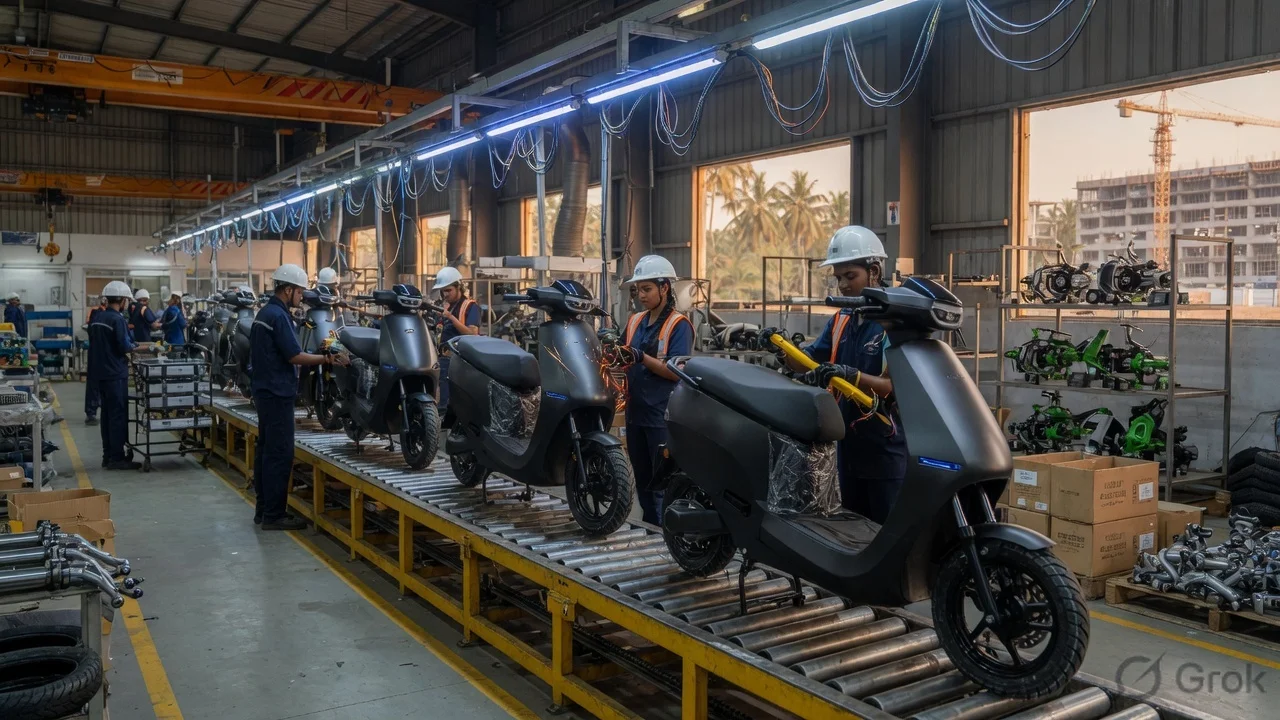
- The funding will primarily be used to expand Ather's manufacturing capacity and accelerate the rollout of the Ather Grid 3.0 fast-charging network across Tier-2 and Tier-3 Indian cities.
- For consumers, this move signals more affordable upcoming models and better after-sales service support leveraging Hero's massive dealership network.
The ₹1,000 Crore Power Move
The Indian electric vehicle space just got a massive jolt of energy. Hero MotoCorp, the world's largest manufacturer of motorcycles and scooters, has officially announced a fresh investment of ₹1,000 crore into Ather Energy. This isn't just another funding round; it is a clear statement that the big players are ready to go all-in on the premium EV segment. As we stand in July 2026, the partnership between these two giants has evolved from a mere strategic investment into a full-blown alliance that aims to dominate the Indian roads. The market reacted instantly, with Ather's shares skyrocketing to a 52-week high, leaving competitors and analysts talking about nothing else.
Why is this happening now? Well, 2026 has been a pivotal year for green mobility in India. With the government’s push for local manufacturing and the increasing cost of petrol, consumers are flocking to EVs faster than ever. Ather has always been positioned as the 'Apple of Scooters'—premium, tech-heavy, and reliable. However, scaling up requires serious cash, and that is exactly what Hero MotoCorp has provided. This infusion of capital ensures that Ather doesn't just survive the cut-throat competition from the likes of Ola Electric and TVS, but actually leads the pack with better R&D and a wider reach.
The Hero-Ather Bromance: A Timeline
To understand why this ₹1,000 crore investment is such a big deal, we need to look back at the history between these two companies. Hero MotoCorp was one of the earliest believers in Ather Energy, back when EVs were just a niche experiment in India. Over the years, Hero has consistently increased its stake, showing that they trust Ather’s engineering more than their own initial internal EV projects. By mid-2026, Hero’s influence on Ather has grown, but they have wisely allowed Ather to maintain its independent identity and startup agility. This synergy is rare in the corporate world where big companies often stifle the innovation of the startups they acquire.
This latest round of funding is specifically designed to bridge the gap between Ather's premium engineering and Hero's legendary distribution power. We are seeing more Ather experience centers popping up in cities where Hero already has a dominant presence. This 'bromance' is effectively solving Ather's biggest problem: reach. While Ola went for a direct-to-consumer digital model, Ather is playing the long game by combining digital excellence with physical reliability, backed by the deep pockets and trust associated with the Hero brand name.
Ather’s Market Performance in 2026
Let’s talk numbers because that is what is driving the 52-week high. In the first half of 2026, Ather Energy reported record-breaking delivery numbers, thanks to the massive success of the Rizta series and the updated 450 Apex. Investors are looking at the margins, and unlike many other EV startups that are burning cash to gain market share, Ather has shown a much clearer path to profitability. The ₹1,000 crore investment from Hero acts as a massive safety net and a growth engine simultaneously. When a giant like Hero puts that much money on the table, the institutional investors follow suit, which explains the sudden surge in stock price.
The stock reaching a 52-week high isn't just about the money; it's about the sentiment. It shows that the market believes the 'EV winter' or the period of skepticism is officially over. In 2026, Ather has managed to capture nearly 18% of the premium electric two-wheeler market in India. With this new capital, they are expected to double their production capacity at their Hosur plant. For someone holding Ather shares or even Hero MotoCorp shares, this is a golden period. The valuation of Ather is now hovering around figures that make it one of the most valuable EV companies in Asia, not just India.
The Tech Edge: Why Ather is Still the Gold Standard
I’ve ridden almost every EV available in the Indian market, and there is something about Ather’s software-hardware integration that others just can't match. In 2026, AtherStack 6.0 has set a new benchmark. The UI is fluid, the Google Maps integration is flawless, and the 'AutoHold' and 'FallSafe' features actually work when you need them. While other brands are busy adding speakers and neon lights, Ather has focused on the battery management system (BMS) and thermal cooling. This is why you rarely hear about an Ather catching fire or having a major software glitch in the middle of the road.
With the fresh ₹1,000 crore, we expect Ather to push the boundaries of battery tech even further. There are rumors of a solid-state battery prototype being tested for their 2027 flagship. Additionally, the Ather Grid 3.0 is a game changer. Imagine charging your scooter for a 50km range in just 10 minutes—that is the goal they are chasing with this new funding. For the average Indian user, 'range anxiety' is the biggest hurdle, and Ather is using tech to kill that anxiety once and for all. This focus on engineering excellence over flashy marketing is what keeps their customer loyalty so high.
India Impact: Expansion and the 'Rizta' Factor
One of the most significant shifts we've seen in 2026 is Ather moving away from being just a 'young person's brand.' The Ather Rizta, their family-oriented scooter, has been a runaway success in states like Tamil Nadu, Maharashtra, and Karnataka. It's bigger, has more storage, and is incredibly comfortable for two adults. The new investment will allow Ather to launch more variants of the Rizta, possibly a more budget-friendly version to take on the mid-range segment where TVS iQube currently dominates. This is where the real volume is in India—the family man who wants to save on petrol but needs a reliable vehicle for daily chores.
Availability is also getting a massive boost. If you live in a Tier-2 city like Madurai, Trichy, or Coimbatore, you’ve probably noticed more Ather showrooms opening up. This is the direct result of the Hero-Ather partnership. They are utilizing Hero's logistical expertise to move parts and vehicles faster across the country. In terms of pricing, while the premium models still cost upwards of ₹1.5 lakh, the buzz is that a new 'sub-1 lakh' Ather might be announced by the end of 2026 to take advantage of the new production scales. This would be a total game changer for the Indian middle class.
The Competition: Ola vs. TVS vs. Ather
It’s a three-way battle for the soul of the Indian EV market. Ola Electric is still the volume king, thanks to their aggressive pricing and massive marketing blitz. However, they've faced heat over service quality. TVS, with the iQube, is the steady performer that appeals to the traditional buyer. Ather sits right in the middle—offering the tech of Ola with the reliability of TVS. This ₹1,000 crore investment gives Ather the ammunition to fight on both fronts. They can now afford to be more aggressive with their pricing while maintaining their high standards of service.
What's interesting in 2026 is that Bajaj has also stepped up its game with the new Chetak variants. But Ather has a 'cool factor' that the older brands struggle to replicate. The community of Ather owners is very vocal and active, similar to how Tesla owners are in the US. This organic brand loyalty is something money can't buy, but money can certainly help sustain it by improving the service experience. I think we are going to see a price war in the coming months, and with Hero's backing, Ather is in a very strong position to win that war without compromising on quality.
The Road Ahead: IPO and Beyond
Everyone is asking the same question: When is the Ather IPO? With the stock hitting a 52-week high on the back of Hero's investment, the whispers have turned into a roar. 2026 might just be the year Ather goes public with one of the most anticipated IPOs in the Indian tech world. This fresh capital from Hero helps clean up the balance sheet and provides the necessary runway to show consistent growth to public investors. If they hit their targets for the Q3 and Q4 of 2026, an IPO in early 2027 looks almost certain.
Beyond the stock market, the future looks bright for the actual products. We are expecting Ather to enter the electric motorcycle segment soon. Imagine an 'Ather 450' equivalent but in a bike format—that would disrupt the 150cc-200cc petrol bike market instantly. Hero MotoCorp is likely to co-develop some of these platforms, bringing their decades of bike-building experience to Ather's electric expertise. The combination is lethal for competitors and exciting for us tech enthusiasts.
TamilTech’s Verdict
So, what do we think at TamilTech? Honestly, this is the best news for the Indian EV industry this year. For too long, people were worried that startups like Ather might struggle against the traditional giants. Instead, we are seeing a beautiful collaboration where the giant (Hero) is fueling the innovator (Ather). If you are planning to buy an electric scooter, this news should give you a lot of confidence. It means Ather is here to stay, their service network is only going to get better, and their tech will continue to lead the market.
Is the stock overpriced? Some might say so, but in the world of EVs, you aren't just buying current sales; you are buying future dominance. Ather has proven they can build a product that Indians love and trust. Our advice? If you're a consumer, wait for the festive season deals that are likely to come as a result of this new funding. If you're an investor, keep a very close eye on Ather's monthly delivery numbers—they are the real indicator of where that 52-week high is headed next. The EV race in India is no longer a sprint; it’s a marathon, and Ather just got a fresh pair of high-performance running shoes.



Comments (0)
Be the first to comment!