


What happened?
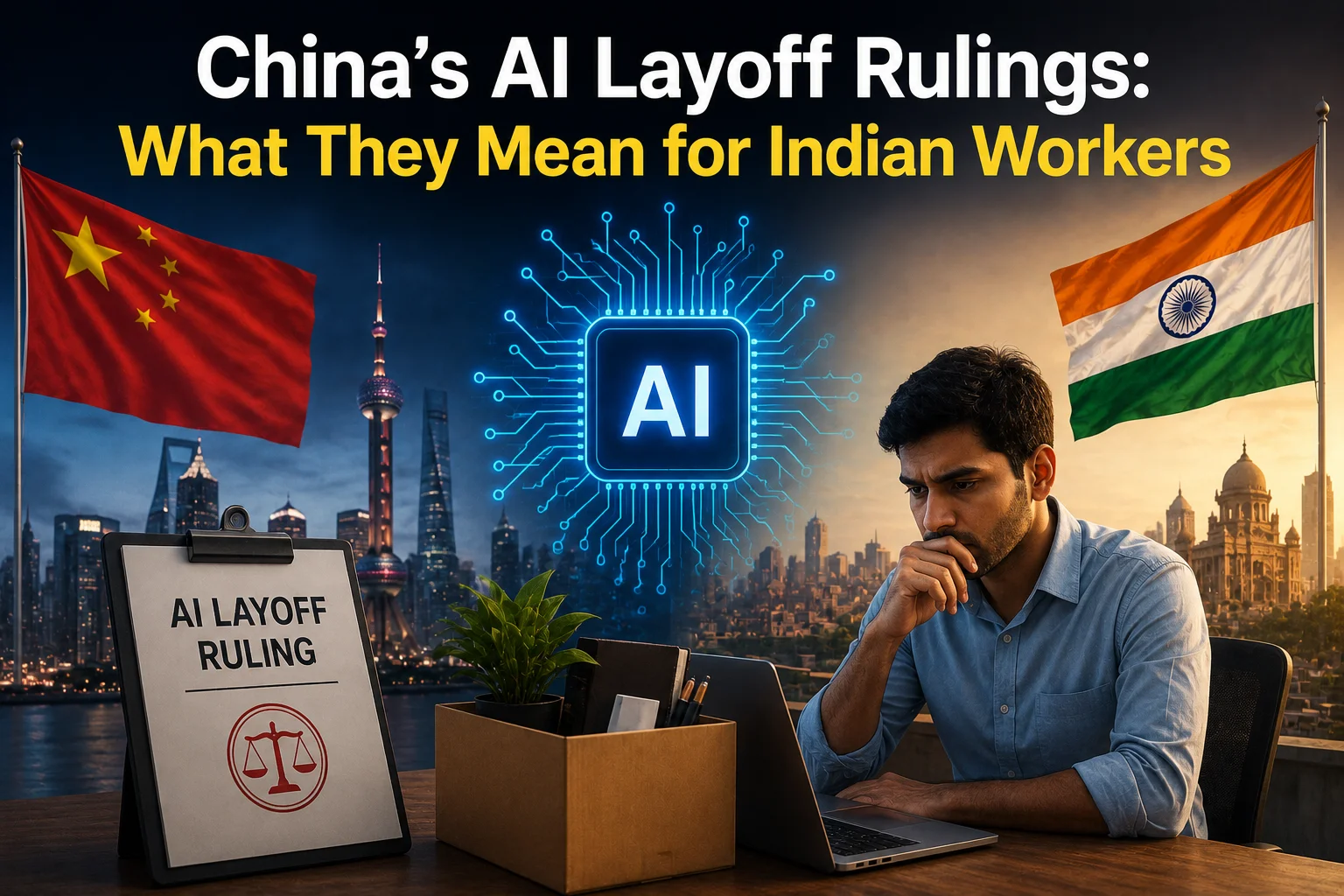
Recently three precedent‑setting court decisions in China declared that when a company replaces human workers with artificial‑intelligence tools, it is considered a voluntary cost‑cutting measure. In other words, the courts said the employer can’t hide behind "AI adoption" to justify large‑scale redundancies.
The three rulings in a nutshell
1. Beijing High Court (2023) – A manufacturing firm dismissed 250 floor‑workers after installing AI‑driven quality‑control robots. The court ruled the move was a business decision, not a compulsory restructuring, and the company had to follow the standard layoff procedure.
2. Shanghai Intermediate Court (2024) – A fintech startup let go of 120 data‑entry staff once a large‑language‑model could parse transaction logs. The judgment stressed that AI‑driven efficiency does not exempt the employer from paying severance under the Labour Law.
3. Guangzhou Municipal Court (2025) – A logistics provider cut 80 driver positions after deploying autonomous routing software. The court again said the employer must negotiate a layoff plan and cannot claim "AI necessity" as a loophole.
Why these rulings matter
China’s labour courts are sending a clear message: even if a machine can do the job cheaper, the law still protects workers. The decisions reinforce two principles:
- Employers must follow the statutory layoff process – notice period, severance, and collective bargaining.
- AI adoption is treated as a voluntary business strategy, not an unavoidable economic crisis.
For Indian companies watching the AI boom, this is a wake‑up call. While India doesn’t have a unified AI‑labour law yet, the courts in India are increasingly scrutinising mass layoffs, especially after the 2020 amendment to the Industrial Disputes Act.
Indian context – why should we care?
1. Tech hiring frenzy – From Bengaluru to Hyderabad, start‑ups are hiring AI engineers faster than ever. If the hype fades, the same “voluntary cost‑cutting” argument could appear in Indian courts.
2. Legal precedent – Indian tribunals often look at foreign jurisprudence for guidance. The Chinese rulings could influence how Indian labour courts interpret AI‑driven layoffs.
3. Worker sentiment – Indian employees are already vocal on platforms like LinkedIn and Reddit about AI‑related job fears. A clear legal stance could either calm nerves or spark more protests, depending on how companies act.
What Indian employers can do now
- Document the business case: Show concrete cost‑benefit analysis for AI adoption.
- Engage unions early: Even if you have a tech‑savvy workforce, many still belong to industry unions.
- Offer reskilling: Provide up‑skilling programmes for affected staff – e.g., training in data‑annotation, AI‑model testing, or cloud‑ops.
- Follow the layoff checklist: Issue notice, calculate severance as per the Industrial Disputes Act, and obtain approval from the labour commissioner.
TamilTech‑ஓட கருத்து
We think the Chinese courts are doing the right thing. AI is a tool, not a magic wand that lets companies dodge their legal responsibilities. In India, where the gig‑economy is booming and many workers are on contract, the pressure to replace them with bots will only increase. Companies that ignore the human cost may save a few crores today, but they risk brand damage and possible litigation tomorrow.
What to watch next
• The Indian Ministry of Labour is drafting a “Digital Workforce” guideline – keep an eye on it.
• Watch for any high‑profile layoffs in Indian tech firms that cite AI as the reason.
• Expect more discussions in Indian courts about whether AI‑driven efficiency counts as an “economic downturn” under existing labour laws.
Bottom line: AI can boost productivity, but it can’t erase the legal and ethical duties employers have towards their people. If you’re a manager, start planning reskilling now. If you’re a worker, know your rights – the law is catching up faster than you think.






Comments (0)
Be the first to comment!